Slate Review of 'The Nerd Reich' Argues Trump's Second Term Brought Silicon Valley's Fringe Schemes Into Power
Key Takeaways
- •The book portrays Marc Andreessen, Peter Thiel, and other tech elites as central figures in a broader web of authoritarian-leaning ideas and allies.
- •Durán’s TESCREALism framework includes proposals for “network cities,” which are intended to be independent and largely free of regulation.
- •Several network-city projects are being pursued in places including Honduras and Sonoma County, but they have faced strong local opposition.
- •The review says Trump’s second term has helped move fringe tech-world ideas closer to mainstream political influence.
- •Miller argues that many of these visions collapse under scrutiny and reflect decades of Silicon Valley self-mythologizing.
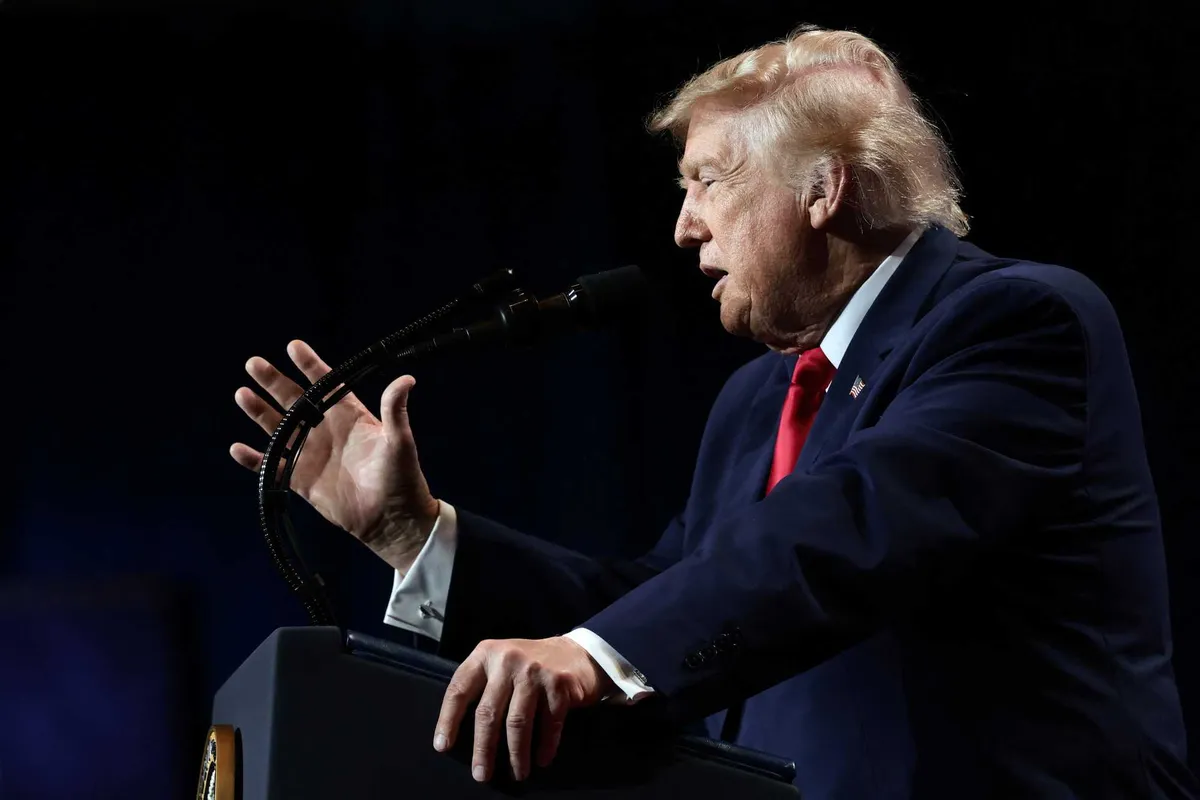
A new account of Silicon Valley politics argues that President Donald Trump's second term has allowed the technology industry's most out-of-touch figures to bring previously impossible schemes into the inner halls of power, according to a review published Sunday by Slate's Laura Miller.
The book under review is The Nerd Reich by journalist Gil Durán, built on the fiery newsletter he publishes about technology and the San Francisco Bay Area. "You could not ask for a more complete and hair-raising compendium of the insane things that Silicon Valley moguls have said and advocated for than journalist Gil Durán's new book, The Nerd Reich," Miller wrote.
According to the review, the book identifies billionaires such as venture capitalist Marc Andreessen and Peter Thiel as "the spiders at the center of a web of 'philosophers,' tech evangelists, start-up founders, and—most disturbingly—politicians who subscribe to a set of authoritarian ideas and plans for the future based on half-baked theories and an incomplete understanding of how the world works."
The agendas Durán documents range from the invasion of Greenland to preparations for the supposed impending arrival of the Antichrist, at least as defined by Palantir co-founder Peter Thiel. During Trump's second term, Miller observes, these far-right tech extremists have been able to implement much of their agenda, giving their long-running fringe ideas a more direct path into policy debates and political influence.
A key concept examined in the book is what Durán refers to as TESCREALism. "A key element of what Durán refers to as TESCREALism—after an acronym coined by computer scientist Timnit Gebru and philosopher Émile P. Torres—is a plan to set up 'network cities,' independent and regulation-free polities in which the supermen of Big Tech will be allowed to do whatever they like," Miller pointed out. Several such projects are currently in the works in locations ranging from Honduras to Sonoma County, though they have mostly encountered the strenuous opposition of local residents. Many advocates of network cities have their eye on Greenland, with its rich lodes of minerals and rare earth materials, as a potential site.
By Durán's account, Miller added, most of these elites already appear to believe that any action of theirs can be justified by their superior intelligence. She cited a 2023 conference speech by Balaji Srinivasan, an entrepreneur and investor who is a major proponent of the network state concept, in which he described a San Francisco divided into tribes: blue and red, corresponding to the current monikers for Democrats and Republicans, but also "grays"—tech workers who must team up with the reds to crush the blues and take over cities such as San Francisco, creating tech-controlled gray "zones" where blues would be banned.
Yet even as these figures claim more and more power, Miller noted that their ideas are usually impossible, which helps explain why Durán treats them less as polished policy proposals than as a pattern of rhetoric, status, and influence. "As Durán points out, this mishmash of ideas tends to collapse under scrutiny," she wrote, noting that he quotes an astrophysicist dismissing Elon Musk's cosmist fantasy of a Mars settlement by remarking: "There's no air—and the dirt is made of poison. You would just die."
Miller concluded that this dynamic developed through decades of exalting Silicon Valley entrepreneurs as "epochal geniuses." Sequestered in an enclave—complete with what she calls its own "deeply complicit university"—the tech sector held a flattering mirror up to itself, compounding its own myopia. She added that the American propensity for worshipping the rich, and equating their wealth with both intelligence and virtue, supplied plenty of reinforcement for their hubris.

