Nepal Principal Evacuates 900 Students Before Floodwaters Sweep Away Their School
Key Takeaways
- •Principal Rajendra Dawadi's prompt evacuation of Tribhuvan Trishuli Secondary School saved at least 900 students from flash floods in Nepal's Trishuli Valley.
- •The floods, unleashed by a glacial collapse in the Himalayas, killed more than 900 people across Nepal and China, with over 4,700 still missing.
- •Save the Children reports that at least 69 schools in northern Nepal were completely destroyed, putting the education of nearly 19,000 students at risk.
- •Informal word-of-mouth warnings from a colleague, a phone call, and a parent were the only alert system available before the flash flood struck.
- •Dawadi is calling on the Nepalese government to rebuild schools and provide psychological counseling so students can return to classes quickly.
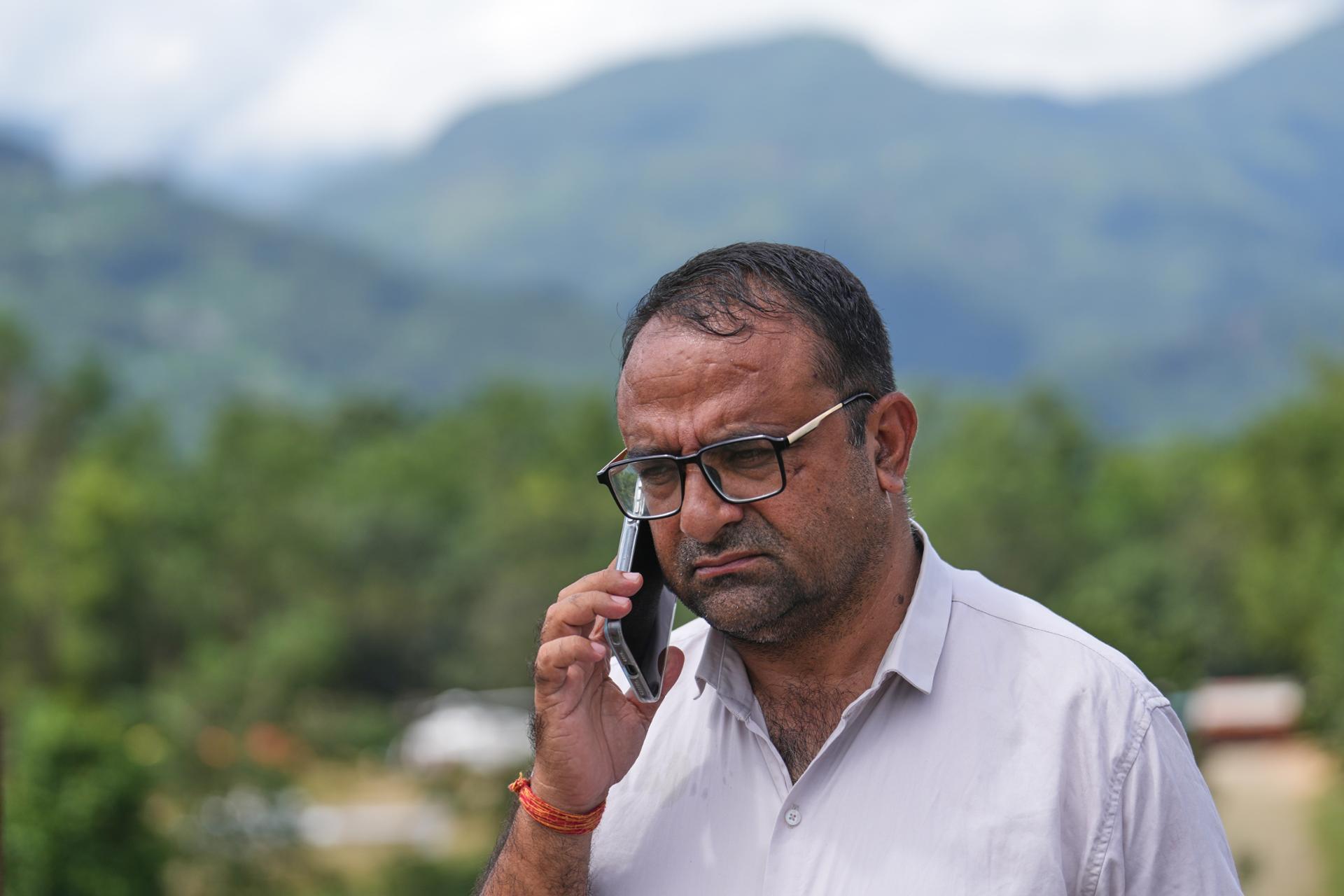
BIDUR, Nepal — Rajendra Dawadi was inside his classroom when a colleague rushed in with a warning: floodwaters were racing through Nepal's Trishuli Valley, tearing apart homes, bridges and entire villages.
A teacher then received another warning by phone, and moments later a parent arrived to take her child home. The danger had not yet been confirmed, but Dawadi, the principal of Tribhuvan Trishuli Secondary School, had little time to act. He rang the school bell and ordered his students and staff out of the building and toward higher ground.
"I immediately decided to stop ... school" and get the children out, he told The Associated Press.
As he followed the students to a nearby hill, the floodwaters rose behind him. From the safety of the hillside, he turned to watch the school where he had once been a student — and where he had spent years teaching — disappear beneath a torrent of water, mud, boulders and debris. Two staff members could not make it out and remain missing.
Dawadi's decision to evacuate saved at least 900 students from last week's devastating flash floods in Nepal, which were unleashed after a glacial collapse in the Himalayas. The disaster killed more than 900 people across Nepal and China, while over 4,700 remain missing.
As Nepal grapples with the catastrophe, Dawadi's story has emerged as a striking example of foresight and courage. His actions also underscore what disaster-risk experts have long emphasized in the Himalayas: informal early warnings passed by word of mouth — a colleague, a phone call, a parent — are often the only alert system available in the critical minutes before a flash flood, making local decision-making decisive when rivers fed by glaciers and landslide-dammed lakes burst without formal warning.
The Tribhuvan Trishuli Secondary School had 1,643 students in total. At least 900 were on campus that morning, while others were still making their way to school. Dawadi ordered those already present to leave and called bus drivers to tell them not to come.
One bus packed with students had already reached the school when Dawadi told the driver to turn back, he said. The bus crossed a newly constructed bridge and, moments later, the old bridge beside it collapsed.
For Dawadi, the scale of the destruction is deeply personal, as the school had been both his workplace and a large part of his life.
"I have no words. I got education from that school. And I gave education at that school," he said.
The destruction of Dawadi's school was not an isolated loss. Across northern Nepal, the floods have left thousands of children without classrooms, disrupted their education and raised fears that the disaster could cost them months of schooling. Charity group Save the Children said in a statement that at least 69 schools in northern Nepal have been completely destroyed, putting the education of nearly 19,000 students at risk.
Dawadi's quick thinking and swift response during the disaster have been hailed as an act of heroism. When he returned to the site of the school days later, parents embraced him as they thanked him for saving their children.
"Their parents hugged me, they cried with me," he said. "They were emotional."
Student Suvina Tamang, 14, said the building was swept away shortly after the students had been evacuated. "I will thank him when I see him" for saving my life, she said.
Dawadi, however, is reluctant to accept the role of hero. For him, rescuing his students was simply his responsibility. He now says the students will need psychological counseling, and then lessons must begin again, even if the school must temporarily relocate.
His appeal to the Nepalese government is simple: rebuild the schools and get children back to classes. How quickly that happens — from temporary classrooms to counseling for children who watched their school vanish — will determine whether the nearly 19,000 students affected across northern Nepal lose weeks of learning or a full school year.
