NCC Set to Disconnect Unregistered Phones in Nigeria as Device Verification Drive Begins
Key Takeaways
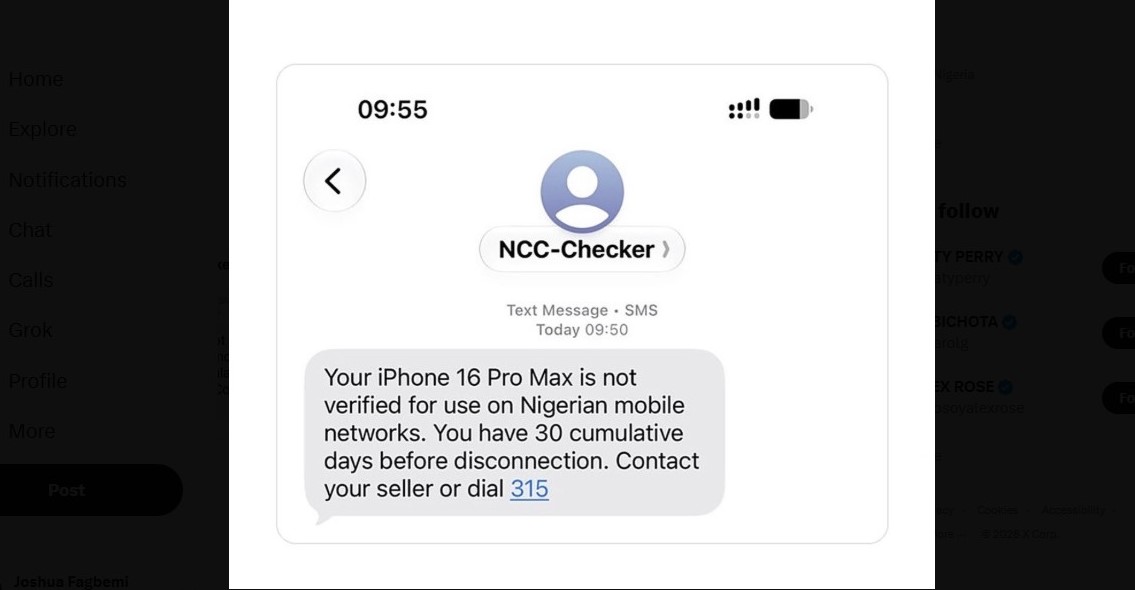
- •The NCC started sending SMS notifications on Saturday under the sender ID 'NCC-Checker,' warning owners of unverified devices that they have 30 cumulative days before disconnection.
- •The Device Management System covers all SIM-enabled devices, including smartphones, tablets, POS terminals and routers, placing businesses that depend on such devices under the same rules.
- •Subscribers can confirm whether a device is type-approved by dialling *315#, and unverified devices will lose access to calls, messages and mobile data on local networks.
- •The policy aims to clear the market of fake, substandard or illegally smuggled phones and to enable IMEI-based traceability through a planned Central Equipment Identity Register (CEIR).
- •The Association of Mobile Phones and Allied Products Traders of Nigeria opposed the registration fee requirement, with its president warning that vendors may raise prices on phones, routers, POS machines and tablets to recover the levy.
Nigeria's telecommunications regulator has begun warning users of unregistered phones that their devices will be disconnected from mobile networks within 30 days.
The Nigerian Communications Commission (NCC) started sending SMS notifications on Saturday morning under the sender ID “NCC-Checker”, informing holders of unapproved phone types that their smartphones will be cut off from local cellular networks.
“Your (Device Model) is not verified for use on Nigerian mobile networks. You have 30 cumulative days before disconnection. Contact your seller or dial 315,” the SMS notification reads.
The notices form part of the NCC's Device Management System (DMS) enforcement framework, which mandates the registration and verification of all SIM-enabled devices — including smartphones, tablets, POS terminals and routers — operating on telecom networks across Nigeria. For device owners, the stakes are practical: an unverified device loses access to calls, messages and mobile data on local networks, and because the rules extend to SIM-enabled POS terminals and routers as well, businesses that depend on those devices fall under the same framework.
Nigerians who receive the message are advised to contact their vendor or authorised retailers to ensure that their phone's International Mobile Equipment Identity (IMEI) has been properly cleared and registered with the commission. The IMEI is the unique identifier that distinguishes each device on a network, and it is the linchpin of the exercise: the same number used to confirm type approval is the one that makes a handset traceable once it sits in a central register.
The regulator initiated the process in September through the technology-backed initiative, which aims to ensure that communications devices imported, sold and used in Nigeria meet applicable technical and regulatory standards. The policy is mainly directed at clearing the market of fake, substandard or illegally smuggled phones that do not meet official safety and quality standards.
The measure is also designed to enable the NCC to track the unique IMEI numbers of every SIM-enabled device imported into or sold in Nigeria, making the devices traceable when used for fraudulent activities. To achieve this, the commission plans to deploy an automated Central Equipment Identity Register (CEIR) system.
How to check if your phone is approved
As the commission enforces safety and quality standards for imported devices, subscribers are encouraged to confirm that their phones meet compliance requirements under the device management system.
Nigerians can check whether their phone is approved for use in the country by dialling *315# and following the instructions to check for their phone or another device.
If the phone is approved, message “This device is NCC Type Approved and verified for use on Nigerian mobile networks” will appear on the screen. If it is not approved, the user has 30 days before the device could be blocked from accessing Nigerian mobile networks.
The development means the NCC has commenced the process of blocking unregistered phones from the market. Nigerians buying new or used mobile devices are therefore advised to test and verify the registration status of a device before purchasing or completing a transaction — a step that carries particular weight in a market where devices change hands through informal channels as well as authorised dealers.
The commission maintains that it is not making business difficult for phone vendors, especially those selling foreign-used devices, describing the new process as a move to regulate the market and ensure every phone carries a unique IMEI code that makes it trackable. Vendors and retailers must adhere to the commission's framework by taking appropriate steps to prevent customers' devices from being disconnected. In line with NCC requirements, vendors can work directly with Original Equipment Manufacturers (OEMs) and distributors for full compliance.
With notifications now live and 30-day windows beginning to run for affected users, developments to watch include the planned deployment of the CEIR and how the commission addresses the objections raised by device traders over registration fees.
Traders reject registration fees
The Association of Mobile Phones and Allied Products Traders of Nigeria rejected the NCC's compulsory device registration move in September, claiming the directive, which requires payment of registration fees, is another exploitative measure.
The traders said that while they are not against the introduction of the DMS, which is designed to establish a register of mobile devices operating on Nigerian telecoms networks, they opposed the payment requirement for newly imported devices.
The association's president, Musa Haruna Mamza, noted that the registration fee might have an indirect impact on Nigerians, as vendors would look to recover the levy by increasing the cost of mobile phones, routers, POS machines and tablets.
Source: TechNext24

