North Carolina election official who urged Insurrection Act use admits he has no proof of fraud in his own county
Key Takeaways
- •James Davis, the Republican chairman of the Clay County Board of Elections in North Carolina, acknowledged he has no evidence of widespread voter fraud in the county he now oversees.
- •In a December 2020 Facebook post, Davis urged President Trump to invoke the Insurrection Act and use military courts to investigate alleged election misconduct.
- •Davis was appointed chairman in 2025 by State Auditor Dave Boliek after a law change shifted county election board authority from the governor to the auditor, giving Republicans control of boards in all 100 North Carolina counties.
- •The Voting Rights Lab has identified Davis as one of 18 county election officials in the state who are election deniers, a designation he rejects while maintaining he has seen evidence of fraud generally.
- •In Lee County, board member Jay DeLancy's effort to remove four allegedly duplicate voter registrations was blocked by state officials pending review, and his proposal to abolish Sunday voting was rejected by the state elections board.
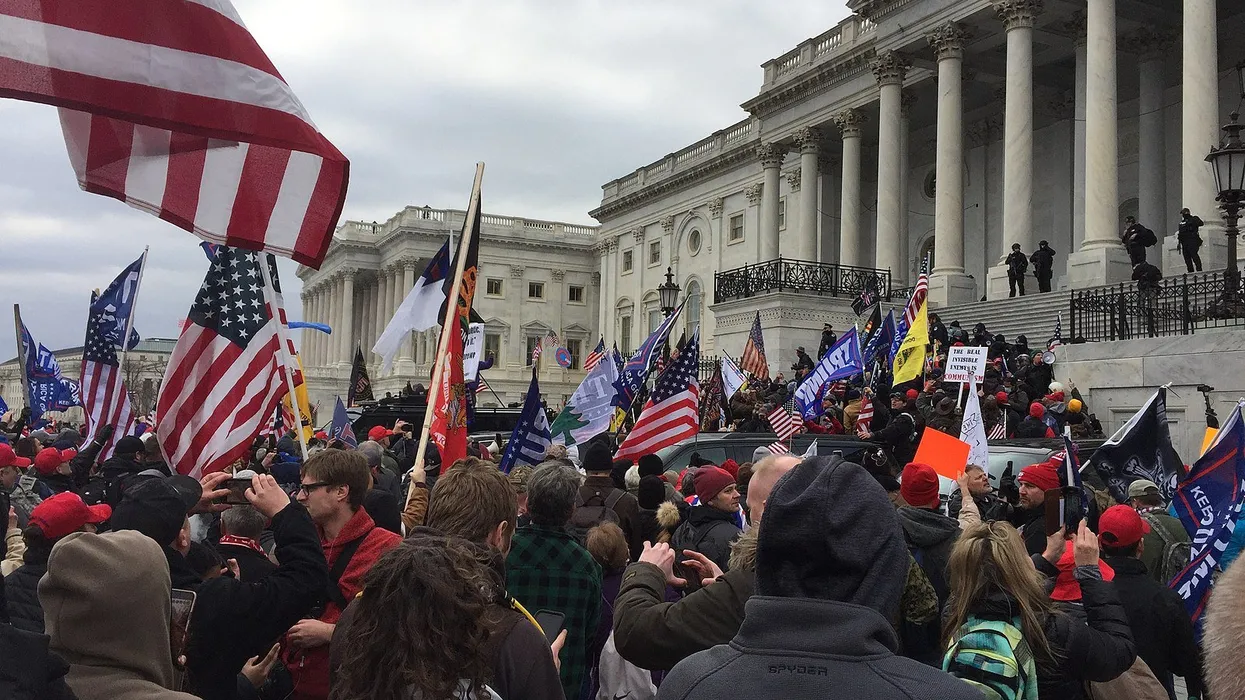
James Davis, the Republican chairman of the Clay County Board of Elections in North Carolina who previously called on President Donald Trump to invoke the Insurrection Act over the 2020 election, has acknowledged that he has no evidence of widespread voter fraud in the county whose elections he now oversees.
The acknowledgment highlights the gap between the unproven claims Davis once publicly promoted and the responsibilities he now holds as a local election administrator. County election boards in North Carolina handle the day-to-day mechanics of voting — maintaining voter registration records, designating polling places, and appointing precinct workers — placing the chairman's post at the center of how elections are actually run in his county.
Davis made the admission to NC Local reporter Ryan Oehrli, who revisited the exchange in an interview published Thursday by Vox.
Davis was among those who supported Trump and advanced allegations of election fraud after Trump's 2020 defeat by Joe Biden. In a Facebook post published in December 2020, roughly a month after the November contest, Davis wrote that "President Trump understates the massive voter fraud." He went on to urge Trump to invoke the Insurrection Act — a federal law dating to 1807 that allows a president to deploy the military within the United States — and to call for military courts to investigate alleged election misconduct and bring charges against those he claimed had conspired against the United States.
Yet after taking office as chairman of his county's election board in 2025, Davis could not substantiate those far-reaching accusations in his own area. Asked about widespread fraud in Clay County, he told NC Local: "I don't know that now. I have no proof."
Davis maintained that he had seen evidence of election fraud in general and rejected the notion that he is an election denier. According to Oehrli's reporting, he further asserted that FBI agents had incited the riot at the U.S. Capitol on January 6, 2021.
The admission comes as Republican officials who previously promoted election fraud theories now hold positions overseeing voting procedures in North Carolina. In 2025, Republican State Auditor Dave Boliek appointed Davis to the chairmanship after changes to state law shifted authority over county election board leadership from the governor to the auditor. The shift gave Republicans control of the election boards in all 100 of North Carolina's counties.
According to NC Local, Davis is one of 18 county election officials identified by the Voting Rights Lab, a group that tracks election laws and administration, as election deniers.
Similar friction has emerged elsewhere in the state. Jay DeLancy, a member of the Lee County election board who long described himself as a voter integrity activist, has run into difficulties in efforts to remove voters he believes are improperly registered. DeLancy sought to have four names removed because he regarded them as duplicates, but state officials blocked the removals pending further review.
"Just too many lawyers," DeLancy complained.
Oehrli told Vox that DeLancy also took part in a failed attempt to abolish Sunday voting in Lee County. DeLancy argued that forcing election workers to work on Sundays would violate the biblical commandment to keep the Sabbath, but the state elections board rejected the proposal.
Those episodes illustrate the practical limits facing individual board members and chairmen: registration challenges and proposed voting changes can be checked by state election officials before they take effect. Oehrli said the officials he has examined have so far had only a limited individual impact on election administration, even though they occupy positions responsible for overseeing voting procedures ahead of the November midterms. With the midterms approaching, how county boards handle routine duties such as voter list maintenance and polling operations — and how often the state board steps in — will be among the details to watch.

