NBER Conference Paper Examines Decline in Cross-Field Diffusion of Scientific Ideas
Key Takeaways
- •The paper documents a major decline over four decades in the cross-field diffusion of new scientific ideas.
- •Berkes and Gaetani argue that more specialized terminology is associated with narrower adoption outside a paper’s original field.
- •The authors describe a communication tradeoff between technical language for immediate peers and accessible language for wider audiences.
- •The paper says policy interventions that align scientists’ incentives could broaden the use and social value of scientific research.
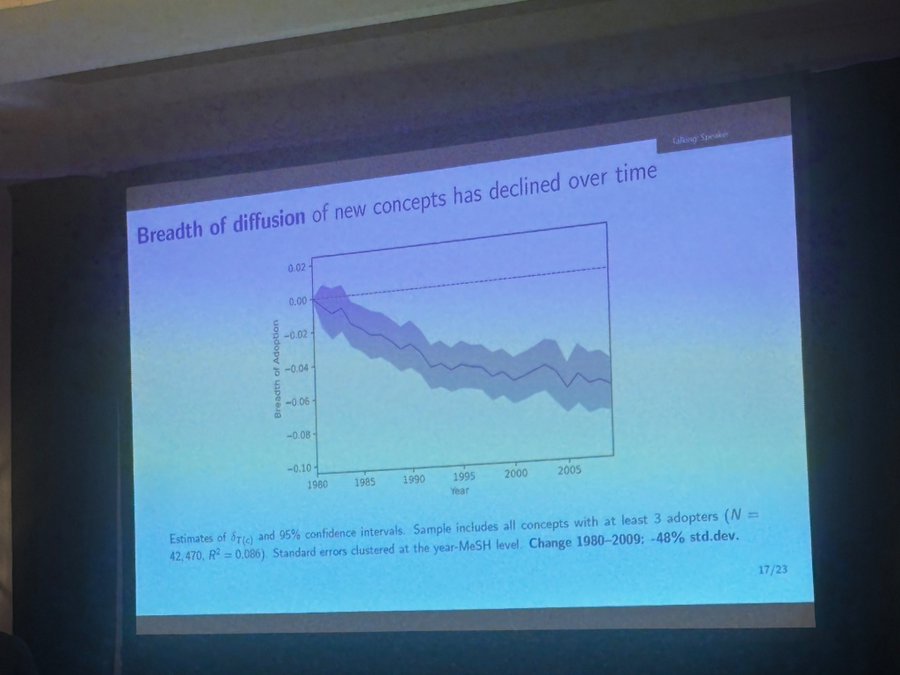
A new NBER conference paper by Enrico Berkes and Ruben Gaetani documents a substantial decline over the past four decades in the diffusion of new scientific ideas beyond their field of origin.
The paper argues that this contraction is closely connected to the increasing specialization of scientific language. According to the authors, research that uses more technical terminology tends to be adopted less broadly outside its originating field.
Berkes and Gaetani develop a theory of scientific discovery in which the spread of new ideas depends on the extent to which potential adopters can understand and process them. In presenting new findings, scientists face a tradeoff between technical communication aimed at their immediate peers and more accessible language intended to reach a wider audience.
As scientific knowledge accumulates and frontier research builds on deeper layers of prior work, the paper says this tradeoff increasingly favors specialized language. The result is more limited diffusion of new ideas across fields, a concern for science policy because cross-field adoption is one way discoveries can generate value beyond their original research community.
The authors also state that policy interventions aligning scientists’ incentives can broaden adoption and increase the social value of scientific research. The paper’s framing places communication choices alongside funding, publication, and career incentives as factors that can shape how widely scientific work is used.
The NBER conference paper is available here:
Marginal Revolution cited the paper and noted that it came via a thread by Juan Mateos Garcia: https://x.com/JMateosGarcia/status/2081378730912415900.

