NBC Calls Georgia Governor's Race for Keisha Lance Bottoms, Who Would Be the State's First Black Woman Governor
Key Takeaways
- •NBC has projected Keisha Lance Bottoms, who served as Atlanta's mayor from 2018 to 2022, as the winner of Georgia's governor's race over Republican first-time candidate Rick Jackson.
- •Pro-Jackson advertising reached $271.5 million compared with $32.8 million for Bottoms, an approximately 8-to-1 Republican advantage according to AdImpact data.
- •A victory would make Bottoms Georgia's first Black woman governor, following Stacey Abrams' 2018 nomination and loss to Brian Kemp by roughly 55,000 votes.
- •Georgia recorded about 2.8 million votes before Election Day with roughly 1.3 million more expected on Election Day, and state law allows a recount if the trailing candidate is within half a percentage point.
- •The race reflects Georgia's shifting political landscape, which accelerated when Joe Biden won the state by roughly 12,000 votes in 2020, its first Democratic presidential victory since 1992.
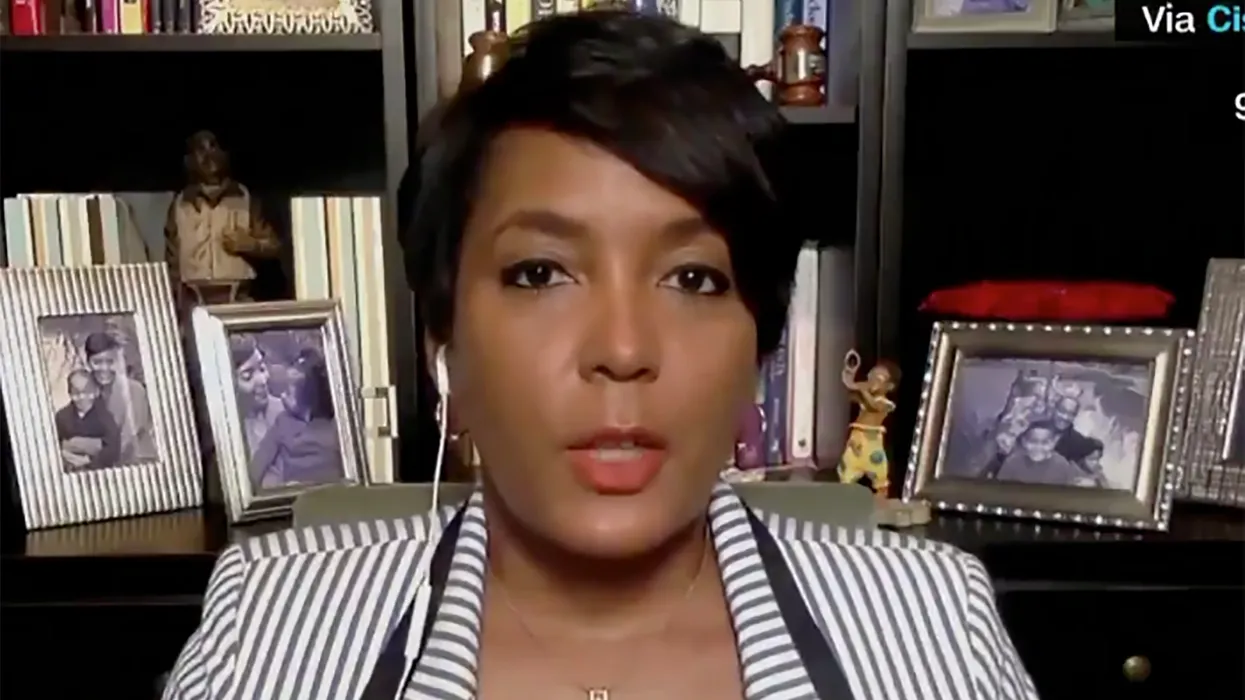
NBC is calling the Georgia governor's race for Democrat Keisha Lance Bottoms. The contest had developed into a genuine toss-up between Bottoms, who led Atlanta as mayor from 2018 to 2022, and Republican Rick Jackson, a billionaire healthcare executive and first-time candidate whose Georgia-based Jackson Healthcare ranks among the country's largest healthcare staffing firms — and it stayed extremely close as Election Day neared.
Republican spending dynamics were shaped in part by the state's U.S. Senate race, which was expected to remain Democratic. The GOP pulled out of that contest more than a month before the election, meaning national Republican funding flowed to only a few select races — one of them the governor's race, which received a disproportionately significant share.
AdImpact data showed pro-Jackson advertising at $271.5 million, versus $32.8 million for pro-Bottoms advertising — a Republican advantage of roughly 8 to 1. With billions of his own, Jackson was able to pour substantial sums into his campaign.
Despite the spending gap, Jackson never pulled far ahead. Late polls showed the race essentially tied, and Bottoms secured a late infusion of national Democratic money that helped her compete on the airwaves.
Bottoms has a chance to make history as Georgia's first Black woman governor and to hand Democrats control of a major Southern battleground — a milestone the state has approached once before, when Stacey Abrams became the first Black woman nominated for governor by a major U.S. party in 2018 and lost to Brian Kemp by roughly 55,000 votes. If Jackson wins, Republicans would hold the governorship for another term and preserve a key 2028 presidential battleground — Georgia and its 16 electoral votes — for the GOP.
Late October polls underscored how narrow the contest was: one survey had Bottoms at 50 percent and Jackson at 47 percent; another had Bottoms at 49 percent and Jackson at 48 percent; and the Atlanta Journal-Constitution/University of Georgia poll showed Jackson at 46 percent and Bottoms at 45 percent. All fell within the margin of error, leaving the outcome too close to call.
The contest reflects Georgia's significant shift in political geography — a shift that accelerated when Joe Biden carried the state by roughly 12,000 votes in 2020, its first Democratic presidential win since 1992. While Republicans remain strong statewide, Democrats have become increasingly competitive, particularly with strong turnout in metro Atlanta.
As with all close races, turnout is the name of the game. Bottoms needs to maximize Black voter turnout, run up her margins in Atlanta and its suburbs, and hold enough of the voters who support Democratic Sen. Jon Ossoff, first elected in Georgia's January 2021 Senate runoffs. Split-ticket voting could be decisive, because Ossoff has led more clearly in his Senate race.
Georgia recorded about 2.8 million votes before Election Day, and officials expected roughly 1.3 million more ballots to be cast on Election Day itself. NBC's call is a projection, not an official result: with every late poll inside the margin of error, the final margin will be settled only after counties finish counting and certify their returns — and Georgia law allows a candidate trailing by half a percentage point or less to request a recount.
CNN reported that Georgia Republicans were "increasingly worried" as turnout numbers came in, suggesting the early-vote coalition may have been stronger for Democrats than Republicans expected.
Source: Alternet

