'The Piggy Bank Is Broken': Trump Administration's Iran War Spending Sparks Payroll 'Crisis' in U.S. Navy
Key Takeaways
- •The Guardian reported that money from U.S. Navy payroll accounts was diverted to help fund the war against Iran.
- •Pentagon reprogramming of funds normally requires congressional notification, making payroll accounts an especially sensitive source of war funding.
- •A Pentagon memo reviewed by the outlet warned of payroll shortfalls for service members due to Pentagon raiding.
- •A Navy official said payroll shortfalls were being backfilled with unspent money so sailors would still receive their paychecks.
- •A Navy spokesperson denied that Navy payrolls were in danger of falling short.
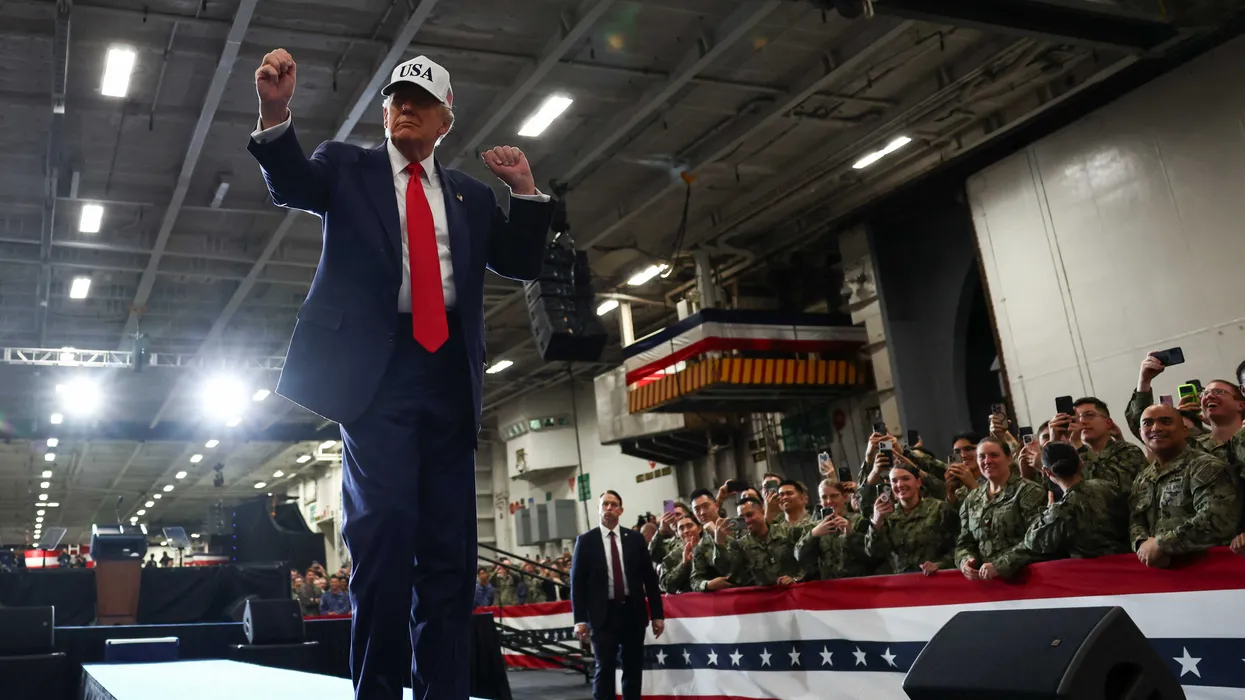
The Trump administration has triggered what U.S. Navy officials describe as a full-blown “financial crisis” inside the branch, after money set aside for service members’ paychecks was diverted to cover the costs of President Donald Trump’s deeply unpopular war against Iran, The Guardian reported, citing Navy officials and newly reviewed documents.
According to the report, dollars earmarked for U.S. Navy payroll accounts were being moved to pay for the conflict with Iran, which has drained the United States’ supply of munitions stockpiles. Shifting money between Pentagon accounts — a practice known as reprogramming — is normally subject to congressional notification, which makes payroll, the pool that funds paychecks for the Navy’s more than 300,000 active-duty sailors, an unusually sensitive place to look for extra war funding. A Pentagon memo reviewed by the outlet warns of “shortfalls in payroll” accounts for U.S. service members due to Pentagon “raiding.”
“The piggy bank is broken,” Harlan Ullman, a retired U.S. Navy officer and military academic, told The Guardian.
Another U.S. Navy official, who spoke on the condition of anonymity, described the “imaginative” workarounds being used to work around the payroll shortfalls. “The money for payroll was robbed to pay for overseas contingencies and is being backfilled by money that hasn’t been spent,” the official said. “They are backfilling payroll so we get enough money in our paycheck.”
A U.S. Navy spokesperson dismissed reports that Navy payrolls were at risk of falling short. Military pay is one of the Defense Department’s largest recurring obligations, funded through annual congressional appropriations, and any lapse in troop paychecks would be among the most immediately visible effects of a funding squeeze. Still, according to The Guardian, the “cash shortage” within the branch is “no secret.”
“They’re just not speaking publicly about it,” said Todd Harrison, a senior fellow at the American Enterprise Institute, a conservative think tank based in Washington, D.C. “And I suspect that is a deliberate decision of the civilian leaders in the Pentagon, starting at secretary, that this is for political reasons, that they don’t want to look like they’re damaging future military readiness over a war that is becoming increasingly a political liability.”
One former military officer who now works for a U.S. Navy contracting company, and who was briefed on the shortfalls, offered a far bleaker assessment. “They’re f-----,” the former officer told The Guardian, speaking on the condition of anonymity. “They shot all their weapons; they trashed all their ships; they ran out of their money.” The description points to replenishment costs — replacing expended munitions and restoring worn ships — that under standard Pentagon budgeting fall on future fiscal years rather than the accounts now being drained.

