Natural Gas Futures Rise Ahead of Expected Small Storage Build
Key Takeaways
- •September heat forecasts were described as among the hottest on record and supported stronger near-term gas demand.
- •Escalating U.S.-Iran hostilities raised concerns about possible disruptions to energy shipments through the Strait of Hormuz.
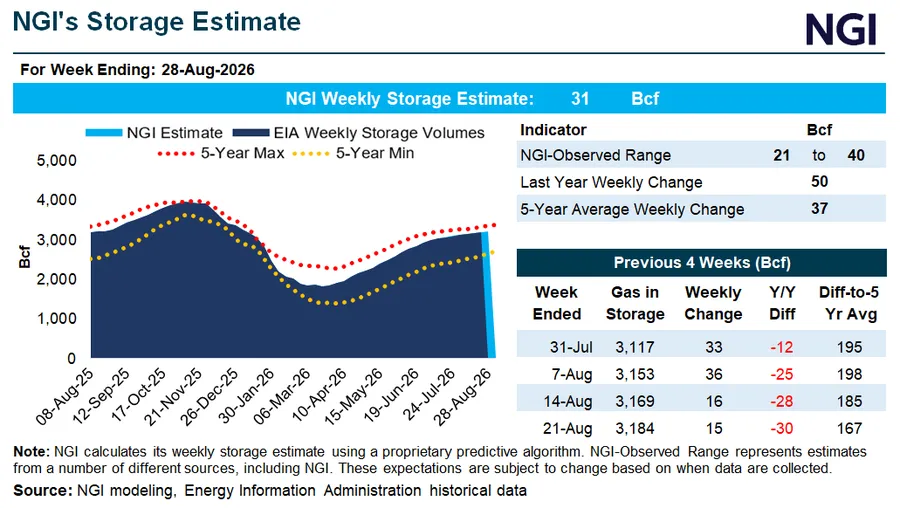
- •NGI projected a 31 Bcf storage injection, keeping attention on the autumn inventory refill period.
- •Gulf Coast physical gas prices had fallen Tuesday after Tropical Storm Edouard came ashore near the Texas-Louisiana border.
- •U.S. manufacturing expanded in August, with Texas activity accelerating and supporting industrial gas demand.
Natural gas futures pushed higher Wednesday as increasingly bullish September heat forecasts gave traders another reason to test the $3 level, while renewed U.S.-Iran fighting added a fresh jolt from overseas.
At a glance:
- September heat tracks hottest on record
- TTF hits highest since January 2023
- NGI models a 31 Bcf storage injection
Physical natural gas prices mostly rose Wednesday as building heat supported demand from the Mississippi Valley into the Ohio Valley, while Gulf Coast hubs recovered some of Tuesday’s steep losses. The weather backdrop matters because late-summer cooling demand can still influence prompt-month trading even as the market looks toward the start of the autumn storage-refill period.
Escalating U.S.-Iran hostilities this week raised fresh concerns about prolonged disruptions to energy shipments through the Strait of Hormuz. The flare-up added to already simmering worries about global LNG supply and could add demand for American exports — and affect pricing — if the war drags into the winter months.
Natural gas futures advanced early Wednesday as traders weighed hefty supply, favorable but potentially fleeting weather, and robust LNG demand amid heightening tensions in the Middle East. Market attention also remained on storage expectations, with NGI modeling a 31 Bcf injection that would fit the seasonal pattern of injections typically used to rebuild inventories after summer cooling demand.
Physical natural gas prices fell back across the Gulf Coast and Southeast Tuesday for Wednesday delivery, surrendering about two-thirds of Monday’s surge past $7 as Tropical Storm Edouard came ashore near the Texas-Louisiana border.
U.S. manufacturing continued to expand in August, with factory production remaining strong and Texas activity accelerating, providing a supportive backdrop for industrial natural gas demand heading into fall.
Natural gas futures clawed back most of their early losses Tuesday as the season’s first Gulf Coast tropical storm bore down on the Texas-Louisiana LNG corridor without denting feedgas nominations.
