Natural Gas Futures Pull Back as October Contract Takes Over Prompt Position
Key Takeaways
- •Natural gas futures declined on Friday as cooler early-September weather forecasts reduced expected cooling demand and stalled Thursday's rally just short of $3.
- •The October contract assumed the prompt-month role from September and debuted cautiously as traders weighed summer heat, LNG feedgas, storage levels, and production.
- •Updated forecasts removed nearly 7 Bcf/d from projected natural gas demand ahead of early September.
- •LNG feedgas demand exceeded 19 Bcf/d, supported in part by recovering operations at Freeport LNG.
- •Modest storage injections combined with strong consumption have been eroding the underground storage surplus relative to both last year and the five-year average.
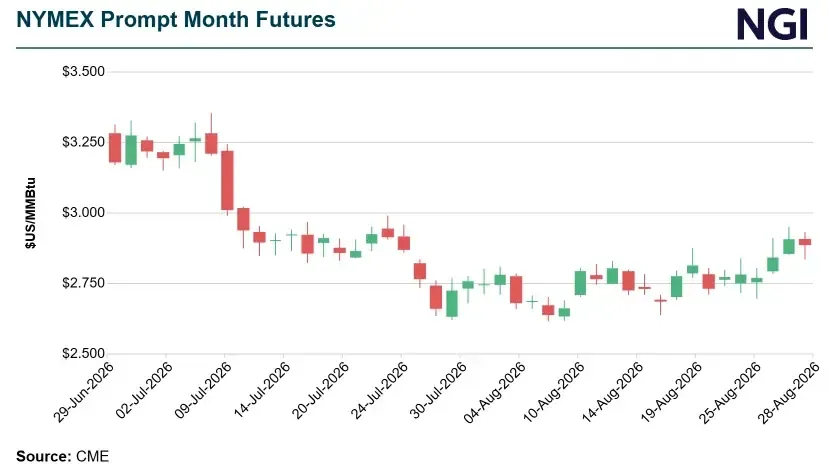
Natural gas futures eased on Friday as cooler weather trends forecast for early September undercut demand expectations, and Thursday's rally stalled just short of the $3 mark.
The pullback came despite supportive fundamentals, including persistent late-summer heat and the leanest storage builds recorded so far this summer. The combination of modest injections into storage and continued strong consumption has been gradually eroding the surplus in underground inventories compared with both last year and the five-year average, a shift traders have watched closely heading into the heating season, when demand typically peaks.
At a Glance
- October breakout attempt stalls
- Forecasts trim nearly 7 Bcf/d of demand
- LNG feedgas again tops 19 Bcf/d
The October contract moved to the front of the futures curve at the start of Friday's trading, taking over the prompt-month role from September. Its debut was cautious, as traders weighed abiding summer heat, strengthening LNG feedgas volumes, a dwindling but still notable storage surplus, and seasonally strong production. The rollover to October also refocuses market attention on autumn fundamentals, when cooling demand fades and the market awaits the first sustained cold snaps that drive winter heating needs.
The market's slide reflected updated weather forecasts showing cooler conditions expected across key consuming regions in early September, which would reduce cooling demand. Forecasters trimmed nearly 7 Bcf/d from projected demand. Weather-driven swings of this size are common in gas trading, since temperature outlooks for key consuming regions are among the most closely watched variables shaping near-term price expectations.
LNG feedgas demand remained a bright spot, with volumes again exceeding 19 Bcf/d, supported in part by recovering activity at Freeport LNG. Export facilities have become a major source of structural demand for U.S. gas, and feedgas flows are a key indicator traders track alongside weather and storage data.
Source: Natural Gas Intelligence
