National Review Warns Trump Is in a 'Difficult Spot' on Iran as Adversaries See Him 'Always Bluffing'
Key Takeaways
- •National Review said Trump has shifted to economic warfare against Iran after months of inconsistent military strikes and rhetoric.
- •Treasury Secretary Scott Bessent announced new sanctions described as part of "Operation Economic Outcast," but said they would be delayed to avoid disrupting the global financial system.
- •The magazine questioned whether the new pressure campaign will be fully carried out and argued that Iran's leadership believes Trump is "always bluffing."
- •The editors said Iran has shown resilience through decades of sanctions, making immediate results from the new strategy unlikely.
- •They warned that any Iranian escalation against Gulf states could force Trump into a difficult decision, with wider implications for global oil supplies through the Strait of Hormuz.
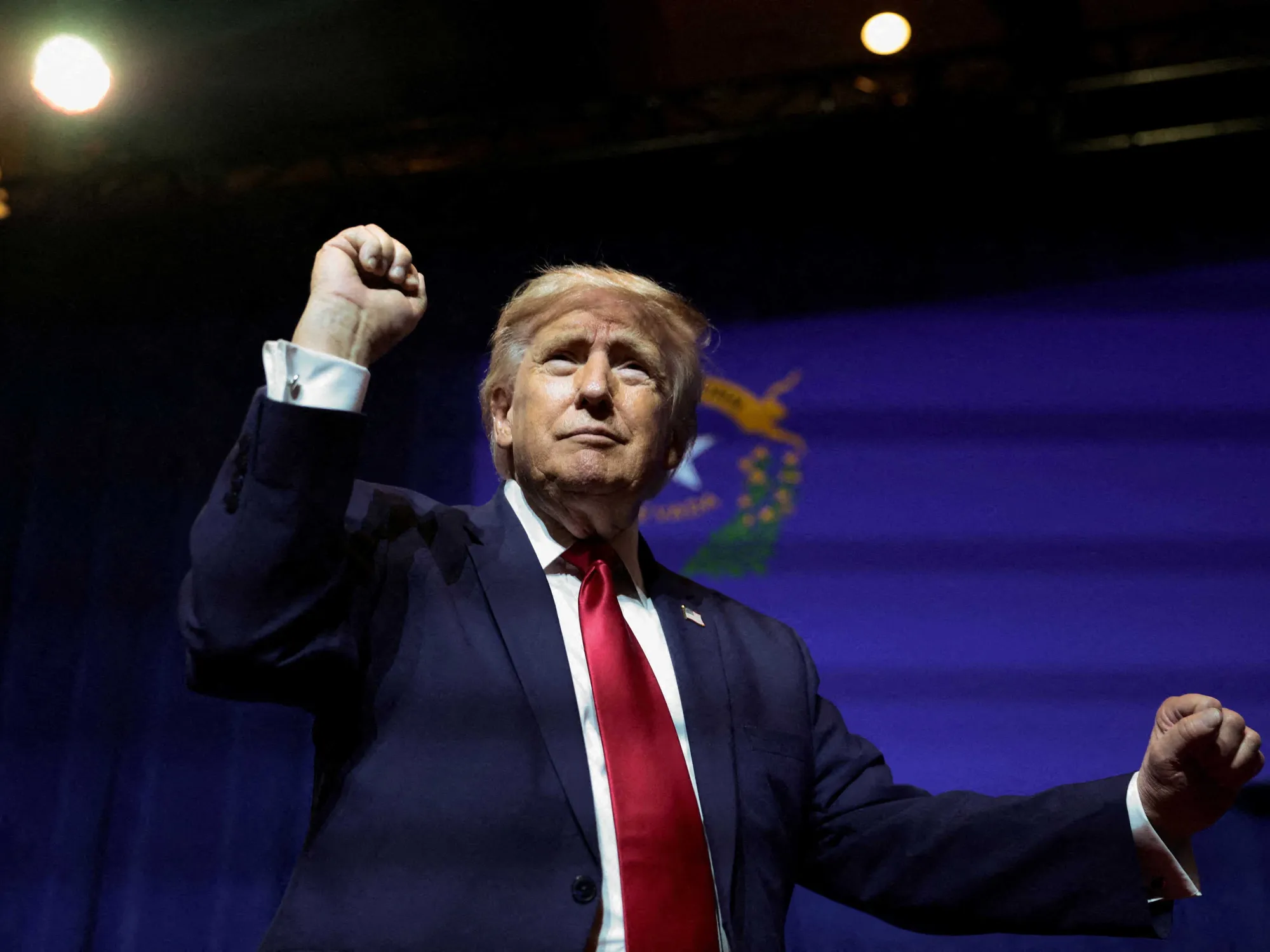
The editors of the National Review warned Thursday that President Donald Trump is in a "difficult spot" as his approach to the war with Iran shifts into a new phase, arguing that his adversaries know he is "always bluffing" and that everything he has tried so far has failed.
In an editorial published Thursday, the conservative magazine — founded in 1955 by William F. Buckley Jr. and famous for having broken with Trump once before, in its 2016 "Against Trump" issue — expressed skepticism about the president's new strategy and cautioned that he may not have the "patience" to see it through.
"After months of on-again, off-again military strikes and rhetoric ranging from dovish to apocalyptic, President Trump has turned to a new strategy for Iran — economic warfare," the magazine wrote. "The U.S. has already been maintaining a naval blockade of Iran, and Trump is taking the strategy further, calling for a D-Day on the Iranian economy. On Monday, U.S. Treasury Secretary Scott Bessent announced what he portrayed as crippling new sanctions on Iran. 'Our objective is to sever every economic lifeline that sustains this tyrannical regime until Tehran stands alone,' he said in describing the new 'Operation Economic Outcast.'"
It is not the first turn to economic pressure: Iran has lived under American sanctions since the 1979 revolution, and Trump's own first term brought a "maximum pressure" campaign of sweeping oil sanctions after he withdrew from the 2015 nuclear accord.
The Review, however, questioned whether the plan will be carried out as billed. "It's not clear, though, what the follow-through will be, which renders the economic D-Day billing inapt; what made D-Day so decisive is that it wasn't announced in advance, with the details TBD," the editors wrote.
The magazine added that Iran has good reason for its unwillingness to make a deal: its leadership knows that "Trump is always bluffing."
The editors also cited a warning from Bessent himself as another reason not to oversell the latest strategy. The Treasury secretary said the sanctions would be delayed because officials did not want "to blow up the global financial system" — leaving open the question of whether these theoretical sanctions will have real teeth at all.
According to the Review, even if the administration stays on its current path, "immediate results" are unlikely. "The ideologically rigid rulers of Iran have proven resilient through decades of sanctions and pounding from the joint might of the U.S. and Israeli air forces, as well as the targeted assassinations of its top leaders," the editors wrote. "It's true that the level of economic pain that Trump is seeking to inflict on Iran is more intense than anything the regime has been forced to navigate to this point. Yet, the same basic dynamic applies as during previous rounds of pressure on the regime. The leadership of Iran is radical and more shielded from the effects of a bad economy than are the people whose welfare the regime is indifferent to. Importantly, it still has the guns and, presumably, the willingness to use them during a popular uprising, as it did in last year's massacres."
The magazine further noted that Iran could choose to escalate by attacking other Gulf states — as some have warned it may do just before the midterm elections — a scenario that would confront Trump with a hard choice. "Given that Trump has indicated time and again that he has no appetite for a renewal of large-scale military operations, the decision of how far to go to protect these leading oil producers would put the president in a difficult spot," the editors wrote.
The stakes of any such escalation would reach well beyond the region: roughly a fifth of the world's traded oil passes through the Strait of Hormuz, the narrow chokepoint between Iran and Oman that the U.S. Navy has patrolled since the tanker wars of the 1980s.
With limited options available and all other efforts having failed, the Review concluded that the new strategy will require one of Trump's greatest weaknesses: patience.
"Ultimately, for any strategy of economic warfare to be effective, it will take months or even years of sustained effort — and there is no guarantee that it will work even then," the editors concluded. "This will be a drain on resources — how long do we want to go without an aircraft carrier in the Western Pacific? — and attention. Trump, whose patience with this conflict has been somewhat surprising to this point, will need to dig in for the long haul."

