Conservative National Review Condemns Trump's Scaling Back of U.S.–South Korea Military Exercises
Key Takeaways
- •Trump said he is minimizing joint defense exercises with South Korea because they are 'very insulting' to North Korean leader Kim Jong-un, whom he described as well-behaved during his term.
- •National Review, a conservative publication, broke with the president and harshly criticized the decision, portraying him as a 'sucker' easily fooled by flattery from dictators of hostile states.
- •The annual joint exercises, held in some form since the end of the Korean War in 1953, train a combined force that includes roughly 28,500 U.S. troops stationed on the Korean peninsula.
- •Trump previously suspended major joint exercises after his 2018 Singapore summit with Kim Jong-un, calling them provocative and expensive, and larger-scale drills resumed only after nuclear diplomacy with Pyongyang stalled.
- •The Trump administration's 2026 National Defense Strategy identifies North Korea as a direct military threat to South Korea and Japan and a growing nuclear danger capable of striking the U.S. homeland.
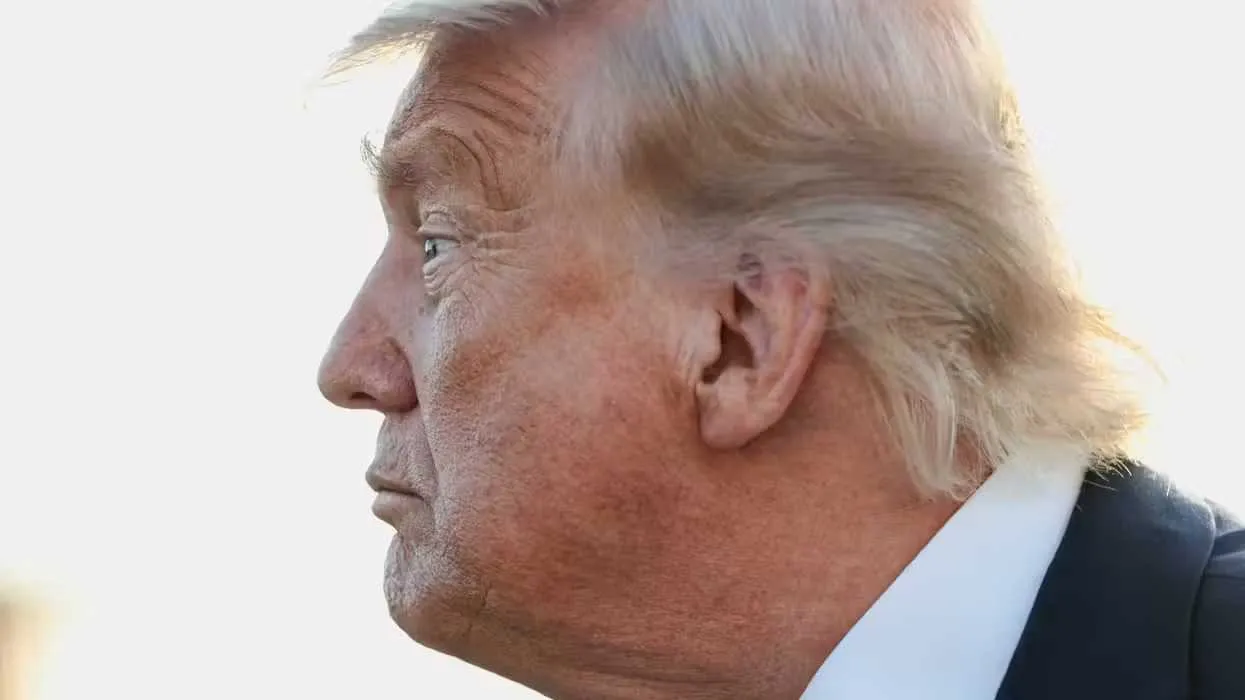
President Donald Trump's decision to scale back joint military exercises with South Korea has drawn an unusually sharp rebuke from a leading conservative publication, which argues the move "does not make sense on any level."
While criticism of Trump from Democrats is constant, full-throated dissent from conservatives is far rarer. This week, the conservative magazine National Review broke with the president, describing him as a "doddering octogenarian" and a "sucker" who was easily "fooled" into disaster.
"Alas," the magazine writes, "the president of the United States, who began his term by taking an oath to preserve, protect and defend the Constitution of the United States, so help him God, says the United States is minimizing its joint defense exercises with the South Korean military because those exercises are 'very insulting' to North Korean Supreme Leader Kim Jong-un."
Trump addressed the decision with reporters on Wednesday. "I didn't like the fact that we're doing these massive military exercises really against North Korea," he said. He noted that South Korea is not participating in the war with Iran and claimed the joint military exercise would be "very insulting to somebody that frankly has been, during my term at least, very well-behaved."
The alliance is anchored by the 1953 U.S.–South Korea Mutual Defense Treaty, and the annual drills train the combined force that pairs South Korea's military with roughly 28,500 U.S. troops stationed on the peninsula. North Korea has long condemned the exercises as rehearsals for invasion, while Washington and Seoul have described them as defensive. It is also not the first time Trump has curtailed them: after his 2018 Singapore summit with Kim Jong-un, he suspended major joint exercises as "very provocative" and "very expensive," and the allies only later resumed larger-scale drills as nuclear diplomacy with Pyongyang stalled.
"Got that?" the Review writes. "Joint U.S.–South Korean military exercises, which have occurred in some form or fashion every year since the end of the Korean War in 1953, are 'very insulting' to North Korean Supreme Leader Kim Jong-un. Oh, no! Heaven forbid that the U.S. ever insult a man who boasted a couple of years ago, 'The whole of [the United States] mainland is within the range of our nuclear strike and the nuclear button is on my office desk all the time.'"
While the president characterizes North Korea as "very well-behaved," his own administration takes a starkly different view. According to the Trump administration's 2026 National Defense Strategy, North Korea "poses a direct military threat to the Republic of Korea as well as to Japan, both of which are U.S. treaty allies," "South Korea must stay vigilant against the threat of a North Korean invasion," and North Korea's "nuclear forces are increasingly capable of threatening the U.S. Homeland. These forces are growing in size and sophistication, and they present a clear and present danger of nuclear attack on the American Homeland."
National Review senior political correspondent Jim Geraghty offered a similarly blunt assessment: "I wish I had something more optimistic to write than the fact that our president is a doddering octogenarian who just blurts out the first thing that pops into his head, and who ardently believes that dictators of hostile states are not so threatening to the U.S. and its allies because they personally flatter him. But that is where we are."
The magazine acknowledges there are valid criticisms to level against South Korea, and that the country could theoretically provide some support for the conflict with Iran. It also argues, however, that "Trump didn't consult South Korea before launching the war against Iran, which set off a major energy crisis, the biggest stock market drop in South Korean history, a huge drop in the value of the South Korean won currency, and a spike in inflation in that country." A month before launching the war, Trump announced high tariffs against the U.S. ally.
According to the Review, "If you take the most aggressive and combative stance on trade possible, you cannot be surprised that the same country you're hitting economically doesn't want to put its soldiers and sailors in harm's way to help you militarily."
In the magazine's assessment, "Trump rarely knows what he is talking about and just blurts out whatever sounds good. He is incontrovertibly wedded to a narrative that all of America's allies are useless mooching freeloaders, while he keeps getting charmed and flattered by some of the worst and most dangerous men on the planet, and downplays the threat they present to U.S. interests. He is an easy mark, a sucker, easily captivated and fooled."
The magazine closes with a grim conclusion: "The president may not intend to leave America weaker on the world stage than when he found it. But that is the course we are on, with his accumulated erratic decisions, fits of pique and spite and dumb and insulting comments."
