National Guard Members Say Trump’s D.C. Deployment Feels Exploitative
Key Takeaways
- •The D.C. National Guard deployment began after Trump declared a national emergency over crime and has lasted for a little over a year.
- •Troops were first used for trash pickup and landscaping before being shifted to presence patrols aimed at deterring crime by visible deployment.
- •Two recent studies found no meaningful reduction in violent crime, though petty theft, break-ins, and bike thefts declined slightly.
- •NPR reported at least $660 million has already been spent, and the total cost could reach about $3.4 billion if the deployment continues through Trump’s final day in office.
- •Congress cut the Washington, D.C., budget by $1.1 billion, while annual policing in the city costs about $600 million.
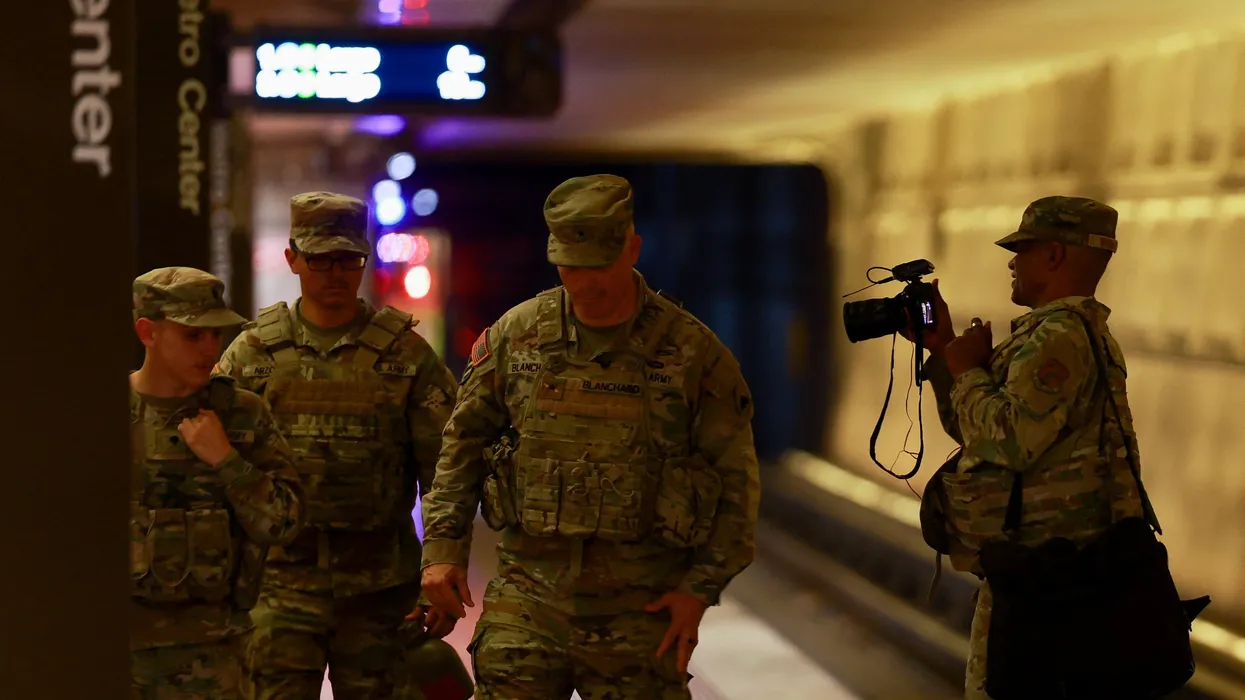
National Guard members deployed to Washington, D.C., are increasingly describing the mission as exploitation rather than service, National Public Radio reported Tuesday.
The Guard has been stationed in the capital for a little over a year as of Aug. 11, after Trump declared a national emergency over "crime." The city had reached a 30-year low in its crime rate before Trump’s troops arrived. While Trump has praised the deployment and said crime is down, Guard members remain in the city, even as questions persist about how long a domestic mission like this can continue without a clear endpoint.
"If it's safe now, then why are we here?" one Guard member told NPR. "You don't really know when good is good enough, or when we can go home. It's just a continuing thing."
PBS News reported in early August that at least $660 million had been spent so far.
Several soldiers said the extended deployment has left them disillusioned, worried about democratic norms, and concerned that the mission is eroding public trust in the Guard.
Thousands of troops have patrolled the capital since last year, making it Trump’s largest and longest military deployment ever. The mission was called "D.C. Safe and Beautiful."
In the early stages, Guard soldiers were assigned to trash pickup, leaf bagging, and landscaping. The report said volunteers found those tasks disappointing. After several reports surfaced showing soldiers gardening, they were shifted to "presence patrols." The idea was to deter crime simply by standing around.
"I know there were a lot of people that showed up from West Virginia specifically that were just like, I want to help, and then later they found out that they were taking out trash and setting up (logistical equipment). I think they later fell off mission as soon as they could get off," said the member from West Virginia.
"Now, with it being a year, it's hard to feel like that justification holds any water," said another Guard member. "It feels like the Guard is being exploited in a sense."
Another member called the deployment a "political stunt," pointing to the way the administration has inserted the Guard into specific narratives, including the "mission" of patrolling the Lincoln Memorial Reflecting Pool after the installation of a new liner was botched.
"I hope that there will be some accounting someday — probably after President Trump is gone — about why we were there, and was it worth it? But none of that is gonna happen right now," that member said.
Two recent studies found no meaningful impact on violent crime in the city. Opportunistic crimes such as petty theft, including break-ins and bike thefts, have declined slightly.
"My very initial reaction was just, I guess, shock and feeling like this context and this situation just felt like a very authoritarian move that kind of felt uncharacteristic of something you would see in our country," a D.C. Guard member told NPR.
"Walking into it, we had no real specifics," a West Virginia Guard member said. "The president is calling out the guard to make D.C. safe. Well, what the what the f—— does that mean?"
"All of these people showed up, and then it was more of an after-the-fact figure out what we're going to do," another Guard member said of Trump’s plan. The members said they have also tried to build goodwill in the community by helping people when needed. If someone overdoses on opioids, Guard soldiers have Naloxone. When a cyclist was hit by a car, Guard soldiers rushed to help.
"We can argue about why they were there and whether they should be there, but soldiers and airmen were trying to do the best with what they had," said one soldier.
Some Guard members described the assignments as "mundane" and "monotonous." One said, "At some point, I found myself going, well, at least this isn't that bad. At least I'm not doing anything illegal, and that's always counterbalanced with, like, this is wasting everyone's time." That member said the mission’s purpose was clearly "presence."
Three Guard members said they understood the appeal of the deployment in part because soldiers are paid extra while deployed and also receive a food allowance. One explained that Guard units usually deploy to places without electricity and sleep on the floor.
"The food on the mission was very good. My hotel was very nice," the soldier said, adding that the experience was very different from the inauguration deployment.
The federal government awarded a nearly $300 million contract to a company that provides furnished luxury apartments for the soldiers.
Another soldier said officials often visit to ask what the Guard needs, but never ask whether the deployment should be happening at all.
"Which is nice as a military member, but once we see what all this is going to cost in the very end, it's probably not going to feel so great," he said.
Keeping the Guard in D.C. through Trump’s final day in office will cost an additional $1.4 billion, NPR reported, citing a total cost estimate from the nonpartisan watchdog Project on Government Oversight. That estimate put the likely total at about $3.4 billion.
Congress ultimately cut the Washington, D.C., budget by $1.1 billion. For context, policing in Washington costs about $600 million annually, meaning the deployment’s total spending could have funded the D.C. police for almost six years.

