Trump's 'Human Printer': Natalie Harp and the Media Cocoon Around the President
Key Takeaways
- •President Trump suspended the White House press credentials of CNN, MS Now, and Politico on September 19, accusing the outlets of being 'fake news' and unfair to him.
- •A federal judge ordered the credentials temporarily restored, but the administration later denied CNN and MS Now access to cover Chinese President Xi Jinping's arrival at the White House the same day.
- •CNN reported that aide Natalie Harp showed Trump media clips, including a Politico graphic, before he decided to bar the three outlets from White House grounds.
- •Harp, dubbed the president's 'human printer,' supplies Trump with flattering coverage and AI-generated images, and reportedly accompanied him on a secret flight out of Turkey.
- •Despite polling around 20% in recent surveys, Trump retains strong base loyalty, with 89% approval among consistent Republicans in a July 2026 Pew survey and 96% of enthusiastic MAGA supporters saying they would vote for him again.
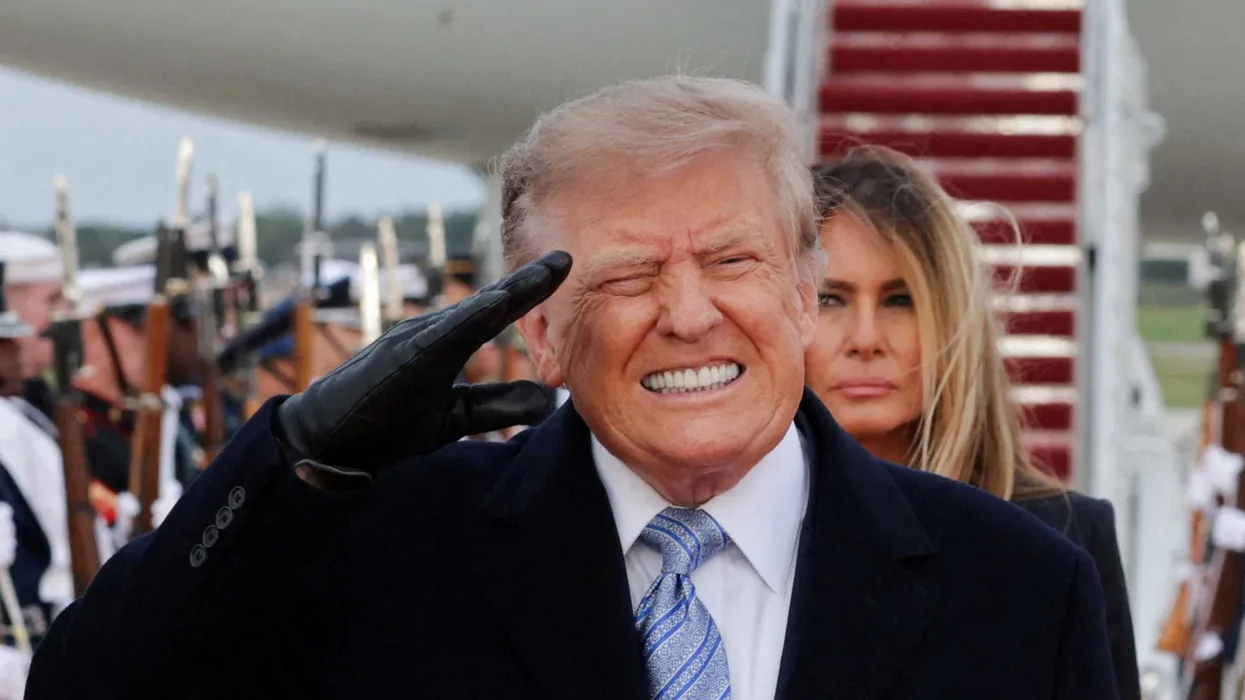
Last Saturday, President Donald Trump attended a nationally televised college football game between the Tennessee Volunteers and the Texas Longhorns before a crowd of more than 100,000 spectators. Yet at one point, according to an essay by Alternet columnist Chauncey DeVega, the president appeared more interested in his personal aide, Natalie Harp, and whatever she was showing him on her laptop than in the game itself.
Harp is the newest figure in the MAGA orbit to draw fascination and derision from the mainstream media, particularly among the liberal commentariat. She reportedly carries a bag filled with Trump's personal care items. The president's detractors have mocked her letters of devotion to Trump and the way she chases after him as he drives off in a golf cart. She was also reportedly at his side on a secret flight out of Turkey, during which members of the cabinet and the press pool served as human decoys against a potential Iranian attack on Air Force One.
Speculation about the nature of the relationship between Trump and Harp has been rampant. DeVega writes that this is largely a private matter — except to the degree that it could make the president vulnerable to manipulation or otherwise imperil the country.
The columnist says he has little interest in Harp as a person, or in the political gossip and rumor-mongering surrounding what he calls Trump's "King's Court." What concerns him is what Harp represents — and the damage he believes she and other members of that inner circle are doing to the American people and the country. The deeper and more urgent story, he argues, is not who Harp is but what she symbolizes and embodies: how does someone this close to Trump shape his thinking, his behavior, and what he does next?
Harp, the president's so-called "human printer," matters because a central part of her job is showing Trump positive and fawning stories about himself in the media. In DeVega's words, she is "like a fascist fairy keeping him cocooned in his own twisted world." That curation role is also what ties her directly to the escalating fight over press access: the same media ecosystem she mines for flattering material is the one the president has moved to lock out of the White House.
Forensic questions of this kind, he contends, have been largely avoided by the American media as an institution during what he describes as the Age of Trump and the country's collapse into fascism. The failure to consistently ask and answer them — along with "sanewashing," the practice of recasting inflammatory or unfounded rhetoric in sober, conventional political language, and other forms of normalization — is, in his view, a major part of how the era began, why it has continued, and why it has grown worse so quickly.
Trump, DeVega writes, truly believes he is perfect, if not divine, and has shown little interest in changing his policies or behavior even as his polling numbers collapse to 20% in recent surveys. One of Trump's biographers told the columnist that the president is the main character and hero in a story he is writing in real time.
The late social psychologist Robert Jay Lifton had a term for the kind of reality Trump inhabits. In a 2017 conversation with journalist Bill Moyers, Lifton described it as a "solipsistic reality":
Solipsistic reality means that the only reality he's capable of embracing has to do with his own self and the perception by and protection of his own self. And for a president to be so bound in this isolated solipsistic reality could not be more dangerous for the country and for the world. In that sense, he does what psychotics do. Psychotics engage in, or frequently engage in a view of reality based only on the self. He's not psychotic, but I think ultimately this solipsistic reality will be the source of his removal from the presidency… The American president has particular power. This makes Trump the most dangerous man in the world. He's equally dangerous because of his finger on the nuclear trigger and because of his mind ensconced in solipsistic reality. The two are a dreadful combination.
DeVega urges readers to remember that Trump commands America's nuclear arsenal and the power to destroy the world.
Consider what happened last week, the columnist writes. On Saturday, September 19, Trump suspended the White House press credentials of CNN, MS Now, and Politico, saying those outlets are "fake news" and unfair to him. White press credentials are the pass that allows reporters onto the grounds to cover the president, which makes their suspension one of the most direct levers an administration holds over coverage of it. In reality, DeVega argues, Trump wants the news media to be his partners and agents in his propaganda machine.
The courts intervened quickly. On Thursday, a federal judge ordered the administration to temporarily restore CNN, MS Now, and Politico's press credentials. The administration initially refused to allow the three outlets access to the White House, with some reporters even having their credentials confiscated. The news organizations returned to court, and the Trump administration finally complied.
But later the same day, despite the judge's order, the administration again refused CNN and MS Now access to cover Chinese President Xi Jinping's arrival at the White House for a dinner. How the judge's order is enforced at future White House events — and whether the restored outlets encounter further barriers — now stands as the immediate test of the courts' ability to police press access.
Who helped trigger Trump's decision to ban CNN, MS NOW, and Politico? DeVega's answer: Natalie Harp. CNN reported:
President Donald Trump's close aide Natalie Harp showed him clips of media coverage last week before he banned Politico, CNN and MS NOW from the White House, people familiar with the matter said. One source said a graphic from Politico was among the material that is believed to have infuriated the president and helped inform his decision to bar the three outlets from the White House grounds. The president also viewed clips from television, a second source said. Trump's pronouncement, which came after a string of setbacks in the courts and Congress, caught many advisers — including those who deal with the press on a daily basis — by surprise. Trump did not point to any particular story or tension point as the cause when asked about it later that day.
DeVega describes Trump as a master propagandist who uses AI, his Truth Social platform, and other tools to emotionally train and condition his MAGA followers — and the larger public — through disinformation, misinformation, and other authoritarian tools of distraction and chaos.
Trump's AI-generated images, the columnist writes, also offer a remarkable window into his mind. The president has repeatedly shared images depicting himself as a god or prophet like Jesus Christ, a time traveler, a mob boss, Hollywood heroes like Rocky and Superman, an evil Jedi from the Star Wars film universe, the commander of an army of AI-controlled killer robots, and himself pushing "the button" to destroy entire countries and the world with nuclear weapons.
Who is facilitating these AI-generated power fantasies? Again, DeVega's answer is Natalie Harp.
Through his words, actions, and policies, the columnist asserts, Trump has shown himself to be a racist, a bigot, and a nativist. Social scientists and other experts, he notes, have identified Trump's skill as a "conflict entrepreneur" as central to his appeal and power over his followers: he gives them permission to act on triggered feelings of white racial resentment, grievance, entitlement, and social dominance.
Who is helping Trump broadcast these values and beliefs on Truth Social and the rest of social media and the internet? Once more, DeVega's answer is Natalie Harp.
As New York Times reporters Shawn McCreesh and Maggie Haberman explain, Harp is a "sylphlike woman" who "supplies him with content she fishes out of the social media gutter (like the video he posted depicting the Obamas as apes) and provides him with a view from the world outside official Washington, of which he has always been mistrustful."
Despite his collapsing public support, Trump continues to command almost total loyalty from his base. A July 2026 Pew survey found that 89% of the most consistently Republican and conservative respondents approved of his performance. An August UMass/Amherst poll found that 96% of the most enthusiastic MAGA supporters would vote for him again.
There is a word for this, DeVega writes: a cult. And Harp embodies it.
She apparently believes that Trump is a kind of personal savior who helped heal her bone cancer. In letters obtained by The Daily Beast, Harp told Trump: "I never want to bring you anything but joy. I'm sorry I lost my focus. You are all that matters to me. I don't want to ever let you down. Thank you for being my Guardian and Protector in this Life."
She also appears to believe that she is "unworthy": "To modify a classic, 'I could not have parted with you, to anyone less worthy' — And, I will add, it is I who is unworthy."
Harp supplies Trump with what DeVega calls narcissistic fuel, is attuned to his emotional needs, and appears to be psychologically bonded to him. New York Times reporter Maggie Haberman has said that Harp's behavior is so unusual that the Secret Service shared their concerns with senior White House personnel about her close relationship with Trump.
Harp's devotion, and apparent love of Donald Trump, represents a much broader phenomenon, the columnist writes: the extraordinary emotional and psychological attachment that Trump's most diehard followers have to him and to the MAGA movement. MAGA, in his assessment, is not simply a political movement — it is a political-religious movement.
After the attempt on Trump's life in Butler, Pennsylvania, a Reuters/Ipsos poll found that 66% of Republicans believed God intervened to save him.
Trump's rallies, DeVega observes, closely resemble charismatic Christian religious tent revivals mixed with a circus or festival, where the president preaches and his most devoted followers are brought to a type of ecstasy or other transcendent experience. Many of his MAGA diehards, he writes, appear to feel most alive when they are in Trump's presence.
For those who live outside the MAGAverse and TrumpWorld — especially the mainstream media and political class — all of this may sound ridiculous and funny. In reality, DeVega insists, none of it is funny. He points to a warning from journalist Chris Hedges in a recent essay:
The buffoons who orchestrate fascism, with its quack science, idiocy, penchant for violence and grotesque hypermasculinity, are ripe for satire…. But this form of satire blinds opponents to its destructive power and murderous core. It ignores the real centers of power. It does not engender resistance.
DeVega also offers a warning from history. At the end of World War II, Germany was in ruins. Hitler's thousand-year Reich lasted twelve years; the Allies destroyed it in six. Yet, as Henrik Eberle documents in "Letters to Hitler," some Germans remained intensely loyal to Hitler even as their country was losing the war — and some continued to send him love letters.
One woman wrote to Hitler: "Sweetest love, favorite of my heart, my one and only, my dearest, myst and hottest beloved…. I could kiss you a thousand times and still not be satisfied. My love for you is endless, so tender, so hot and so complete."
In a February 27, 1945, letter reproduced in "Letters to Hitler," Friede Nögler expressed her encouragement and belief in a final victory: "Wherever I encounter people who are weak, I give them something of my own strength of faith, so that they too may become strong and confident. The results are still small, but I know that I shall continue to encounter souls here who are weak in their faith, and I shall encourage and strengthen them in the confident belief you have taught us—the belief in Final Victory, which is closer than we ourselves realize. May God help me in this!"
Hitler would commit suicide two months later.
America in 2026 is not Germany in 1945, DeVega concludes. But the echoes, he argues, are becoming much harder to ignore. People often laugh when they are terrified — and much of the laughter aimed at Trump, his "King's Court," and the MAGA movement is born, in his view, of terror rather than humor or happiness.
Chauncey DeVega is a politics and opinion writer whose work focuses on American democracy, inequality, political power, and the enduring significance of race in American society and the wider world. He was formerly a senior politics writer at Salon, and his essays and commentary have been cited by The New York Times, The Washington Post, the BBC, NPR, The Atlantic, and other leading publications. He hosts two podcasts: The Chauncey DeVega Show and The Truth Report.
Source: Chauncey DeVega, "Trump's 'human printer' and the twisted magic of the MAGA cocoon," Alternet, Sept. 29, 2026: https://www.alternet.org/trump-s-human-printer-and-the-dangerous-magic-of-the-maga-cocoon

