Nasdaq Falls 2.6% as AI Trade Worries Hit Tech Stocks; Meta Drops Nearly 7%
Key Takeaways
- •The Nasdaq Composite dropped 2.6% and the S&P 500 fell more than 1% on Thursday as concerns about AI-related spending pressured technology and semiconductor shares, while the Dow ended little changed.
- •Meta shares fell nearly 7% after quarterly results and the announcement of a 2-for-1 stock split, and Tesla traded erratically despite an earnings beat as investors weighed its higher 2027 and 2028 spending plans for Optimus, Cybercab, and Terafab.
- •CoreWeave sank 10% amid worries about debt-heavy balance sheets and the cost of capital, while Blackstone climbed 8% after giving an upbeat outlook for upcoming investment sales despite weaker third-quarter earnings.
- •Brent crude rose to $113 a barrel and West Texas Intermediate climbed to $100, lifting oil to a five-month high, after reports that the US and Israel are preparing renewed attacks on Iran and a deadly strike hit a Saudi Arabian airport and oil field.
- •Weekly jobless claims fell to 194,000, the fewest in three months, and investors now await earnings from Alphabet, Amazon, and Microsoft along with the Federal Reserve's October rate decision next week.
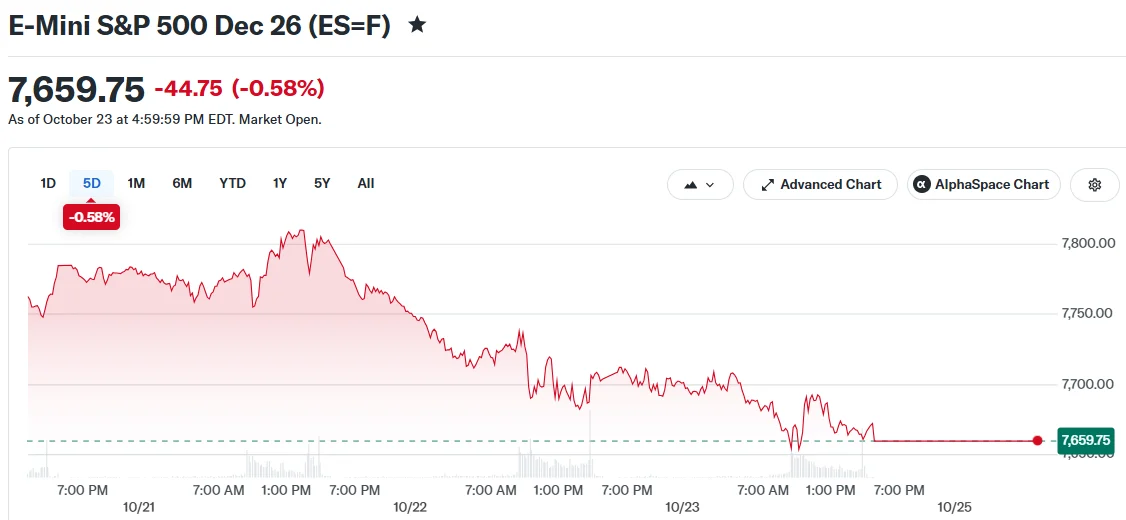
US stocks fell on Thursday as worries about the AI trade — the cluster of semiconductor, cloud, and technology stocks tied to spending on artificial intelligence — returned, with technology shares leading the decline after earnings reports from Tesla and Meta.
The S&P 500 fell more than 1%, and the Nasdaq Composite which is weighted heavily toward technology, lost 2.6%, while the Dow Jones Industrial Average was little changed. Semiconductor stocks dropped, reversing their gains from Wednesday, and investors moved into bonds, pushing Treasury yields lower, since yields fall when bond prices rise.
Company Moves on Thursday
Meta shares fell nearly 7% as investors weighed the company's quarterly results. Alongside its earnings, Meta announced a 2-for-1 stock split, a move that doubles the number of outstanding shares and halves the per-share price while leaving the company's total value unchanged.
Tesla shares were volatile after an earnings beat. Investors weighed lower capital spending planned for 2026 against higher spending in 2027 and 2028, with the later outlays covering Optimus, Cybercab, and Terafab — Tesla's humanoid robot, robotaxi, and large-scale manufacturing programs. Tesla's results did not settle investor concerns about costs.
CoreWeave, a cloud provider that rents out computing power for AI workloads, sank 10% as worries about the cost of capital returned, with concerns centered on debt-heavy balance sheets.
SpaceX stock fell, giving back more than half of its gain from Wednesday's earnings.
Blackstone, one of the world's largest alternative asset managers, climbed 8% after giving an upbeat outlook for upcoming investment sales. The firm had posted weaker third-quarter earnings because of elevated borrowing costs, and its outlook for sales drew the focus of investors.
Oil Prices and Jobs Data
A report said the US and Israel are preparing for renewed attacks on Iran after the US midterm elections. Brent crude, the international oil benchmark, rose to $113 a barrel, and West Texas Intermediate, the US benchmark, climbed to $100. A deadly attack at a Saudi Arabian airport and oil field also pushed energy prices up, and oil reached a five-month high.
Labor market data offered a counterpoint: jobless claims fell to 194,000 last week, the fewest in three months — a high-frequency gauge of layoffs that feeds into the Fed's rate deliberations.
Friday's Session and the Week Ahead
On Friday, the tech selloff took a breather. The S&P 500 slid 0.5%, and the Nasdaq Composite dropped 0.2%. The Dow fell 1.2%, or 653 points, after closing flat on Thursday. It still posted a positive weekly return, while the other two major indexes did not.
The PHLX Semiconductor Index, a widely watched gauge of chip stocks, gained 0.44% and backed off its 200-day moving average, a long-term trend line that many traders watch.
22V Research said the more large AI spenders need credit markets, the more expensive it will be for others to finance the buildout.
Attention now turns to next week, when Alphabet, Amazon, and Microsoft — three of the biggest spenders on AI data centers — will report earnings, giving investors an updated look at the capital spending behind the AI trade. The Federal Reserve will also announce its October interest rate decision, a key determinant of the borrowing costs that have been at the center of this week's cost-of-capital worries.
This article originally appeared on CoinCentral.

