Sony CEO Explains Why a $250M Ad Blitz Couldn't Save GOP's Midterm 'Box Office Bomb'
Key Takeaways
- •Elon Musk spent roughly half a billion dollars backing Republican candidates in the midterms but saw little return, with favored nominees such as Ken Paxton losing resoundingly.
- •Sony executive Rothman compared large-scale political spending without a compelling message to burning cash, drawing on Hollywood marketing wisdom that budgets cannot force an uninterested audience to engage.
- •Republicans outspent Democrats on Senate race advertising by more than a quarter of a billion dollars by late October, yet Democrats still won through a messaging advantage.
- •Rothman argued Republicans relied on outdated linear television ad blitzes in states like Texas and Ohio, while Sony's own marketing staff is now five to one in favor of digital and social media.
- •Political scientist John Kenneth White predicted a return to four-party politics, with Democrats divided between moderates and socialists and Republicans split between Trump loyalists and Reagan-style conservatives.
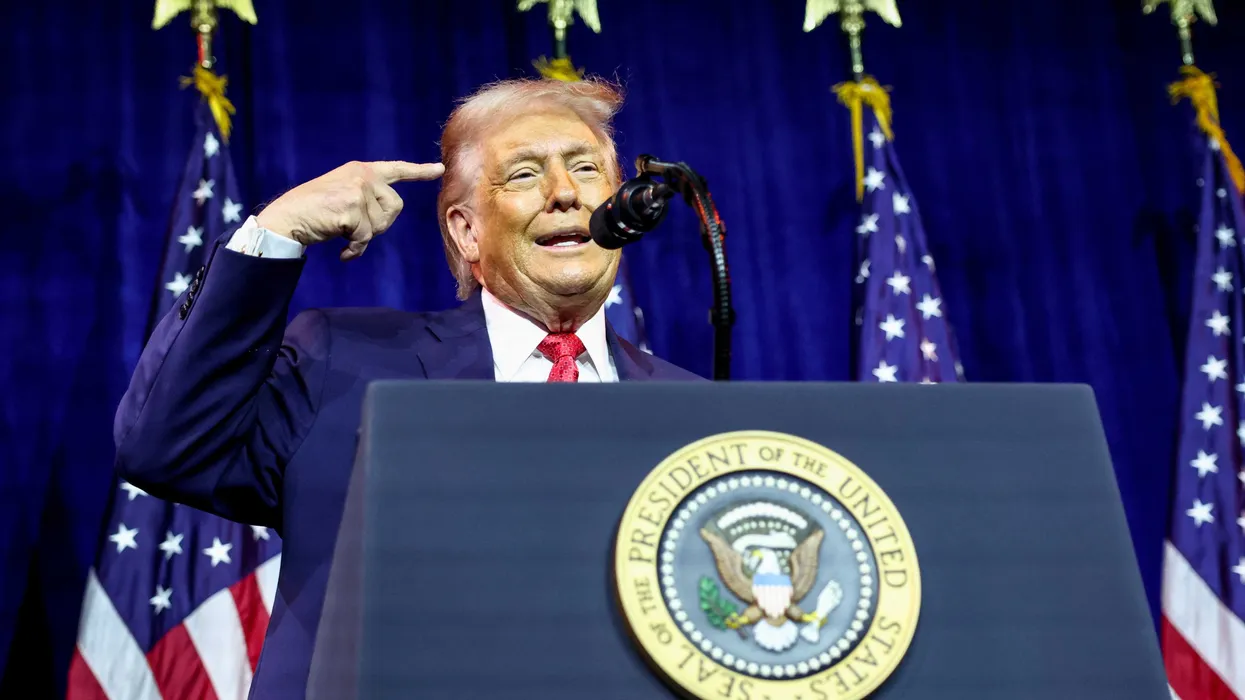
Despite pouring roughly half a billion dollars into electing Republican candidates, the world's richest man, Elon Musk, failed to see any meaningful return on his investment, with favorites like Texas Senate Republican nominee Ken Paxton losing resoundingly. According to Sony CEO Rothman, a top Hollywood film executive, that shocking outcome was actually quite predictable — in keeping with the advice of one of his industry mentors: "if they ain't coming, you can't stop 'em." The line is a piece of standard Hollywood wisdom about the limits of marketing: no promotional budget, however large, can force an audience that isn't interested to show up.
"Spending money, even tens or hundreds of millions of dollars, without a message that spurs people to action is like lighting the cash on fire," Rothman wrote in a recent article for The New York Times.
Rothman noted that Republican financial dominance had been treated for months as Democrats' biggest threat. "For months, we'd heard how the overwhelming Republican money advantage was the greatest risk in an otherwise favorable environment for Democrats, with Republicans outspending Democrats on ads by late October by more than a quarter of a billion dollars in the Senate races alone," he argued. Yet despite that spending edge, he pointed out that Democrats beat Republicans with their messaging advantage.
"The midterms felt like a festival of feel-good Hollywood genres: Underdog, sports story-type triumphs were everywhere (Annie Andrews in South Carolina; Abdul El-Sayed in Michigan)," Rothman argued. "Other races felt like dramas about the unmatched power of community, like Gina Hinojosa in Texas, or nail-biting thrillers, with Julia Letlow narrowly elected to become the first Republican woman to represent Louisiana in the Senate and Mary Peltola pulling out a victory in Alaska. (One of Peltola's campaign slogans was a locally resonant alliterative tagline any movie marketer would envy: 'Fish, Family, Freedom.')"
He also accused Republicans of relying on outdated methods of reaching audiences, arguing that Democrats, by contrast, seemed better attuned to meeting voters where they live. The distinction, in his telling, is less about ideology than about where attention now lives — a shift his own industry has already reorganized around.
"Both parties aired TV ads this election cycle, but Republicans relied on a traditional heavy linear TV blitz in Texas and Ohio — an approach that went out with the answering machine," Rothman wrote. "At Sony, we now have five marketing employees working in digital and social mediums around the world for every one working in legacy media. Anyone who watched either the Ohio State or University of Texas football games on the Saturday before the election was inundated with negative ads on Sherrod Brown and James Talarico. Both candidates, now senators-elect, easily covered the spread." The staffing ratio he cites is his shorthand for how far audience attention has moved from scheduled broadcasts toward digital and social platforms — and for why ad buys aimed at the former may no longer reach the voters they target.
While Trump has vacillated since his midterm setbacks between denial and rage, Republicans and Democrats have evolved ideologically to adjust to the new post-midterm reality.
"We are about to return to four-party politics," John Kenneth White, professor emeritus of political science at The Catholic University, recently wrote for The Hill. "Back in the 1960s, political scientist James MacGregor Burns described what he saw as a four-party politics that defined his era. Today's new four-party politics has Democrats split between moderates who were the majority-makers in 2026 and the socialists who want an even bigger government. On the other side of the aisle, there are the remaining Trump Republicans, whose loyalty to the president is bonded by a superglue, and the Reagan Republicans looking back to traditional conservative principles." Where Rothman reads the results through a marketer's lens, White reads them through ideology — and his four-party frame points to contests inside each coalition becoming as central to what comes next as the races between the parties themselves.

