Elon Musk's Heated Economist Interview and Tim Martin's FT Rebuke Illustrate Two Approaches to Media Criticism
Key Takeaways
- •During his interview with the Economist, Musk predicted that AI could eliminate the need for human labor within a decade and expressed support for European alt-right parties such as Rupert Lowe's Restore.
- •Musk confronted Minton Beddoes by claiming the public hates the media more than they hate him, while she conceded that journalism has made mistakes rather than forcefully defending the profession.
- •Declining public trust in news media across Western democracies has been documented over multiple years by the Reuters Institute Digital News Report, complicating outright dismissal of Musk's criticisms.
- •JD Wetherspoon chairman Tim Martin used the company's publicly available financial disclosures to systematically refute a Financial Times article that described Wetherspoon pubs as grotty and overstated fruit machine revenue.
- •The article contrasts Musk's emotional personal attack on the media with Martin's methodical, evidence-based rebuttal of inaccurate reporting.
- •The two media criticism episodes highlight the difference between unsubstantiated broadsides and effective, data-grounded challenges to press coverage.
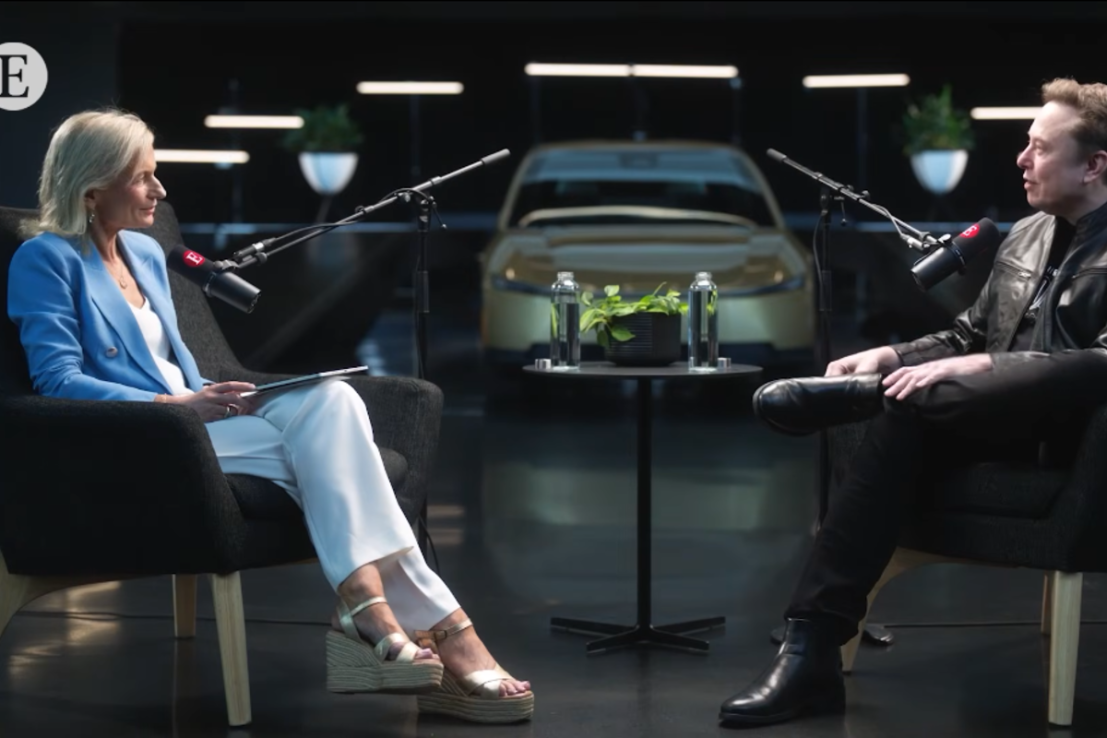
Elon Musk sat down for a wide-ranging 90-minute interview with Economist editor-in-chief Zanny Minton Beddoes, covering topics from artificial intelligence to European politics before devolving into a confrontation about the press.
The interview opened with Musk's predictions about the future of AI — predictions that ranged from thought-provoking to alarming. Some of his forecasts, such as the idea that humanity may never need to work again within a decade, struck many listeners as far-fetched, though dismissing Musk's prognostications outright has historically proven unwise.
Before long, however, the conversation shifted to considerably more contentious territory. Heated exchanges erupted over Musk's expressed support for European parties aligned with the alt-right, including Rupert Lowe's Restore, as well as his assertion that the UK would eventually descend into civil war driven by Islam. Musk's hostility toward mainstream media has been a recurring theme, particularly since his 2022 acquisition of X, formerly Twitter, a platform he has used to amplify criticism of traditional news organizations.
Pressed on these claims, an evidently exasperated Musk turned the tables on Minton Beddoes: "I think a lot more people hate you and the media more than you realise. Do you realise that the media is despised?"
"The shoe is on the other foot – they hate you. They hate you far more than they hate me," Musk continued.
Minton Beddoes maintained her composure throughout the exchange but declined to mount a robust defence of journalism or her colleagues. Instead, she conceded that the media had made "mistakes" and sought areas of common ground with Musk on various points. Her measured response comes against a backdrop of declining public trust in news media across Western democracies, a trend documented over multiple years by the Reuters Institute Digital News Report — context that complicates simple dismissal of Musk's charges even when his specific assertions lack substantiation.
While Musk's broadside against the media drew criticism, there are unquestionably instances where press criticism is both warranted and effectively delivered. One notable example this week came from JD Wetherspoon chairman Tim Martin, who pushed back against a Financial Times article that described Wetherspoon pubs as "grotty" and claimed the company earned more revenue from fruit machines than from food. Wetherspoon operates approximately 800 pubs across the UK and is publicly traded on the London Stock Exchange, making its financial disclosures a matter of public record — a fact Martin leveraged to full effect.
"You don't need to be J.K. Galbraith, Milton Friedman, or even Rachel Reeves, to regard this as voodoo economics," Martin said, before systematically dissecting the article's claims.
Referencing previous instances in which he had challenged Financial Times commentary, Martin concluded: "At the risk of immodesty, I'm pleased to say that this fruit machine debate makes it three-nil to Timbo."
The two episodes stand as a study in contrasts: one an emotional personal attack, the other a methodical, point-by-point rebuttal grounded in financial data.

