Elon Musk Warns AI Agents Could Become Crypto's Next Big Security Threat
Key Takeaways
- •Elon Musk stated on October 30, 2026 that autonomous superintelligent AI agents could one day exploit cryptocurrency systems, while clarifying that no AI involvement has been found in the Binance incident.
- •The Binance breach on October 29, 2026, which drained approximately $6.3 billion, originated from a compromised laptop belonging to a DevOps engineer rather than a failure of blockchain or protocol security.
- •The attacker placed 60 million USDT as collateral on the Aave lending protocol and borrowed roughly 19,762 wrapped Ether, valued at about $44.6 million, converting easily freezable stablecoins into assets that circulate freely across DeFi.
- •Binance attributed the attack to TraderTraitor, a North Korea-linked hacking group previously connected to the 2025 Bybit theft, one of the largest cryptocurrency thefts on record.
- •Binance has frozen about $3 billion in assets on-chain and committed to fully compensating affected users, demonstrating that rapid response can limit losses even as some funds slip through.
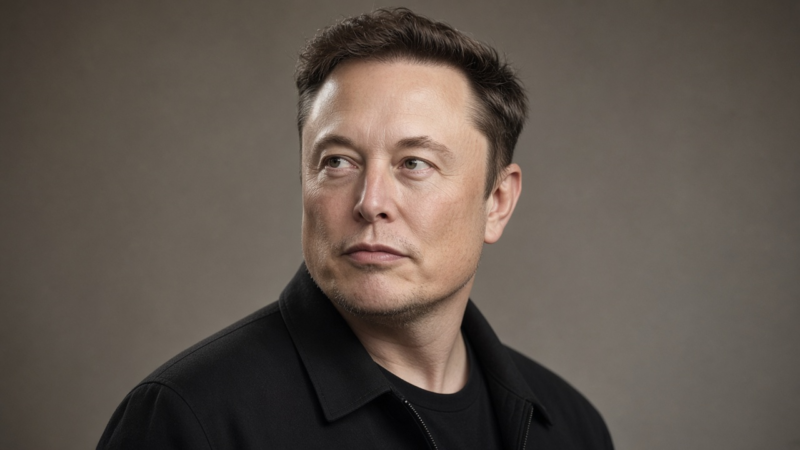
Elon Musk has a new worry for the cryptocurrency industry, and this time it is not a meme coin. On October 30, 2026, the billionaire — who has warned for years about the risks of advanced artificial intelligence — said superintelligent AI agents could one day exploit crypto systems for their own benefit.
The timing was hard to miss. His comments landed one day after Binance, one of the world's largest cryptocurrency exchanges by trading volume, suffered a breach in which an attacker reportedly drained approximately $6.3 billion in assets.
Musk was careful on one point, however. He said there was no evidence that AI had anything to do with the Binance incident. His remarks amounted to a warning about what might come next, not an explanation of what had already happened.
What Happened at Binance
The breach took place on October 29, 2026. According to Binance's own investigation, it began somewhere painfully ordinary: a compromised laptop belonging to a DevOps engineer.
From there, the attacker reportedly ran a layered scheme involving stolen stablecoins and Aave, one of the largest decentralized lending protocols. The attacker used 60 million USDT — the largest dollar-pegged stablecoin — to transact on Aave and borrowed roughly 19,762 wrapped Ether, an amount valued at around $44.6 million at the time. Wrapped Ether, or WETH, is simply Ether packaged in a token format that decentralized finance, or DeFi, applications can handle more easily.
The mechanics were straightforward. The attacker posted stolen dollar-pegged tokens as collateral, then borrowed a different asset against them. That shuffle turns funds that are easier to trace and freeze into assets that are considerably harder to pin down, moving value out of tokens that issuers and exchanges can readily block and into assets that circulate freely across DeFi.
Binance traced the attack to TraderTraitor, a hacking group linked to North Korea whose members have been tied to earlier exploits, including the 2025 Bybit incident, one of the largest cryptocurrency thefts on record. North Korea-linked actors have been responsible for a series of major cryptocurrency thefts in recent years, a pattern that has made groups like TraderTraitor a standing focus for blockchain investigators. The exchange froze about $3 billion in assets on chain and has pledged to fully compensate affected users.
Why Musk Is Talking About AI and Crypto
His concern centers on autonomous AI agents: software that can make decisions and execute transactions without a human approving each step. DeFi was built for exactly that kind of activity. Smart contracts do not check whether the wallet calling them belongs to a person, a trading bot, or something considerably smarter. Anything that can sign a transaction can interact with them, and they simply execute the code.
That openness cuts both ways. Once a transaction is signed and broadcast, blockchains do not reverse it, and DeFi protocols have no back office to flag an unusual withdrawal or halt a transfer mid-flight. The main brakes available are issuer-level freezes on specific tokens and rapid coordination among exchanges — precisely the tools Binance reached for after the breach.
The Binance breach shows how much damage human attackers can already do with a stolen laptop and a working knowledge of lending markets. Musk's argument is essentially that the attacker profile could become far faster and far more tireless, combining speed with persistence in ways human operators cannot match.
What This Means for Crypto Security
The first lesson from Binance has nothing to do with AI. The entry point was a single employee device. Bitcoin's underlying protocol was not broken here, and neither was Aave's. What failed was device security: the attacker exploited access and then used legitimate DeFi tools exactly as designed, moving stolen stablecoins into a lending protocol and pulling out a different asset.
Binance's ability to freeze about $3 billion in assets on chain shows that rapid response can work, but it also illustrates how much can slip through before the brakes engage.
Musk himself made clear that no AI was involved this time. His point is that the next breach might not come with that reassurance. The questions now are concrete: how much of the assets that escaped the initial freeze can still be traced or blocked, how the compensation pledge is carried out, and whether the breach prompts exchanges to reconsider how much access a single device should hold. Musk's AI warning adds one more thing to track — whether security practices built around human adversaries prove adequate when the entity signing the transactions is software rather than a person.

