Alternet Columnist Argues Mueller's 2019 Statement Should Have Ended Trump's Career
Key Takeaways
- •The column centers on Mueller's May 29, 2019, statement that his office would have said so if it had confidence the president clearly did not commit a crime, delivered weeks after his 448-page report.
- •Stephens highlights Mueller's public complaint that Attorney General William Barr's handling of the report did not adequately represent its findings, alongside Justice Department policy barring federal charges against a sitting president.
- •The columnist argues the judicial system declined to hold Trump accountable for the January 6, 2021, Capitol attack, criticizing then-Attorney General Merrick Garland for not pursuing prosecution.
- •Stephens cites the lifting of sanctions on Putin and reported White House-originated limits on SpaceX's Starshield service to Ukraine as evidence Trump is threatening Ukraine's independence while siding with Putin.
- •The piece concludes with the author's demand that Trump be jailed and his characterization of Trump as an enemy of the American people, presented as opinion rather than a new legal determination.
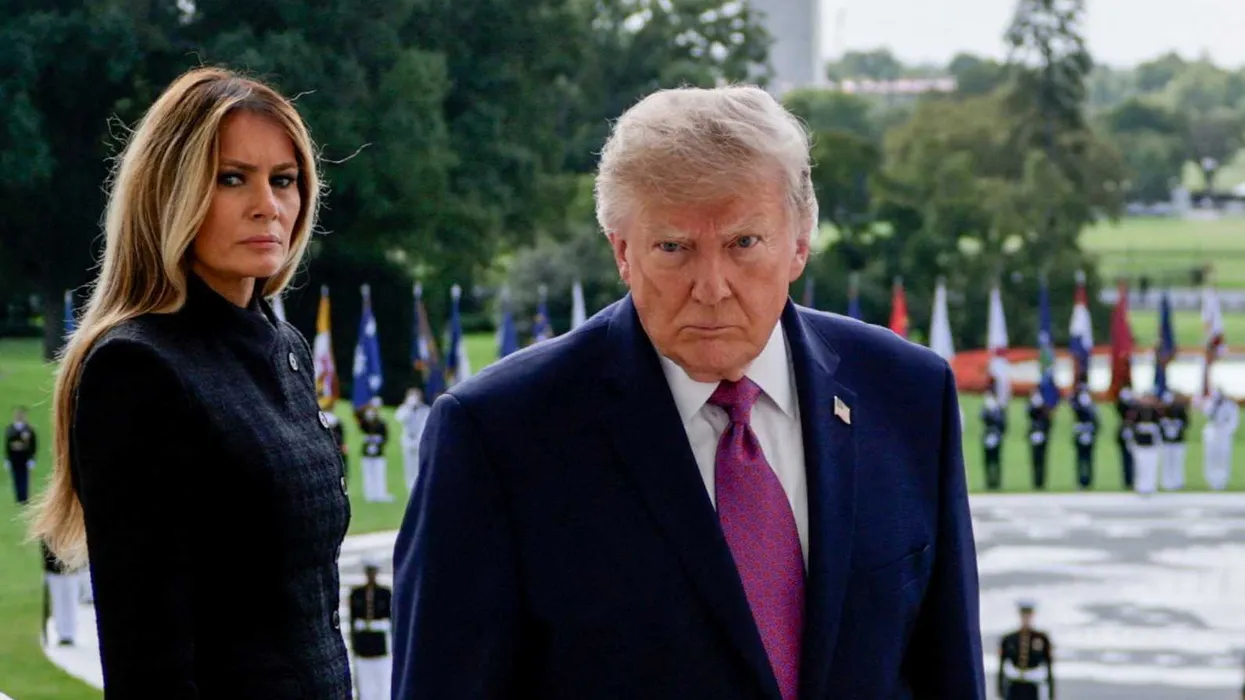
A new opinion column published by Alternet argues that a single sentence from Special Counsel Robert Mueller's May 29, 2019, public statement should have ended Donald Trump's political career — and that the years since, from the January 6, 2021, Capitol attack to the current stage of the Russia-Ukraine war, have only sharpened the author's case.
The piece presents columnist D. Earl Stephens's interpretation of Mueller's statement and subsequent events; it is an opinion argument rather than a new report from Mueller or a new legal finding.
“If we had had confidence that the president clearly did not commit a crime, we would have said so,” Mueller, a Republican, said at the time, speaking weeks after the submission of his 448-page report examining Trump's relationship with Vladimir Putin's Russia. His remarks drew wide coverage, including from AP News.
Columnist D. Earl Stephens, a veteran journalist and author, writes that those words should stand as the only part of the Mueller Report worth remembering, describing its findings on Trump's ties to Russia in the lead-up to the 2016 election as showing the then-candidate “knee-deep” in Russian involvement. He notes that Trump had openly asked for Putin's help during that campaign — “Russia if yer listening …” — in a bid to defeat Hillary Clinton, the rival who had labeled him “Putin's puppet” on the trail. “Russia was listening alright,” Stephens writes.
According to the column, everything Mueller said that day had already been drowned out six weeks earlier by Trump, echoed by then-Attorney General William Barr and by a mainstream media that Stephens says was all too willing to accept the line that the entire matter was “a hoax.”
While Stephens writes that he would have preferred Mueller to be more direct in “nailing Trump for his high crimes,” he highlights Mueller's public complaint that Barr's handling of the report “did not adequately represent his findings,” as well as Mueller's explanation that “under longstanding department policy, a president cannot be charged with a federal crime while he is in office. That is unconstitutional. Even if the charge is kept under seal and hidden from public view, that, too, is prohibited.”
In Stephens's reading, Mueller was signaling to Congress — “without actually telling Congress” — that there was more than enough potential criminality by Trump to proceed with indictments. “But nothing happened,” he writes, calling the episode the most galling example to date of how readily Americans and their representatives will go along with anything, “even if it threatens everything.”
Stephens next turns to January 6, 2021, writing that the judicial system “asked the world to hold its beer yet again” by refusing to punish and jail Trump for what he describes as a violent attack on the country, carried out as Trump sought to overturn an election he lost by more than seven million votes. He contends that Merrick Garland, a Democratic-appointed attorney general, “cleared the stacked deck against Trump, and let him wriggle free from prosecution.”
From there, the column moves to the present day. Writing as the country, in his words, closes in on “what might be the country's last free and fair election,” Stephens argues that Trump and Putin are aligned once again — “this time as fast friends” — and are working to crush America's allies, beginning with Volodymyr Zelenskyy's Ukraine, which he portrays as fighting heroically on the frontlines defending democracy around the world.
He notes that Trump said 53 times on the 2024 campaign trail that he could end the Russia-Ukraine war in one day if elected — a claim examined by CNN's fact-checkers. In Stephens's view, Trump has instead “once again taken the side of Putin” and is “actively threatening Ukraine's independence,” an outcome, he writes, that surprised nobody who had been paying attention.
Stephens argues that Trump has never said a negative word about Putin, whom he calls his “Russian puppet master,” and points to Trump's defense of the Russian leader at the time of the invasion of Ukraine, when Trump depicted the attack as “genius” and “savvy.” He also recalls Trump's 2018 trip to Helsinki, Finland — a meeting, he writes, that took place with the knowledge that Putin had attacked the 2016 election. Emerging from a closed-door session, Stephens writes, Trump delivered what he calls a “gruesome, weak display of subserviency,” telling reporters: “President Putin says it's not Russia. I don't see any reason why it would be …”
Those words, Stephens argues, “should have been the last things Trump ever said in public office.” Instead, in his view, Trump again escaped consequence under cover from a Republican Party that “believes in nothing but holding power,” and one he says “will pledge allegiance to any flag featuring the colors red, white and blue, especially if it's Russian.”
The column's sharpest accusations concern Trump's current conduct, which Stephens says “should close the case on his treason.” He cites the lifting of sanctions on Putin; the disruption of crucial satellite systems used by Ukraine for battlefield communications and drone operations — a reference to Reuters reporting that the order limiting SpaceX's Starshield service to Ukraine came from inside the White House; and the pushing of Ukraine toward surrender to Putin.
According to Stephens, Trump “is no longer even bothering to hide his contempt for Democracy, and his love of Mother Russia,” and is siding with a country that “wants to diminish us, and break us in two” — a development, he writes, that would have been impossible to imagine a decade ago.
In closing, Stephens writes that he is no longer interested in why Trump behaves this way, pointing to what he describes as Trump's falsification of bank records, his abuse of women and “potentially little girls,” habitual lying, the poisoning of air and water, and the emptying of taxpayers' wallets for personal gain. His interest, he says, lies only in seeing Trump “jailed for his ongoing crimes against America and humanity.”
“It is long past time this is said as fact: Donald Trump is an enemy of the American people,” Stephens writes, calling Trump “a serial liar, a crook, a felon, a coward, a draft-dodger and a traitor.” In his view, Trump is guilty of treason and a range of other crimes not because critics say so, but “because he is showing us he is.” The column ends with a two-word demand: “Lock him up.”
Stephens is the author of Toxic Tales: A Caustic Collection of Donald J. Trump's Very Important Letters and an award-winning journalist who headed newsrooms and worked as a newspaper reporter for decades. His work is collected at his Substack. The original column appears on Alternet.

