MTN Nigeria Posts ₦3 Trillion Revenue in H1 2026, but Fintech Segment Faces Headwinds
Key Takeaways
- •Data revenue climbed 38.4% year-on-year to ₦1.7 trillion, accounting for well over half of MTN Nigeria's total service revenue and driven by rising smartphone penetration reaching 66%.
- •MTN Nigeria's fintech segment revenue declined 7% due to the suspension of NCC-regulated lending services, even as MoMo mobile money revenue surged approximately 132% and active wallets grew to 5 million.
- •The company fully repaid all foreign currency loans during the period, swinging from a ₦5.2 billion foreign exchange loss in the prior half-year to a ₦36.4 billion gain.
- •MTN Nigeria plans to reduce its mobile money ownership stake to 40%, transferring 60% to MTN Group Fintech, though the structural separation remains subject to regulatory approval and no timeline was provided.
- •Total capital expenditure since January 2025 exceeded ₦1.6 trillion, financed entirely from operating cash flow rather than debt, despite persistent infrastructure disruptions from fibre vandalism and site access disputes.
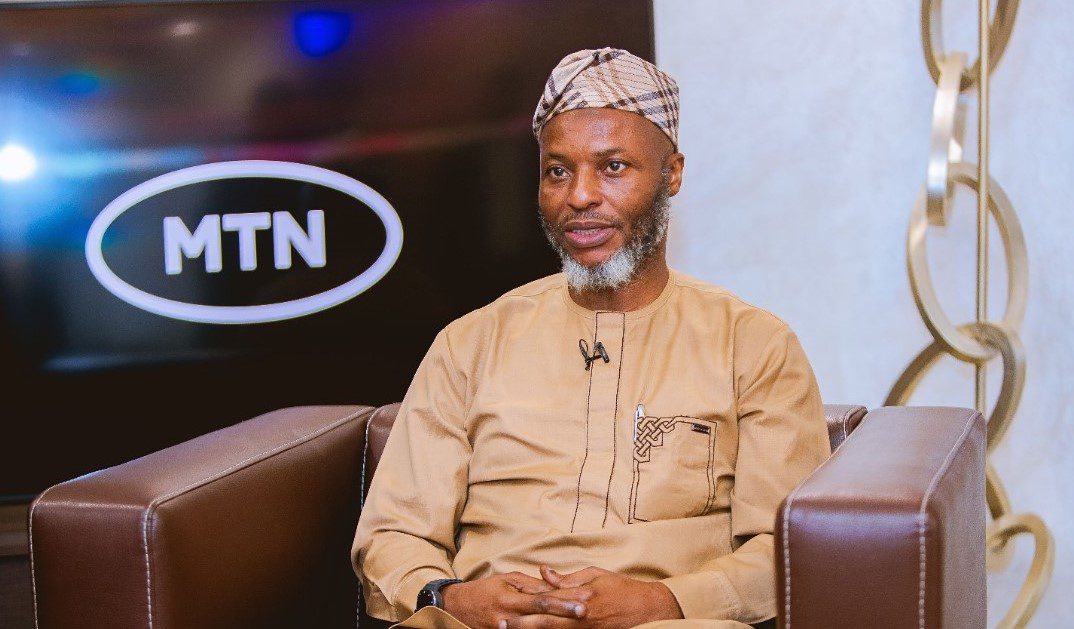
MTN Nigeria, the largest mobile operator in Africa's most populous country, reported half-year 2026 financial results that paint a picture of a company emerging from an extended period of currency volatility and cost pressures. The results come against the backdrop of Nigeria's ongoing macroeconomic reform programme, which began in 2023 with the removal of a long-standing fuel subsidy and the floatation of the naira — policy shifts that triggered double-digit inflation and sharply higher operating costs across virtually every sector of the economy. Yet the details Chief Financial Officer Modupe Kadri shared in a recent interview reveal a more nuanced reality than the headline numbers suggest.
Service revenue rose 25.9% to ₦3 trillion, profit after tax jumped 70.6% to ₦707.5 billion, and the board approved a ₦26 interim dividend. However, Kadri cautioned against overinterpreting the topline figure, emphasizing that revenue is not equivalent to profit. The more meaningful story, he argued, lies in how the company has deployed the capital it generated. MTN Nigeria had previously reported these results in line with its independently filed disclosures.
Data Drives the Growth
Data revenue was the primary engine behind the half-year performance. At ₦1.7 trillion, it climbed 38.4% year-on-year and now represents well over half of total service revenue. Voice revenue posted a comparatively modest 12% increase, while digital services — encompassing video, music, gaming, and e-commerce — grew 20.9%.
Kadri attributed the data surge to demographics and user behavior rather than pricing power. MTN Nigeria's subscriber base reached 92.2 million, with smartphone penetration rising to 66% from under 55% a year earlier. The average subscriber uses roughly 15 gigabytes of data per month at a cost of about ₦170 per day, or approximately ₦5,000 for that monthly allowance — a framing Kadri used to contextualize the ₦3 trillion headline figure and counter perceptions that the operator is overcharging customers already strained by inflation. Nigeria's median age of roughly 18 years and a rapidly urbanizing population of over 220 million underpin the structural demand for mobile data that operators like MTN, alongside competitors Airtel, Globacom, and 9mobile, are competing to capture.
Fintech: A Mixed Picture
The fintech segment told a markedly different story. Revenue from that division declined 7% during the period, a drop Kadri attributed directly to the suspension of MTN's NCC-regulated lending services for most of the half under review. The service was only partially restored during the period.
This contraction complicates the narrative of fintech as MTN's next major growth driver, even as the underlying mobile money business continued to expand. MoMo revenue surged approximately 132%, and active wallets grew by 1.3 million to reach 5 million, according to the company's own disclosures. The growth in mobile wallets comes as Nigeria's digital payments ecosystem continues to deepen, with the Central Bank of Nigeria reporting sustained increases in electronic payment transaction volumes across the banking sector.
The divergence between a shrinking regulated lending line and a rapidly expanding wallet base suggests that MTN's fintech operations are not a monolithic business but several distinct units advancing at different speeds — a critical distinction for anyone attempting to value the entity MTN plans to spin off.
Structural Separation of Fintech
That spin-off remains the more consequential fintech development than any single quarter's results. Kadri confirmed that MTN Nigeria intends to reduce its ownership stake in the mobile money entity to 40%, transferring 60% to MTN Group Fintech — the Johannesburg-headquartered parent's financial services arm, which oversees mobile money operations across multiple African markets. He characterized the move as a capital allocation decision rather than a retreat, with the telecom business maintaining its focus on connectivity while the group's fintech arm invests more aggressively in the wallet product.
Kadri was careful to distinguish this structural separation from an eventual public listing, which he said remains undecided. The separation, still pending regulatory approval following shareholder sign-off, would position MTN's financial services business to be evaluated independently for the first time — apart from the network economics that currently absorb the majority of its capital. Further analysis on MTN's mobile money performance is available here.
Managing Costs in an Inflationary Environment
Costs rose across the board, consistent with an economy where nearly all inputs became more expensive. Kadri cited energy costs increasing 50% to 80% year-on-year, diesel prices up nearly 80%, and intra-city transport fares rising approximately 24% according to National Bureau of Statistics (NBS) data. He argued that MTN's own cost growth actually trailed the broader inflation the industry is absorbing. Nigeria's headline inflation rate has remained elevated since the 2023 reforms, with the NBS consistently reporting year-on-year rates above 30% through much of the period.
Total expenses climbed 12% to ₦1.3 trillion, with cost of sales up 14% and operating expenses up 11% — both running below the 26% top-line growth. The company renegotiated tower contracts after flagging the initiative at its Extraordinary General Meeting (EGM), producing savings reflected in improved expense ratios.
Net finance costs declined 20%, which Kadri linked to a specific decision: MTN Nigeria fully repaid its foreign currency loans, eliminating all forex-denominated debt. The company's remaining naira bonds carry sub-14% average interest rates, secured when market conditions were favorable. A more stable naira — closing the half at approximately ₦1,380 to the dollar compared to ₦1,530 a year earlier — further compounded these savings by reducing lease-related finance charges. The result was a swing from a ₦5.2 billion foreign exchange loss in H1 2025 to a ₦36.4 billion gain this half.
Capital Expenditure and Operational Challenges
On capital expenditure, Kadri pushed back firmly against the notion that MTN is extracting value without reinvesting. He placed total spending since January 2025 at over ₦1.6 trillion, financed entirely from operating cash flow rather than debt — split roughly between ₦1 trillion last year and ₦600 billion in the current half alone. Reported capex excluding leases came in at ₦620.5 billion for the half, up modestly, even as total capex including leases fell 19%. Kadri used this distinction to argue that headline capex declines mask continued network investment.
He was equally direct about what that spending cannot resolve: fibre vandalism, landlords locking network sites over disputes with tower companies, and other disruptions he described as largely beyond MTN's control. These issues, he said, explain why service quality complaints persist despite the substantial investment. Infrastructure attacks on telecom facilities have been a recurring challenge across Nigeria, with industry groups documenting hundreds of incidents annually.
Tariffs and Competition
On the tariff question, Kadri offered a measured response. He refrained from calling directly for higher prices, instead pointing to the ongoing NCC cost study as the appropriate mechanism for establishing fair, cost-reflective tariffs. He invoked the Minister of Power's recent statements on ending electricity subsidies as an analogy for why current pricing models may be unsustainable. Nigeria's telecom tariffs have remained among the lowest on the continent, a legacy of the competitive market structure that took shape after the country's 2001 liberalization of the sector.
Regarding competition, Kadri welcomed new entrants in principle but qualified that stance around operational obligations. He noted that MVNOs and national roaming operators recently licensed by the NCC still depend on MTN's own infrastructure — a detail that complicates the premise that these new players represent a genuine structural check on MTN's market position in the near term.
Filing Verification and Unanswered Questions
Measured against MTN's independently filed results, Kadri's framing holds up numerically but is more selective on causation. MTN's own filings confirm the 25.9% service revenue growth, the ₦707.5 billion profit after tax, the 92.2 million subscriber base, and EBITDA margin expansion to 55.9%. Notably, one detail Kadri did not address in the interview: underlying service revenue growth, excluding the suspended lending product, was actually 27.3% — meaning the fintech suspension flattered rather than dragged the headline telecom figure, even as it hurt the fintech segment specifically.
Kadri offered a specific figure for his revenue-versus-profit argument: for every naira of revenue, approximately 24 kobo reaches shareholders as distributable profit. He also raised the tax dimension of the interim dividend unprompted, noting that 10% of shareholder payouts return to the government as tax, on top of the over ₦600 billion MTN already pays in taxes and NCC levies.
What the interview leaves unresolved is timing. Kadri provided no date for the fintech spin-off's regulatory approval, no commitment on when tariff adjustments might follow the NCC's cost study, and no specifics on how MTN plans to address the site lockouts and fibre vandalism that continue to undermine its investment narrative. For a company reporting its strongest half-year performance in years, the most consequential developments may still be the ones pending.

