10 decisive moments in MTN Nigeria’s 25-year history
Key Takeaways
- •MTN Nigeria entered the market in 2001 after paying $285 million for a licence and completed its first test call in Lagos before launch.
- •The company introduced per-second billing in December 2003 after Globacom launched the service earlier that year.
- •In 2015, the NCC fined MTN Nigeria ₦1.04 trillion for failing to disconnect 5.2 million unregistered SIM cards, but the penalty was later reduced to a $1.67 billion settlement payable over three years.
- •MTN Nigeria listed on the Nigerian Stock Exchange in 2019 and became the first telecom operator to do so.
- •The company expanded into digital finance, fibre broadband, and data infrastructure, including YDFS, MoMo PSB, FibreX, and the Dabengwa data centre.
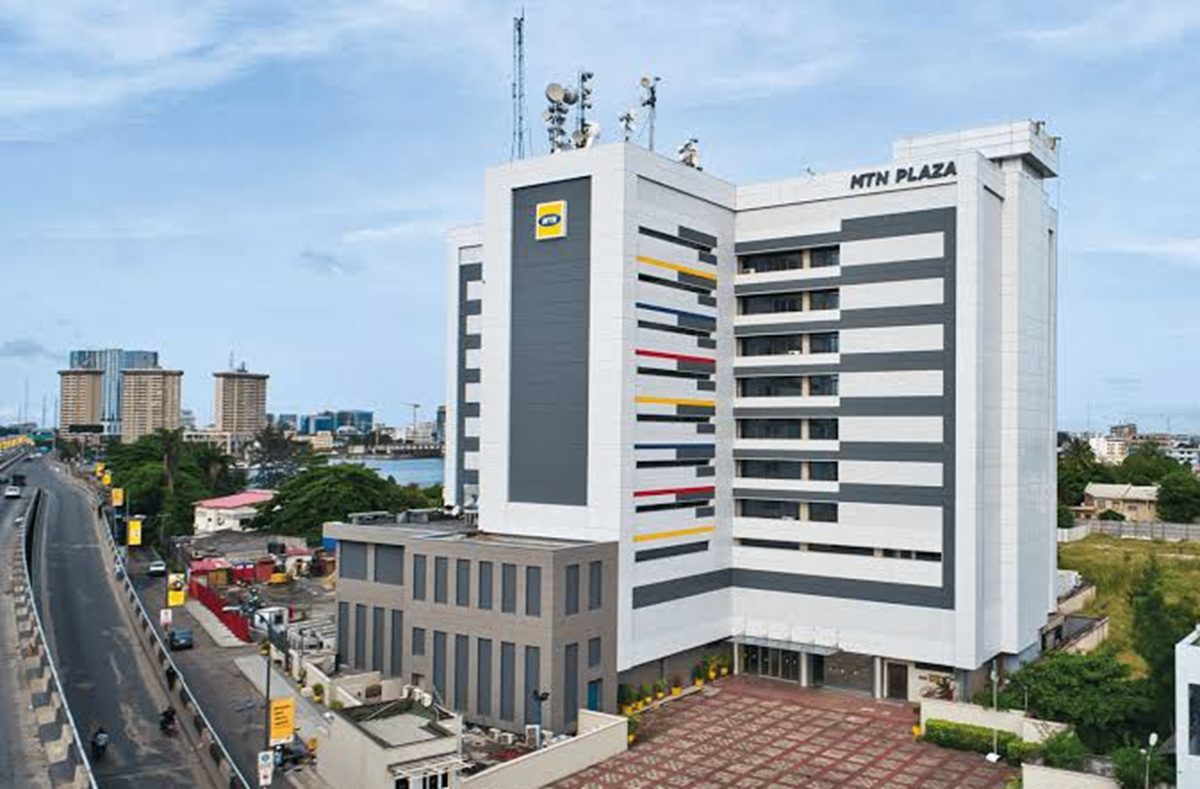
When MTN Nigeria completed its first test call at Maritime House in Apapa, Lagos, in May 2001, few could have predicted that a single network would go on to reshape Nigerian digital life, culture, and connectivity.
Twenty-five years later, the telecom giant has evolved from a telecommunications provider into a central pillar of Nigeria’s mobile connectivity. Along the way, it adapted to cultural shifts that made Nigerians’ voice and data usage story distinctive.
MTN Nigeria’s rise to more than 90 million subscribers was driven by risky decisions, continuous innovation, and marketing strategy. It also faced a regulatory challenge that nearly forced it out of the Nigerian telecoms industry.
In no particular order, here are 10 decisive moments that shaped MTN Nigeria’s 25-year journey, from a $285 million entry into the market to its expanding digital capabilities.
1. A costly entry into Nigeria’s telecom market
At a time when Nigerians still relied heavily on telephone services and NITEL’s weak and expensive network for calls, the possibility of easier voice communication seemed remote. The Nigerian Telecommunications Policy 2000 opened the door to a broader telecom market and made that transformation possible.
The scale of the gap was extraordinary: Nigeria had fewer than 500,000 working phone lines for a population of over 100 million, and early SIM packs sold for around ₦20,000, placing mobile service far beyond the reach of most Nigerians.
But entering Nigeria came at a steep cost for MTN.
The company paid $285 million for a license and had 90 days to prepare its facilities before launch. MTN, alongside Econet (now Airtel) and MTEL, NITEL’s mobile service arm, had to move quickly. The opportunity was significant, but failure to launch on time would have meant losing a major investment.
On May 6, 2001, Strive Masiyiwa, chairman of Econet Wireless (now Airtel), made the first Nigerian call to the Nigerian Communications Commission (NCC). Ten days later, MTN Nigeria completed its first test call at Maritime House in Apapa, Lagos, before officially rolling out three months later.
2. The move to per-second billing
Another turning point was the introduction of per-second billing.
MTN Nigeria had previously said per-second billing was technically impossible because mobile networks were still immature. That position changed after Globacom launched the service in August 2003.
Before that, operators used per-minute billing, meaning calls were rounded up to the next full minute. A one-second call cost the same as a 60-second call.
On October 21, 2003, under CEO Adrian Wood and Chief Marketing Officer Afam Edozie, MTN reversed its stance. Effective December 1, 2003, prepaid customers were billed 80 kobo per second for calls.
For millions of low-income users, the shift lowered the effective cost of staying connected, since even brief calls no longer carried a full minute’s charge.
3. A series of memorable brand identities
MTN Nigeria also distinguished itself through branding.
Its 2001 identity, “The better connection,” featured a white-and-yellow MTN logo on a blue-and-white background.
That later gave way to the well-known all-yellow “Everywhere you go” branding, which helped cement the operator’s place in the minds of Nigerian customers. The logo and slogan defined the company for the next 20 years as it moved through competition and difficult conditions in Nigeria.
Its current slogan, “What are we doing today?”, reflects a shift from a basic phone company to a digital and technology platform. The message signals MTN’s focus on helping Nigerians act, build businesses, and use digital tools daily as part of its 2030 ambition around connectivity, fintech, and digital infrastructure.
4. Becoming part of everyday Nigerian life
MTN Nigeria has also built strong cultural memory.
The company moved beyond calls and messages to become part of Nigeria’s social and technological transition. XtraCool midnight calls, branded flash drives, modems, purses, bags, call centres, and the yellow umbrella all became familiar symbols for many Nigerians.
That long-term visibility helped MTN consolidate its position as Nigeria’s leading telecoms operator, with more than 92 million subscribers.
5. The “I don port” campaign
One of the best-known telecom marketing campaigns in Nigeria came in 2013 with the “I don port” advert.
In the campaign, comic actor Hafiz Oyetoro sang and danced as he announced, “I don port o! I don port to MTN!” Before the advert, Saka had appeared in campaigns for Etisalat Nigeria, now T2mobile, one of MTN’s close rivals at the time.
The campaign did more than boost MTN’s profile. It helped popularise Mobile Number Portability (MNP), which allows users to switch telecom networks while keeping their phone numbers. The NCC had struggled to explain the concept to many Nigerians.
The advert generated major media attention and intensified the rivalry among operators. It also reportedly encouraged many users to move from Etisalat to MTN Nigeria.
6. The 2015 SIM-card fine
MTN Nigeria also faced one of the most serious crises in its history.
In October 2015, the NCC fined the company a record ₦1.04 trillion ($5.2 billion) for failing to disconnect 5.2 million unregistered SIM cards. The regulator said the unregistered lines posed a national security risk amid operations by extremist groups.
The fine was calculated at ₦200,000 ($1,000) for each unregistered SIM card, producing an unprecedented penalty that exceeded MTN’s annual profit.
The crisis led to the resignation of MTN Group CEO Sifiso Dabengwa. Trading in the group’s shares on the Johannesburg Stock Exchange (JSE) was temporarily halted after the stock price fell sharply.
After intense negotiations, executive changes, and further market pressure, the penalty was reduced in 2016 to a $1.67 billion settlement. The amount was made payable over three years, helping the company avoid financial collapse.
The episode became a lasting reference point for telecom regulation in Nigeria and made SIM registration compliance a permanent requirement across the industry.
7. Building relevance through entertainment and youth-focused branding
Over the years, MTN Nigeria has maintained relevance through youth-focused media branding and deep cultural integration.
The company moved beyond standard telecom services to become an active part of lifestyle, entertainment, and digital expression in Nigeria. It created and supported widely recognized properties such as Who Wants to Be a Millionaire, Project Fame, and Y’ello Star, all of which brought families together.
More recently, MTN has continued that strategy through the Live It 100 campaign for creators and the MTN Media Innovation Programme (MIP) for journalists and content creators.
8. Moving with Nigeria’s shift to digital payments
MTN Nigeria also aligned itself with the country’s shift from traditional banking to digital payments.
It launched Yello Digital Financial Services (YDFS), a digital wallet that helped millions of unbanked Nigerians access cash transfers and payments.
It later introduced MoMo Payment Service Bank (MoMo PSB), a mobile financial service that allows users to send money, buy airtime, and pay bills. MoMo PSB operates under a Payment Service Bank licence from the Central Bank of Nigeria, a framework introduced to extend formal financial services to unbanked communities through telecom and agent networks.
MTN is now moving those innovations toward a standalone fintech business, using its large telecom network as the foundation.
9. Listing on the Nigerian Stock Exchange
The company’s launch on the Nigerian Stock Exchange (NGX) in 2019 was another major development.
The listing was presented as an innovative move that supported local ownership and broadened public participation in the company’s growth. MTN Nigeria was the first telecom operator to list on the exchange, joining by way of introduction rather than an initial public offering, and it immediately ranked among the exchange’s most valuable companies. The listing also followed through on a commitment made during the 2016 fine settlement negotiations to list locally.
10. Expanding into fibre and data infrastructure
In April 2025, MTN Nigeria rebranded its fibre broadband service as FibreX, responding to growing demand for reliable high-speed internet.
The aim was to reach more homes and provide households and businesses with stronger internet access.
A year later, the numbers showed rapid growth. Industry data indicates that MTN FibreX expanded from 11,794 subscribers in January 2025 to nearly 154,000 users in May 2026.
The figures suggest the service gained substantial ground in the fixed-wire market, and MTN is now using fibre to complement its mobile network as part of a broader digital transformation.
MTN Nigeria has also invested heavily in data infrastructure. Its $150 million facility in Ikeja, Lagos, is another response to technological change. The 9-megawatt (MW) Dabengwa data centre marks a significant step in the company’s infrastructure strategy.
MTN says the facility is intended to support rising demand, bring content closer to Nigerian users, and improve access speed. The data centre can reportedly be expanded to 14MW, and the company says the cloud system offers capabilities similar to global hyperscale providers, reducing the need for Nigerian businesses to rely on foreign platforms.
After 25 years, MTN Nigeria has done more than follow Nigeria’s mobile transition. It has created a series of moments that made it more than a network provider. Nigeria remains MTN Group’s largest market by subscribers, and how quickly FibreX grows and whether the Dabengwa facility scales toward its 14MW ceiling will show how much of the company’s 2030 ambition translates into capacity. The company has built a brand that has been intertwined with Nigeria’s history since the 2000s.

