MTN posts record $7.18bn first-half 2026 revenue as Nigeria and Ghana offset South Africa struggles
Key Takeaways
- •Nigeria and Ghana contributed 30% and 19% of MTN’s revenue respectively, with roughly 70% of service revenue coming from Nigeria, Ghana and South Africa combined.
- •Nigeria generated ₦3 trillion in service revenue, while Ghana’s revenue rose 32.3% year on year to $1.3 billion and profit after tax increased 43.3% to $461 million.
- •Data revenue provided about 50% of service revenue as MTN’s data traffic increased 22.8% to 14.3 PB and active data subscribers reached 179.3 million.
- •Fintech revenue rose 1.4% to $931.66 million, while MoMo monthly average users, active agents, active merchants, transaction volumes and transaction value all increased.
- •MTN spent $1.49 billion on capital expenditure in H1 2026, with Nigeria accounting for 40% of the total, and Bayobab’s external fibre revenue grew 37.2% on network expansion.
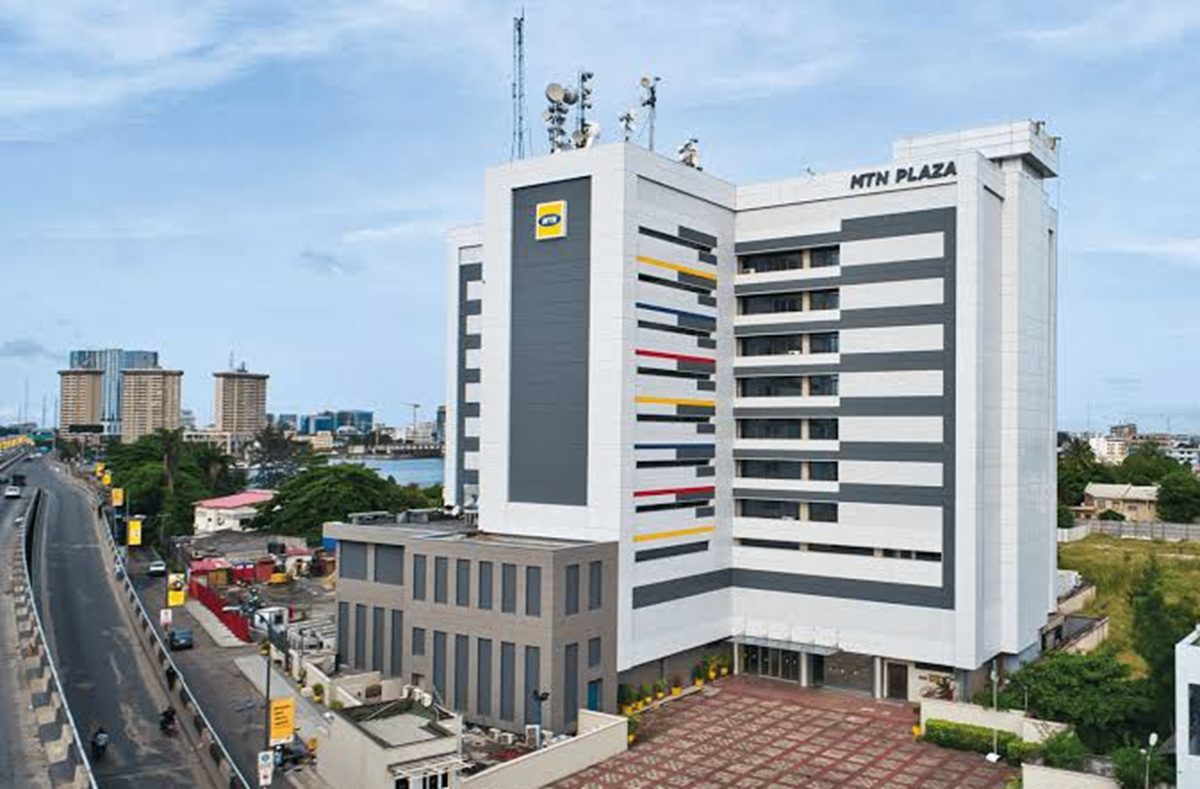
MTN Group, Africa's largest mobile network operator by subscribers, has recorded another historic result, with a first-half 2026 performance that continues to benefit from foreign exchange stability in its key markets and the ongoing expansion of its digital infrastructure. The Johannesburg-headquartered group, listed on the JSE, reports in rand, which is why currency stability in markets like Nigeria and Ghana flows so directly into its results.
In its first-half 2026 earnings, the operator announced service revenue of approximately $7.18 billion (R115.3 billion), 17.5% more than it earned a year earlier and the highest in its history. Profit after tax increased to $994 million (R15.9 billion) from R14.8 billion in H1 2025.
The group's earnings were led by its Nigerian and Ghanaian markets, which contributed 30% and 19% of revenue respectively. About 70% of the company's service revenue came from its Nigerian, Ghanaian and South African markets, with other subsidiaries including Uganda, Côte d'Ivoire and Cameroon topping contributions in the remaining 30%.
Nigeria and Ghana lead the way
In extensive numbers, the Nigerian market delivered ₦3 trillion in service revenue, driven largely by ₦1.70 trillion in data revenue, with voice at ₦993 billion and fintech at ₦77 billion. In Ghana, revenue rose 32.3% year-on-year to $1.3 billion (GH¢14.96 billion), and profit after tax jumped 43.3% to $461 million (GH¢5.13 billion).
Two factors continue to propel MTN's revenue in these markets.
First, the operator's dominance of the subscriber base is generating increasing demand for mobile data. In Nigeria, the company controls 48% of the total telecoms market, leaving Airtel, Globacom and others to battle for the rest. In Ghana, it controls 32.8 million subscribers, representing 85% of the total subscribers in the country.
Second, the expansion of fintech ecosystems — especially MoMo — has continued to drive user growth and infrastructure expansion in both countries. This realisation and growth match MTN's ongoing process of structurally separating its fintech arm from connectivity in Nigeria, a similar restructure having now been completed in Ghana (Q1 2026) and Uganda (2025).
A tariff adjustment implemented in early 2025 — Nigeria's first major upward tariff review in more than a decade — was the defining point of the group's turnaround from the loss of 2024. It continues to influence earnings in what is now the group's biggest revenue market, supported by foreign exchange stability in the local currencies and counter-inflationary pressures.
A mixed result in South Africa
MTN delivered a mixed result in South Africa, its home market, where intensified competition from mobile and virtual operators and internet service providers has left the operator playing catch-up. While service revenue rose 1.5% — a boost from last year's earnings — the subscriber base dropped 0.7% to 39.5 million.
Data fuels half of service revenue
Revenue from data usage fuelled about 50% (R58.6 billion) of the group's service revenue after data traffic grew 22.8% to 14.3 PB, reflecting the rush of data from device to device. Active data subscribers on MTN's network across its 19 markets climbed to 179.3 million, with usage per user at 13.6 GB.
The strong growth in data revenue tells a familiar story, following a continent-wide trend of increasing internet usage. Across home and business, access to the internet drives connectivity, and smartphone penetration deepening at 66.5% shows Africans are leveraging the space for social media, online learning and access to digital infrastructure.
Voice grows slowly amid OTT shift
Revenue from outgoing and incoming calls is increasing, albeit at a slow rate. Total earnings from voice increased 2.4% to $1.87 billion (R30 billion), attributed to the tariff adjustment in Nigeria. Although voice revenue declined 1.6% in Ghana, the group said the service continues to grow across its markets.
This contrasts with the wider industry experience: telecom operators have been experiencing a drastic drop in voice revenue as Africans shift to internet-based data, free over-the-top (OTT) messaging apps like WhatsApp and Zoom, and bundled data packages that replace expensive per-minute out-of-bundle voice billing.
Digital services up on lifestyle and gaming
MTN's digital services revenue grew 20.9%, driven primarily by strong growth in lifestyle and gaming services. Its key markets, Ghana and Nigeria, led the growth, with contributions from other subsidiaries. With the rollout of MTN One TV — a new streaming and entertainment proposition designed to make digital video content more accessible — the group is expected to record increased revenue from its digital services in H2 2026.
Fintech grows despite Nigeria airtime suspension
MTN's fintech revenue increased slightly, by 1.4%, to $931.66 million (R14.9 billion). The figure was achieved after the suspension of airtime advance in Nigeria — a core part of fintech revenue — and operational disruptions within the Uganda agent network.
EBITDA margins slowed to 42.4%, from 43.3% in H1 2025, primarily due to the disruptions to airtime advance in Nigeria. Excluding the impact of this disruption, EBITDA margins improved to 38.8%, showing how XtraTime services continued to grow faster than basic services. The airtime suspension also underlined how MTN was affected by the move and the weight of the Nigerian market across its revenue lines.
Outside airtime advances, MoMo (mobile money) revenue grew 17.8%, supported by continued growth in advanced services, particularly in Ghana, Rwanda, Zambia and Benin — a defining result in an African market dominated by startups and mobile money giants across the continent. That competitive set includes Safaricom's M-Pesa and Airtel Money.
The growth produced impressive figures:
- MoMo monthly average users (MAU) increased 12.1% year-on-year to 70.8 million, driven by growth in Nigeria.
- Active agents grew 13.1% to 1.4 million, boosted by the expansion of an in-house digital sales tool.
- Active merchants increased 18.1% year-on-year to 2.3 million.
- Transaction volumes grew 17.2% to 13.0 billion.
- Transaction value grew 33.8% year-on-year to $330.5 billion.
The growth reflects how MTN is pushing its fintech base towards the goal of making it a strong standalone enterprise. Fintech revenue is expected to rise in H2 2026, driven by the reinstatement of airtime lending in Nigeria.
Ambition 2030 and infrastructure spending
MTN is advancing Ambition 2030, its strategy built around connectivity, digital infrastructure and fintech, which continues to be reflected in how the group positions its infrastructure, connectivity and fintech divisions. The distribution of its digital infrastructure investment reflects the markets the group considers big enough to fuel this push.
Nigeria accounted for 40% of the $1.49 billion (R24 billion) spent on capital expenditure in H1 2026, while South Africa and Ghana saw 13.8% and 12.5% respectively.
The group is not only spending on expansion but also generating revenue. Through its digital infrastructure, MTN earned R2.3 billion from tower lease and roaming deals, though the figure marks a 7.1% decrease. Its fibre network, through Bayobab, saw external revenue growth of 37.2% driven by network expansion.
The company's acquisition of IHS Towers — a deal to buy back the 70% stake it did not own in one of Africa's largest independent tower operators — is expected to unlock value for MTN and to strengthen and reintegrate its ownership of critical digital infrastructure across Africa.

