Moscow Exchange Set to Launch Bitcoin, Ethereum and USDT Trading on December 1
Key Takeaways
- •Moscow Exchange is reportedly preparing to launch cryptocurrency trading on December 1, initially offering Bitcoin, Ethereum, and Tether (USDT) under an annual limit of 300,000 rubles per intermediary.
- •A November 24 exchange notice indicating that USDT transactions during December would be subject to an additional 22% VAT was removed within hours, leaving the final tax arrangements unclear.
- •Russia's National Clearing Center reportedly considers Bitcoin and Ethereum VAT-exempt because they lack a central issuer, while USDT, issued by Tether, is classified as a foreign digital instrument ineligible for the exemption.
- •Corporate entities could face a 25% profit tax on gains involving USDT, and the differing tax treatments could influence demand for individual cryptocurrencies once trading begins.
- •Proposed amendments to Russia's Tax Code that could remove the VAT burden have passed only their first reading, meaning USDT's treatment will hinge on the rules in force when trading goes live.
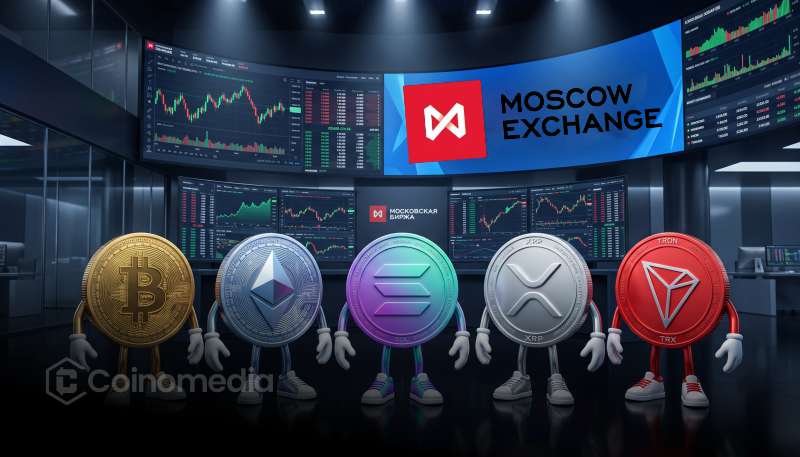
Moscow Exchange (MOEX), Russia's largest stock exchange, is reportedly preparing to launch cryptocurrency trading on December 1, a move that would mark a significant development for the country's digital asset market.
According to Bits.media, the MOEX crypto trading service will initially support Bitcoin (BTC), Ethereum (ETH) and Tether (USDT) — the three largest cryptocurrencies by market capitalization. The reported trading framework includes an annual limit of 300,000 rubles per intermediary, reflecting a controlled approach to cryptocurrency market participation. If implemented as described, the service would give investors another channel for accessing digital assets through established financial infrastructure.
However, uncertainty surrounding cryptocurrency taxation — particularly the treatment of stablecoins — has emerged ahead of the planned launch, with a swiftly deleted exchange notice adding to the confusion.
USDT Faces Potential 22% VAT
On November 24, roughly one week before the scheduled debut, Moscow Exchange reportedly published a notice stating that USDT transactions during December would be subject to an additional 22% value-added tax (VAT). The exchange removed the announcement several hours later, leaving open questions about the final tax arrangements.
Russia's National Clearing Center reportedly explained that Bitcoin and Ethereum qualify as VAT-exempt digital currencies because they do not have a central issuer. USDT, however, is issued by Tether, the company behind the world's largest stablecoin, and is classified as a foreign digital instrument under the reported framework, making it ineligible for the same exemption.
Corporate entities could also face a 25% profit tax on gains involving USDT. These taxation differences could influence demand for individual cryptocurrencies once MOEX crypto trading becomes available, and the short-lived notice has drawn fresh attention to how stablecoin transactions will be taxed once trading begins. Because the notice was withdrawn while the relevant tax legislation remains mid-process, how USDT is treated in December will hinge on the rules in force when trading goes live.
Wu Blockchain shared the report on X:
Russia's Largest Stock Exchange, Moscow Exchange (MOEX), to Launch Crypto Trading on December 1 According to Bits media, Moscow Exchange (MOEX) is set to launch crypto trading on December 1 (offering BTC, ETH, and USDT with an annual limit of 300,000 rubles per intermediary),… pic.twitter.com/Ucx0JCvgFK
— Wu Blockchain (@WuBlockchain) November 25, 2026
Tax Uncertainty Clouds Russia's Crypto Expansion
Proposed amendments to Russia's Tax Code could remove the VAT burden affecting qualifying digital instruments. However, the legislation has reportedly passed only its first reading and has not yet completed the approval process, leaving its final form unresolved. With the December 1 launch date fixed, the two timelines now run in parallel: the venue's debut and the legislation's remaining approval steps.
The uncertainty could create additional challenges for businesses and investors seeking exposure to stablecoins through regulated trading platforms.
Despite these concerns, the planned MOEX crypto trading launch represents an important step toward integrating cryptocurrencies into Russia's traditional financial markets. Specific items worth tracking include whether the Tax Code amendments move beyond their first reading and how Moscow Exchange and the relevant authorities clarify USDT's status after the withdrawn notice. Market participants will likely monitor further announcements from Moscow Exchange and regulatory authorities for clarification regarding trading requirements and taxation ahead of the December 1 launch.

