Morgan Stanley Drops Nvidia From Top Stock Picks but Retains Overweight Rating Amid Jensen Huang Controversy
Key Takeaways
- •Morgan Stanley removed Nvidia from its preferred stock picks list but retained its Overweight rating, meaning the bank shifted positioning without downgrading its fundamental view of the stock.
- •The change coincides with allegations that CEO Jensen Huang had a relationship with a Chinese businesswoman suspected of links to Beijing's intelligence network, prompting Nvidia's board to open an independent investigation.
- •Huang acknowledged being unfaithful in a message to employees and said he would cooperate with the investigation, while Nvidia stated it has no reason to believe national security or company secrets were compromised.
- •Nvidia lost approximately $430 billion in market value over two trading sessions, according to Reuters, amplifying existing investor concerns about the sustainability of AI spending and returns on data center investments.
- •The controversy carries heightened significance because Nvidia's advanced chips sit at the center of U.S.-China technology competition, and the company ranks among the largest weights in major U.S. stock indexes.
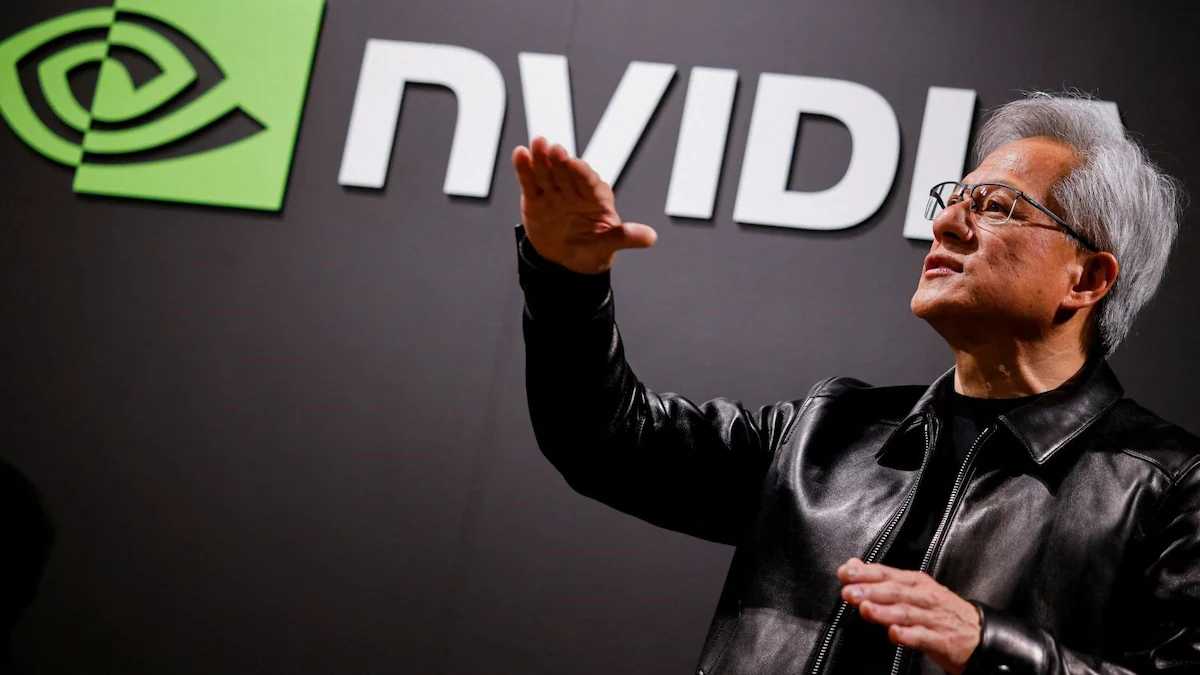
Nvidia, the leading maker of the semiconductors that power artificial intelligence systems, has lost its place among Morgan Stanley's top stock picks, but the Wall Street bank is not ready to turn bearish on the company. According to a Bloomberg report, Morgan Stanley has removed Nvidia from its list of preferred stocks while retaining its Overweight rating on the shares, a signal that the bank continues to see upside even as Nvidia confronts an extraordinary crisis around chief executive Jensen Huang.
The removal is notable given Nvidia's standing as one of the world's most valuable listed companies and its position at the center of the artificial intelligence boom, though the change does not amount to a downgrade. An Overweight rating indicates that the bank continues to see upside in the stock, and Morgan Stanley has not turned negative on Nvidia's prospects. Preferred-pick lists are a separate layer of communication: they serve as a bank's highest-conviction shortlist for clients, and slots on them can rotate without any change to the ratings that underpin coverage. Still, losing its spot among the firm's preferred picks marks a shift in positioning at a delicate moment, with questions emerging over corporate governance, national security, and the future of the company's leadership.
At the center of the controversy are allegations that Huang had a relationship with a Chinese businesswoman, Alice Huang, who is suspected of having links to Beijing's intelligence network. Nvidia's board has initiated an independent investigation into the matter as scrutiny of the company's leadership intensifies. The security dimension carries added weight for a company whose advanced chips sit at the center of U.S.-China technology competition.
Huang has acknowledged being unfaithful to his wife in a message to employees and said he would cooperate with the investigation. The allegations have also raised concerns over whether the relationship could have exposed the chipmaker to foreign intelligence operations or compromised sensitive information.
Nvidia has said its board has no reason to believe that national security or company secrets were compromised. Even so, the episode has brought an unusual layer of uncertainty to a company whose fortunes have been closely tied to Huang's leadership and public persona.
The market reaction has been swift. Nvidia lost around $430 billion in market value over two trading sessions, according to Reuters, as the controversy rattled investors. Because Nvidia ranks among the largest weights in major U.S. stock indexes, declines of that size ripple through the funds and portfolios that track them. The stock was already facing pressure from concerns over the sustainability of artificial intelligence spending and the returns expected from the hundreds of billions of dollars being committed to data centers.
While Morgan Stanley's fundamental view on the stock remains intact, the loss of top-pick status reflects a change in preferred positioning at a time when Nvidia is navigating both persistent market pressures over AI spending and an increasingly public leadership controversy. The near-term markers to watch are the outcome of the board's independent investigation — with which Huang has said he will cooperate — and any further public updates from Nvidia as the review proceeds. The bank's decision keeps its endorsement of the chipmaker on record, but it also underscores how the episode has injected fresh uncertainty into a company at the heart of the global artificial intelligence buildout.
This article was originally published by CNBC-TV18 on November 11, 2026. Source: CNBC-TV18

