'Some of Us Died in the Process': Moove Drivers React to Company's Exit from Nigeria
Key Takeaways
- •Moove, a mobility fintech founded in Lagos in 2020 by Ladi Delano and Jide Odunsi, announced its exit from the Nigerian market on October 8, ending operations in the market where it started.
- •The company is transferring vehicle ownership worth ₦35 billion to current drivers, a step the drivers' union has characterised as corporate empathy.
- •Drivers operated Suzuki Xpresso vehicles under a four-year drive-to-own contract with weekly remittances that rose from ₦56,200 to ₦112,400, a 100 per cent increase.
- •Driver grievances dating back to 2022 included hire-purchase prices jumping from ₦8 million to ₦12 million, charges for health insurance and maintenance drivers said they never accessed, and rapid reessions that allowed vehicles to be reassigned to new drivers.
- •Mistrust persists at the company's departure, with some drivers citing hundreds who recently paid over ₦200,000 without receiving cars and calling on Moove to reach older drivers who never obtained vehicles.
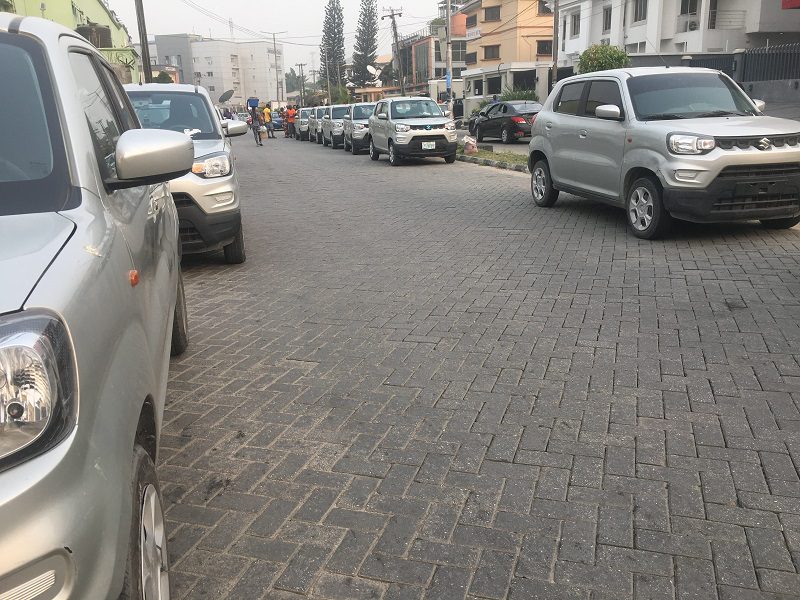
As news continues to filter in about the circumstances surrounding Moove's exit from the Nigerian market, drivers of the vehicle financing company are reacting to the development, with many expressing relief that their ordeal at the hands of the company is coming to an end.
Moove is a mobility fintech founded in Lagos in 2020 by Ladi Delano and Jide Odunsi to finance vehicles for ride-hailing and delivery drivers, and it has since expanded across Africa, Europe, the Americas and Asia. Its Nigerian exit therefore closes the company story in the market where it started, ending a drive-to-own arrangement that has shaped how its drivers earned over four years.
Moove supplied its Suzuki Xpresso vehicles to drivers under a four-year drive-to-own contract that carried a strict weekly remittance of ₦56,200 — a figure that later doubled to ₦112,400, a 100 per cent increase. Across those four years, drivers say they ground through conditions best described as rigorous.
"We came, we saw, and we conquered," one driver simply said.
"Congratulations to all Moove drivers who endured to stay put till today. At least life begins smoothly now. It can only be God," another driver said, alluding to the turmoil that has characterised the company's relationship with its drivers.
Other drivers used their reactions to highlight colleagues left behind. One said the company needed to reach out to its older drivers, many of whom toiled for a very long time but never ended up getting vehicles. Another recalled drivers who died while trying to meet their obligations.
"Every Moove driver is a hero. We have laboured for long time, and some even died in the process. To God be the glory for everything," he said.
Moove's frosty history with drivers
Moove announced its exit from the Nigerian market on Thursday, October 8. In its exit notice, the company had nothing but thanks for its drivers.
"Jide and I started the company because talented hardworking mobility entrepreneurs wanted the opportunity to earn, but could not get access to the vehicles and finance they needed. Our first customers trusted us when Moove was still an idea, and that trust made everything that followed possible, and for that we thank you," said Ladi Delano, Co-Founder, Co-CEO and Advisory Board Chairman of Moove.
Like other companies offering loans and related services to Nigerians, however, Moove's relationship with its drivers has long been frosty, with many describing it as tumultuous. The first major clash between drivers and the company dates back to 2022, when drivers protested what they described as injustices and inhumanity meted out to them by the company.
Among those grievances, according to the drivers, was a sudden hike in the payment for their hire-purchase vehicles from ₦8 million to a whopping ₦12 million.
Another was a sudden increase in their daily remittance from 35 per cent of gross income to a flat ₦14,400 per day. According to the drivers, that was roughly 80 per cent of their daily average income of ₦18,000 — before personal expenses such as fueling the car and buying data. In total, it amounted to ₦66,000 per week.
The drivers also accused the company of charging them a weekly maintenance fee, handling costs and health insurance, even though it never gave them access to any HMO service. They said even a driver who was sick and bedridden was still required to make the ₦9,400 daily remittance, and that in such instances defaulting drivers would be disabled, their cars repossessed and their total deposits to date forfeited. Drivers said this forced them to work longer hours than normal.
They further accused the company of recycling drivers on its vehicles, claiming it was always quick to demobilise and repossess cars for the flimsiest of reasons — thereby terminating the driver's contract and making him forfeit the vehicle. Once a vehicle was repossessed, they claimed, the company would quickly hand it over to another driver, even though the vehicles were supposed to be provided on a hire-purchase arrangement.
On several occasions, the relationship descended into police arrests and court cases. For instance, Fortune Chima, then President of the Moove Africa driver's group, who led the 2022 protest, was reportedly arrested, detained and dragged to court on allegations that he destroyed company property during the course of the protests.
More recently, two drivers, Moses Ameh and Byang Zakka, were arrested by the police at the behest of the company. Comrade Jaiyesimi Azeez, Lagos State Council Chairman of the Amalgamated Union of App-based Transporters of Nigeria (AUATON), said the drivers were arrested for opposing Moove's price increase and were tortured and forced to sign a prepared statement before being transferred to the Ikoyi correctional centre for a month.
The company, however, said the drivers were duly prosecuted for a threat to life and property. One of the drivers, Byang Zakkar, admitted that he had made such utterances, even though he never meant them.
Lingering mistrust even at exit
Even as Moove departs, the mistrust appears to linger. The company said it is transferring vehicle ownership worth ₦35 billion to current drivers, a move that has been lauded as compassionate, with the drivers' union describing it as "corporate empathy". For current drivers, that transfer is the exit's most consequential element — a shift from years of weekly remittances to full ownership of the vehicles they have driven.
Some drivers, though, remain sceptical — an attitude borne out of their history with the company.
"I don't trust Moove so I will advise my fellow drivers to have the full money just in case. Nothing comes free from those guys so even if it is to collect a loan just to be sure, let us try to be wise," one driver said.
"Trusting Moove is at your own risk," another driver said. "There are hundreds of drivers that have paid over 200,000 naira recently and are yet to get their car. What's their own fate? Be sure to know what you are doing before borrowing money to sort your way," he said.
Attention will now turn to how the exit is executed: whether the ₦35 billion transfer reaches every current driver as announced, what happens to the hundreds who recently paid and are yet to receive cars, and whether the company acts on calls to reach out to older drivers who never ended up getting vehicles.
For now, one can only hope the vehicle transfer process proves as smooth and seamless as possible.

