Moove Allows Drivers to Operate on Bolt and inDrive Following Uber's Nigeria Exit
Key Takeaways
- •Moove has officially allowed its financed drivers to operate on alternative ride-hailing platforms such as Bolt and inDrive following Uber's exit from Nigeria.
- •Drivers previously restricted to Uber's UberGo service had long requested multi-app access because limited rides hindered their ability to meet weekly loan repayments under the four-year vehicle financing scheme.
- •Moove had insisted on exclusivity because it relied on single-platform productivity data to power its financing products and assess repayment capacity.
- •Drivers have reacted with concern about how loan remittances will be calculated, the fate of drivers without accounts on other platforms, and potential fare declines from increased competition.
- •Moove stated that business operations will continue as usual until further notice, with additional updates promised in due course.
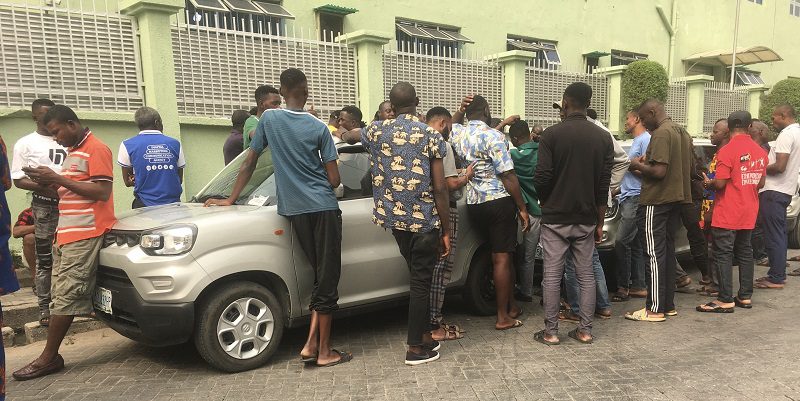
Vehicle financing company Moove has given its drivers permission to operate on other ride-hailing apps following Uber's exit from Nigeria. The decision was communicated in an official message to drivers, seen by Technext.
Uber, which is also one of Moove's biggest investors, previously held an exclusive agreement with the vehicle financing company requiring its drivers to operate solely on the Uber app under its UberGo offering. With Uber's departure, drivers quickly found themselves in limbo, with many wondering what would become of them and their vehicles.
Moove has now clarified the situation, informing drivers that following the exit of their exclusive partner, they are free to operate on other platforms such as Bolt and inDrive — the two platforms that now dominate Nigeria's ride-hailing market following Uber's withdrawal, leaving the country's mobility financing sector to adjust to a landscape without one of its anchor partners.
"Kindly note that our business operations will proceed as usual until further notice, and you are free to continue operating through alternative ride-hailing platforms," the company said.
Moove added that further updates will be shared in due course, and that drivers with additional inquiries can contact their Performance Executive directly. How the company adapts the revenue-sharing arrangements that underpinned its Uber-exclusive financing model, and whether it builds its own app or partners with other platforms as some drivers anticipate, will shape the next phase of its Nigeria operations.
Moove drivers react even as they get what they always wanted
Moove drivers, popularly called "Uber Korope" because of their miniature hunch-back Suzuki Espresso cars, were previously only allowed to operate on the Uber Go platform. This restriction stems from the vehicle financing loan scheme through which they obtained their vehicles, which requires weekly loan repayments for four years.
This arrangement severely limited the amount of business the drivers could do in a day. The situation was made worse by the general scarcity of rides on the platform, a reflection of Uber's declining fortunes in the market. The constraint affected drivers' ability to meet their financial obligations, support their families, and maintain a decent livelihood. As a result, they had persistently sought permission to operate across multiple apps to increase their chances of earning a reasonable income.
Moove had consistently refused, insisting that it restricted drivers to the Uber app because it needed to generate productivity data to power suitable financing products — data that could not be accurately generated if drivers were juggling several apps simultaneously. That exclusivity was central to how Moove, an Africa-born mobility fintech that finances vehicles for drivers who lack access to traditional bank credit, assessed repayment capacity — which is why the sudden loss of the exclusive partner poses an operational question beyond just ride supply.
Now that the drivers are finally getting their wish, the development is not being universally welcomed.
"What about the remittance? We need to talk about it," one driver said, referring to the vehicle financing repayment plan.
Another driver, responding to the question of remittance, said: "We should perhaps be expecting estimated billing based on meter reading until they can come up with their own app."
"What about drivers that do not have other apps? What will happen to their cars after the years of commitment and contribution so far? Moove is totally inconsiderate," another driver said.
Another driver raised the possibility of further fare declines, noting: "More drivers will move to inDrive and the price will drop. The competition will be between drivers, and riders will be kings."
Uber may have left Nigeria, but it leaves a great deal to be resolved in its wake — from how thousands of financed drivers will keep up repayments, to how Bolt and inDrive absorb the influx of new drivers. It remains to be seen how Moove moves on from here.
