MoneyGram Launches Solana Cash Ramps Across More Than 170 Markets
Key Takeaways
- •MoneyGram launched cash-to-digital-asset ramps powered by Solana across more than 170 markets worldwide.
- •The service allows users without bank accounts or credit cards to convert physical cash into Solana-linked digital assets and back through MoneyGram's roughly 430,000 retail agent locations.
- •Solana's high-throughput, low-fee blockchain architecture is designed to settle transactions in seconds at a fraction of a cent, suiting MoneyGram's small-value, high-frequency remittance traffic.
- •No verified usage metrics, transaction volume data, or user-growth figures were disclosed, meaning the rollout represents expanded availability rather than proven consumer adoption.
- •The initiative builds on MoneyGram's earlier blockchain integration with the Stellar network, reflecting an incremental strategy of adding blockchain chains to its existing settlement infrastructure.
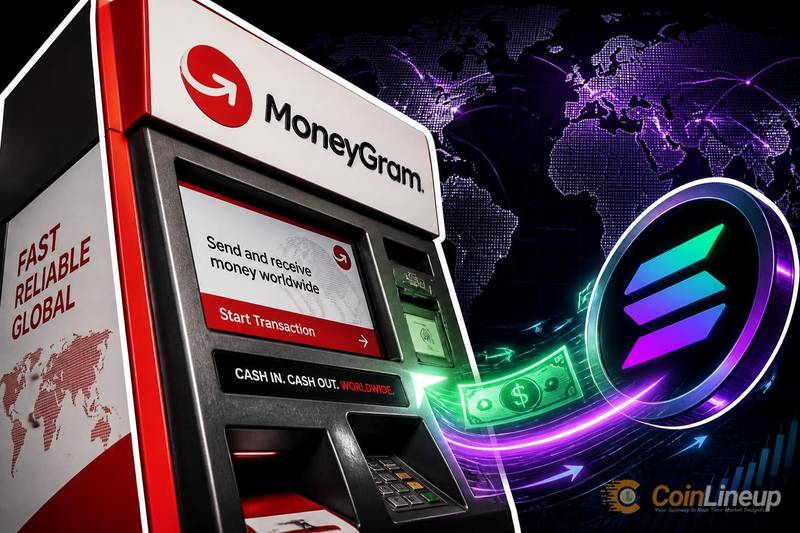
MoneyGram has launched Solana cash ramps across more than 170 markets, significantly widening the ways users can move between physical cash and Solana-linked digital assets through the money-transfer company's existing global footprint. The launch matters because it drastically expands cash-to-digital-asset access through an established, real-world money-transfer network that processes millions of transactions annually across its roughly 430,000 agent locations worldwide.
The central feature of the announcement is its impressive scale. The cash ramps are being made available in more than 170 markets, according to Solana's announcement of the rollout. In this framework, MoneyGram acts as the fiat access layer, providing the physical retail locations where cash changes hands.
A cash ramp functions as the crucial on- and off-ramp that allows individuals to convert physical cash into a digital asset, or to convert a digital asset back into physical cash. In practice, it connects a traditional fiat access point directly to a blockchain. This infrastructure ensures that users without a bank account or credit card can still seamlessly enter and exit the digital-asset ecosystem. Wide market coverage can significantly reduce the friction between physical money and digital assets, giving people in regions with limited banking infrastructure a practical way to interact with the broader financial system, as described by MoneyGram. The ramps leverage Solana's high-throughput, low-fee architecture, which is designed to settle transactions in seconds at a fraction of a cent per transfer—a profile suited to the small-value, high-frequency remittance payments that dominate MoneyGram's corridor traffic.
The strongest differentiator in this launch is geographic reach. For this initiative, expanding distribution is a more meaningful milestone than any short-term token price reaction. The development focuses heavily on new infrastructure being deployed on the ground, rather than reflecting a confirmed change in consumer demand or trading activity. MoneyGram's prior blockchain integrations, including its earlier work with the Stellar network for crypto-to-cash transfers, laid operational groundwork for this broader rollout, indicating an incremental strategy of layering additional chains onto its existing settlement relationships.
That distinction is critical. Expanded access does not inherently equal proven adoption: the currently available information does not include verified usage metrics, transaction volume data, or user-growth figures. Therefore, the rollout should be interpreted strictly as an expansion of availability rather than measured user uptake. Similar infrastructure moves, such as Coinbase's licensing push for tokenized securities in Abu Dhabi, demonstrate how firms are actively building regulated access rails ahead of confirmed consumer demand.
Solana is the core blockchain network at the center of this rollout. Fiat on- and off-ramp access can fundamentally support a network's real-world utility, as it provides everyday users a practical path to hold, send, or redeem assets on that specific chain, rather than restricting activity to trading solely between existing cryptocurrency holders. For Solana specifically, direct cash on-ramps address a recurring challenge for high-performance blockchains: despite strong technical throughput, real-world payment utility has historically been constrained by limited non-custodial fiat access for unbanked users. Connecting MoneyGram's retail footprint to Solana wallets could, over time, broaden the network's user base beyond crypto-native participants.
Any assessment of the launch's impact should remain measured. There is no confirmed data regarding transaction counts or the exact number of active users the ramps will ultimately reach, meaning any claims of an immediate demand surge would go beyond what the announcement explicitly supports.
Nevertheless, the development firmly fits into a broader accessibility trend within the digital asset industry, where financial firms build the underlying plumbing that connects traditional finance to specific blockchain networks. That same trend is visible in recent Solana-linked financial products, including a Bitwise Solana staking ETF being accepted as loan collateral, signaling a continued, multi-faceted effort to widen how individuals can access and utilize the network.

