MoneyGram Expands Ramps Service to Solana, Enabling Global Cash On- and Off-Ramps for Developers
Key Takeaways
- •MoneyGram has extended its Ramps service from the Stellar network to Solana, marking its second major blockchain integration for fiat on- and off-ramp capabilities.
- •Developers building on Solana can access MoneyGram's global cash infrastructure across approximately 200 countries and territories through a single API integration.
- •The expansion targets Solana specifically because of its high transaction throughput, low costs, and prominent role in stablecoin transfers and DeFi activity.
- •MoneyGram's established regulatory compliance experience across multiple jurisdictions provides an advantage over crypto-native payment infrastructure providers.
- •The integration could simplify user onboarding for Web3 applications by allowing users to convert between traditional currencies and digital assets with fewer steps.
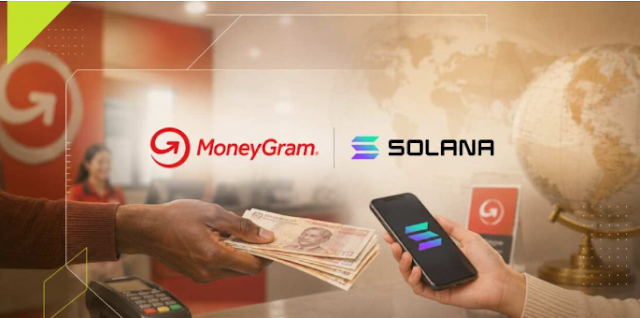
MoneyGram Expands Ramps Service to Solana, Enabling Global Cash On- and Off-Ramps for Developers
MoneyGram is expanding its Ramps service to the Solana blockchain, providing developers with access to the company's global cash on- and off-ramp infrastructure through a single application programming interface (API). The service was originally built on the Stellar network, and the Solana expansion marks MoneyGram's effort to extend its fiat on/off-ramp capabilities to a second major blockchain ecosystem—this time targeting one of the most active networks for stablecoin transfers and decentralized finance activity. The move represents another step in MoneyGram's broader effort to connect traditional financial services with blockchain-based applications, offering builders a simplified pathway for users to move between digital assets and local currencies.
With this expansion, developers building on Solana can integrate MoneyGram's cash infrastructure without constructing separate connections to payment providers in every market where their applications operate. The development has attracted attention across the digital-asset industry and was highlighted in crypto market coverage, including reporting referenced by Cointelegraph.
Source: X Post
MoneyGram Brings Ramps to Solana
MoneyGram's Ramps service is designed to provide developers with infrastructure for moving money between traditional currencies and digital assets. By extending the service to Solana, the company is opening its payment network to applications built on one of the most active blockchain ecosystems.
The appeal for developers is straightforward: instead of creating separate integrations for different payment systems, an application can use MoneyGram's infrastructure through a single API. This can potentially reduce development complexity and make it easier for blockchain applications to offer users familiar methods for depositing and withdrawing funds.
Why Cash On-Ramps Matter
One of the biggest challenges facing cryptocurrency applications is the transition between traditional money and digital assets. Users may hold funds in a bank account or cash-based financial system but need digital assets to interact with a blockchain application. A cash on-ramp bridges those two worlds, allowing users to convert traditional currency into digital assets that can then be used within a blockchain ecosystem.
For a decentralized application, having a reliable on-ramp can make the difference between a product that is easy to use and one that requires users to navigate multiple exchanges and payment services.
Off-Ramps Complete the Equation
The reverse process is equally important. An off-ramp allows users to convert digital assets back into traditional currency. Without an efficient off-ramp, users may be able to acquire crypto but face difficulties when they want to spend or withdraw their funds.
MoneyGram's expansion addresses both sides of the transaction. Developers can potentially provide users with a more complete financial experience without building the underlying payment infrastructure themselves.
Solana's Growing Role in Payments
The decision to expand to Solana is significant because the blockchain has increasingly attracted developers building financial applications. Solana is known for high transaction throughput and relatively low network costs compared with some other major blockchain networks. Those characteristics have made the network attractive for decentralized finance (DeFi), payments, stablecoins, and consumer applications. Solana also ranks among the top blockchain networks by total value locked in DeFi protocols, and it handles substantial stablecoin transfer volume, including significant activity in Circle's USDC.
As blockchain usage expands beyond trading and speculation, payment infrastructure becomes increasingly important. MoneyGram's move reflects that broader transition.
Stablecoins Could Benefit
Stablecoins are likely to be one of the areas where blockchain payment infrastructure becomes particularly relevant. Stablecoins are digital assets designed to maintain a relatively stable value, typically by being linked to a fiat currency such as the U.S. dollar. They are increasingly being used for transfers, trading, payments, and settlement.
Solana has become an important network for stablecoin activity. By providing easier connections between cash and blockchain assets, MoneyGram could help developers build applications where stablecoins can be acquired and converted into traditional currencies more easily.
A Single API Could Simplify Development
For developers, APIs are critical infrastructure that allow different software systems to communicate with each other. Instead of building an entire payment network from scratch, a developer can connect an application to an existing provider.
MoneyGram's single-API approach is designed to simplify that process. Developers can potentially integrate the company's global cash network into their applications without separately managing relationships with multiple local providers, which could save time and reduce the operational burden associated with international payments.
Global Reach Is the Bigger Selling Point
MoneyGram's international presence is one of the most important aspects of the expansion. The company operates across approximately 200 countries and territories, a physical and regulatory footprint built over decades in the remittance industry. Blockchain applications are inherently global—a developer can create a product in one country and attract users from dozens of other markets. Traditional payment infrastructure, however, remains fragmented, with different countries having different banking systems, currencies, regulations, and payment methods. A global cash network can help address some of those challenges.
Bridging Traditional Finance and Blockchain
MoneyGram's strategy illustrates how traditional financial companies are increasingly moving toward blockchain infrastructure. Rather than treating blockchain as a competitor to traditional payments, financial companies are exploring ways to use the technology alongside existing systems.
This creates a hybrid model where users can interact with blockchain-based applications while still using familiar local currencies and cash-based financial systems. That could make digital assets more accessible to people who are not experienced cryptocurrency users.
User Experience Remains a Major Challenge
Blockchain technology can be technically sophisticated. For mainstream users, however, the experience can still be complicated. Wallet addresses, network fees, private keys, and different blockchain networks can create friction.
Payment infrastructure providers can help hide some of that complexity. If users can purchase or cash out digital assets through familiar payment channels, interacting with blockchain applications becomes less intimidating—a factor that could be particularly important for consumer-focused applications.
What This Means for Developers
Developers building on Solana could gain another option for handling fiat-to-crypto transactions. Rather than dedicating significant resources to payment integrations, teams can focus on the application itself.
For startups, this can be particularly valuable. A small development team may not have the resources to establish relationships with payment providers across multiple countries. An integrated API can potentially allow the company to launch in more markets with fewer infrastructure requirements.
Potential Impact on Web3 Adoption
One of the biggest barriers to Web3 adoption has been onboarding. A new user may be interested in a decentralized application but struggle to understand how to acquire the required digital asset. Simplifying that first transaction can make the entire experience easier.
If users can move from fiat currency to blockchain assets with fewer steps, more people may be willing to try decentralized applications, potentially contributing to broader Web3 adoption.
Solana Developers Are Expanding Beyond DeFi
Solana's ecosystem has evolved beyond decentralized exchanges and trading applications. Developers are increasingly experimenting with payments, consumer applications, gaming, digital assets, and other blockchain-based products. Those applications may require payment infrastructure that works outside the traditional crypto ecosystem.
MoneyGram's expansion could therefore provide a useful tool for teams attempting to build products aimed at mainstream users.
Competition in Crypto Payment Infrastructure
MoneyGram is entering a market where several companies are attempting to solve similar problems. Crypto exchanges, payment processors, fintech companies, and blockchain infrastructure providers are all developing systems that connect digital assets with traditional currencies.
The competition could ultimately benefit developers, as more infrastructure providers mean more choices, potentially lower costs, and better user experiences. MoneyGram's established global network gives it a different position from companies that were created specifically for crypto.
Traditional Brands Are Paying Attention
The involvement of established financial companies in blockchain infrastructure represents a broader trend. For years, cryptocurrency companies largely built their own payment rails. Now traditional financial institutions are increasingly exploring blockchain-based settlement and digital assets.
MoneyGram's approach demonstrates how a legacy payments company can use its existing infrastructure to participate in the blockchain economy—a shift that could become increasingly important as digital assets move toward mainstream financial applications.
The Importance of Regulatory Compliance
Global payment infrastructure also brings regulatory challenges. Moving money between fiat currency and digital assets requires compliance with financial regulations. Companies operating across multiple jurisdictions must consider requirements involving customer identification, anti-money-laundering (AML) controls, and transaction monitoring.
This is one area where established payment companies may have an advantage. They already operate within regulated financial systems and have experience managing compliance requirements across different markets.
Blockchain Payments Could Become More Invisible
One of the long-term goals of blockchain adoption may be making the underlying technology less visible to ordinary users. Most consumers do not need to understand how traditional payment networks work—they simply use an application and expect the payment to happen.
Blockchain applications could eventually operate in a similar way. Users may not need to know which blockchain processes their transaction. They may simply interact with an application, pay in their local currency, and allow the infrastructure to handle the blockchain side automatically.
Why the Solana Expansion Matters
MoneyGram's decision to add Solana to its Ramps service is more than a simple network integration. It reflects a growing effort to connect blockchain applications with traditional financial infrastructure. Developers gain another tool for handling cash transactions. Solana gains additional connectivity to an established global payment network. Users potentially gain a simpler path into and out of digital assets.
The combined effect could help reduce some of the friction that has slowed mainstream blockchain adoption.
The Bigger Picture
MoneyGram's expansion of its Ramps service to Solana highlights the increasingly important relationship between traditional payments and blockchain technology. By offering developers access to its global cash on- and off-ramp network through a single API, MoneyGram is attempting to simplify one of the most difficult parts of building consumer-facing blockchain applications.
The significance could extend beyond Solana. As more blockchain networks attract developers and stablecoin usage continues to grow, demand for reliable fiat connectivity is likely to increase. The companies that can make those connections simple, compliant, and accessible could become important infrastructure providers for the next stage of digital finance.
For Solana developers, the expansion provides another route for connecting users to traditional money. For MoneyGram, it represents another step toward positioning its global payments network within the emerging digital-asset economy. And for the broader cryptocurrency industry, it underscores a larger trend: blockchain adoption may ultimately depend less on convincing people to use cryptocurrency directly and more on making blockchain technology work seamlessly behind the financial applications they already use.

