Khamenei Tightens Grip on Iran's Security Council with Appointment of Hard-Line IRGC Veteran Rezaei
Key Takeaways
- •Mohsen Rezaei has been appointed secretary of Iran's Supreme National Security Council as part of a broader reshuffle increasing the Supreme Leader's direct representation in key security bodies.
- •Rezaei commanded the IRGC for over sixteen years from 1981 to 1997 and faces an Argentine indictment and Interpol Red Notice linked to the 1994 AMIA bombing, which he and Iran deny.
- •Prediction markets tracked by Vera assign a 14% probability that President Masoud Pezeshkian will no longer hold office by December 31, reflecting modest adjustments after Rezaei's appointment.
- •The Supreme National Security Council is Iran's highest body for coordinating national security and foreign policy decisions, including oversight of the nuclear file and international sanctions diplomacy.
- •Observers are monitoring statements from Ayatollah Khamenei and the IRGC for further signs of a leadership shift, as conservative influence within Iran's government appears to be increasing.
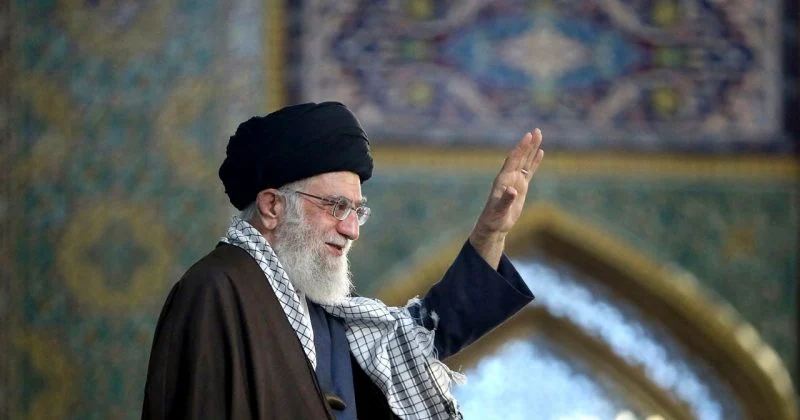
Mohsen Rezaei, a former commander of the Islamic Revolutionary Guard Corps (IRGC) and a close ally of Supreme Leader Ayatollah Ali Khamenei, has been appointed secretary of Iran's Supreme National Security Council (SNSC), as part of a broader security reshuffle in Tehran that has increased direct representation of the Supreme Leader's office in key security bodies.
Rezaei's appointment has been widely interpreted as a consolidation of power within the regime, with potential implications for Iran's political landscape. His longstanding reputation as a hard-line figure signals a possible shift toward more conservative security and foreign policies, which could affect the standing of current President Masoud Pezeshkian, a relatively moderate figure who won the July 2024 snap election following the death of President Ebrahim Raisi in a helicopter crash that May. Iran's political system divides authority between elected institutions, such as the presidency and parliament, and unelected bodies controlled by or aligned with the Supreme Leader, including the Guardian Council, the IRGC, and the SNSC, which means personnel changes in the latter carry outsized weight in shaping national strategy.
Rezaei commanded the IRGC for over sixteen years, from 1981 to 1997, spanning much of the Iran-Iraq War and its aftermath. During and after his command tenure, Argentina issued an indictment and Interpol Red Notice against him in connection with the 1994 bombing of the AMIA Jewish community center in Buenos Aires, which killed 85 people; Rezaei has denied the allegations and Iran has rejected the charges. He later served as secretary of the Expediency Discernment Council, a body that arbitrates between Iran's parliament and the Guardian Council. He has also run for president on multiple occasions, most recently in 2021, when he withdrew in favor of eventual winner Ebrahim Raisi.
The Supreme National Security Council is Iran's highest body for coordinating national security and foreign policy decisions, and its secretary plays a central role in shaping the country's strategic direction, including oversight of the nuclear file and engagement with international powers on sanctions and diplomacy. The council's decisions are ultimately subject to the approval of the Supreme Leader.
Prediction markets tracked by Vera currently price a 14% probability that President Pezeshkian will no longer hold office by December 31, reflecting modest adjustments following Rezaei's appointment. Markets have interpreted the move as consistent with scenarios in which conservative influence within Iran's government increases, potentially raising the likelihood of leadership changes.
Observers are closely monitoring any public statements from Ayatollah Khamenei or the IRGC that may further indicate a leadership shift, as well as changes in Pezeshkian's public posture or policy positions. Domestic political stability and ongoing international relations remain key indicators for assessing the trajectory of Iran's leadership dynamics in the months ahead.

