Psychologist Says Mitch McConnell Shows Signs of 'Neurocognitive' Failure in First Vote Since Senate Return
Key Takeaways
- •Dr. John Garrison attributed McConnell’s observed behavior to a possible neurocognitive condition, but the assessment was not presented as a formal medical diagnosis.
- •Garrison said McConnell required guidance from several people to complete his vote and appeared unable to understand the proceedings.
- •McConnell has represented Kentucky since 1985 and is serving a Senate term scheduled to end in January 2027.
- •A 2023 evaluation by the Capitol’s attending physician found no evidence of seizure disorder, stroke, or Parkinson’s disease.
- •Senators are not required by Senate rules to undergo cognitive testing, so any evaluation would be voluntary.
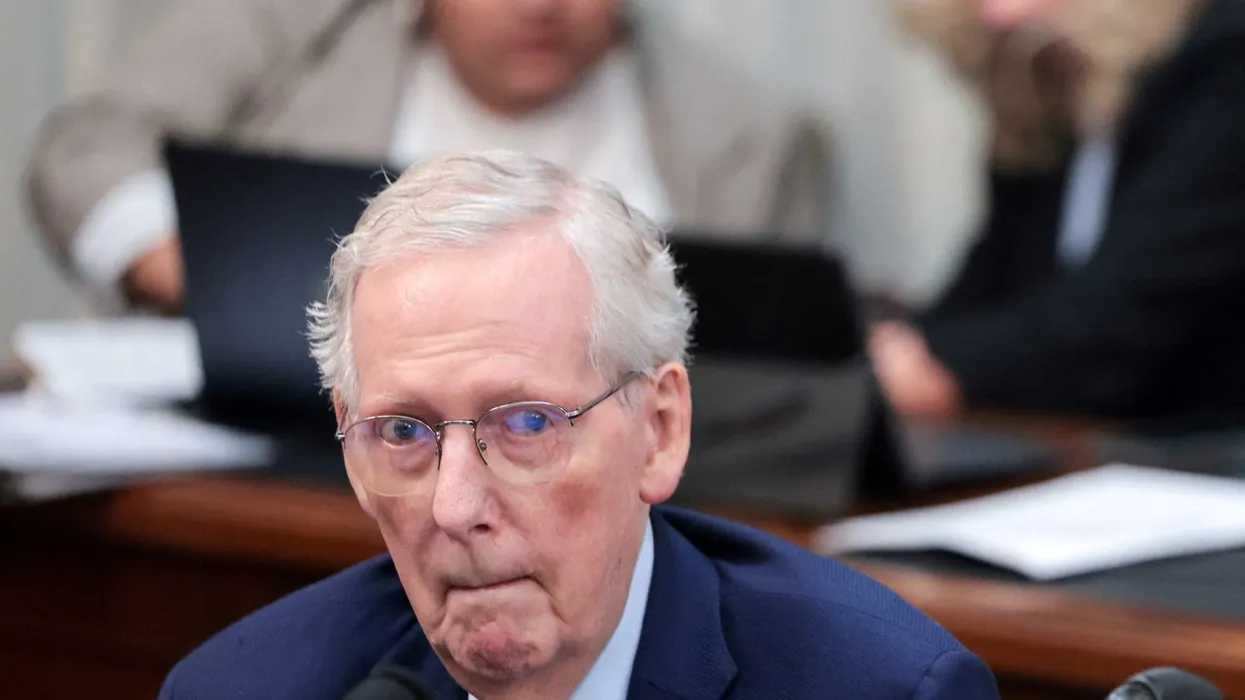
Dr. John Garrison, a psychologist and body language expert whose analyses are widely cited, said on Friday that Sen. Mitch McConnell (R-KY) appears to be afflicted with some form of “neurocognitive” condition. Garrison pointed to footage of McConnell’s first vote after returning to the Senate from a three-month medical absence, saying it makes clear that the senator has “absolutely no idea what is going on.”
McConnell, 83, has represented Kentucky in the Senate since 1985 and served as Senate Republican leader from 2007 until stepping down from the post in late 2024, a tenure that made him the longest-serving party leader in the chamber’s history. He has remained in office to serve out his current term, which runs through January 2027.
Garrison’s assessment begins with a video of McConnell’s arrival to cast his vote. “He is unmoving,” Garrison notes. “Just has a thumbs up and they are moving him along fast. This is a lot of what we're seeing from Mitch McConnell: frozen positions, his facial expression unchanging, no responsiveness to the environment around him. I think comprehension-wise, he is not comprehending what is being spoken to him. He does not understand what he is doing.”
In the psychologist’s view, the senator’s difficulties become even more evident when he attempts to vote. The video shows someone grasping McConnell’s arm to signal that he is being addressed, prompting the senator to appear to attempt a handshake. Garrison attributes this to training: “He's been trained to shake hands with everybody. That's one of the things he probably is supposed to be able to do well at this point. But he really has no concept of what's happening right here. You'll notice immediately when his name is called, McConnell looks to the right to see what he's supposed to do.”
“Everybody around him seems to know he has no idea what's going on,” Garrison adds. “They know they're going to have to guide him to get anything meaningful out of him.”
According to the analysis, McConnell ultimately struggles to vote and manages to do so only after being prompted by several people around him. “What is abundantly clear at this point is that Mitch McConnell has absolutely no idea what is going on,” Garrison says. “I suspect he doesn't understand that he's actually voting on anything, much less what he is actually voting on. The ability to comprehend what's going on around him appears to be so limited that he needs reassurance even to know whether or not he should lift his finger.”
Garrison next examines footage of McConnell being loaded into a vehicle, which he says looks almost identical to a recording from two days earlier. “This is a separate video entirely, but we're getting exactly the same reaction, which is absolutely nothing,” he says. “What we're seeing is a profound lack of spontaneous facial expressions. He tends to keep this odd smile on his face almost in a mask-like way. We see issues like this in advanced Parkinson's disease. Sometimes you also see these kinds of behaviors in something like Lewy body dementia. But what's very clear is there are serious neurocognitive impairments going on and he does not seem to have any ability to appropriately react to the situation around him.”
McConnell’s health has been the subject of public attention before: he froze mid-sentence at two press appearances in 2023, episodes he attributed to feeling lightheaded, and the Capitol’s attending physician wrote after evaluating him that there was no evidence of a seizure disorder, stroke, or movement disorder, including Parkinson’s disease.
Summing up his observations, Garrison asserts that McConnell “is incapable of understanding the world around him. He did not know how to vote. He did not know what he was supposed to do. He needed reassurance even to say the word ‘aye.’ He has to look to other people to do literally anything in this meeting. But the shocking part is that even individuals with advanced neurological illness or advanced neurological disease tend to show more functioning than what we are seeing from Mitch McConnell at this point. I presume that until his term is up, we're just going to see more of this. Nobody seems to insist that he gets some kind of cognitive assessment. So, I suspect they'll just bring him in, tell him what to say, and then take him out again anytime they need a vote… It's remarkable that they are doing this.”
There is no Senate rule requiring members to undergo cognitive evaluations, and any such testing is left to each senator’s discretion.
Garrison concludes with a warning: “I cannot overstate how concerning it is that someone who is incapable of comprehending even the simplest of interactions is voting on legislation.” The warning carries procedural weight: in a chamber where legislation can pass or fail by a single vote, each member’s roll-call participation counts fully.

