Authoritarianism Expert Cites 'Mafia State' Tactics Behind McConnell's Health Secrecy
Key Takeaways
- •Sarah Kendzior, an author and expert on authoritarianism, argued in a Substack essay that "mafia state" dynamics entrenched under Trump-era Republican governance have shielded Sen. Mitch McConnell from public scrutiny of his health.
- •McConnell was reportedly hospitalized for several weeks after a fall and pneumonia, and despite an alleged August discharge, Kentucky Gov. Andy Beshear says he has received no communication about the senator's condition.
- •Under a 2021 Kentucky law enacted over Gov. Beshear's veto, any U.S. Senate vacancy would be filled by a same-party successor selected from a three-name list supplied by the state Republican Party.
- •McConnell stepped aside as Senate Republican leader in January 2025, ending a record tenure as the longest-serving party leader in Senate history, and later announced he would not seek reelection in 2026.
- •With the GOP holding a narrow 53-47 Senate majority, any prolonged McConnell absence would tighten the party's vote math on contested floor decisions.
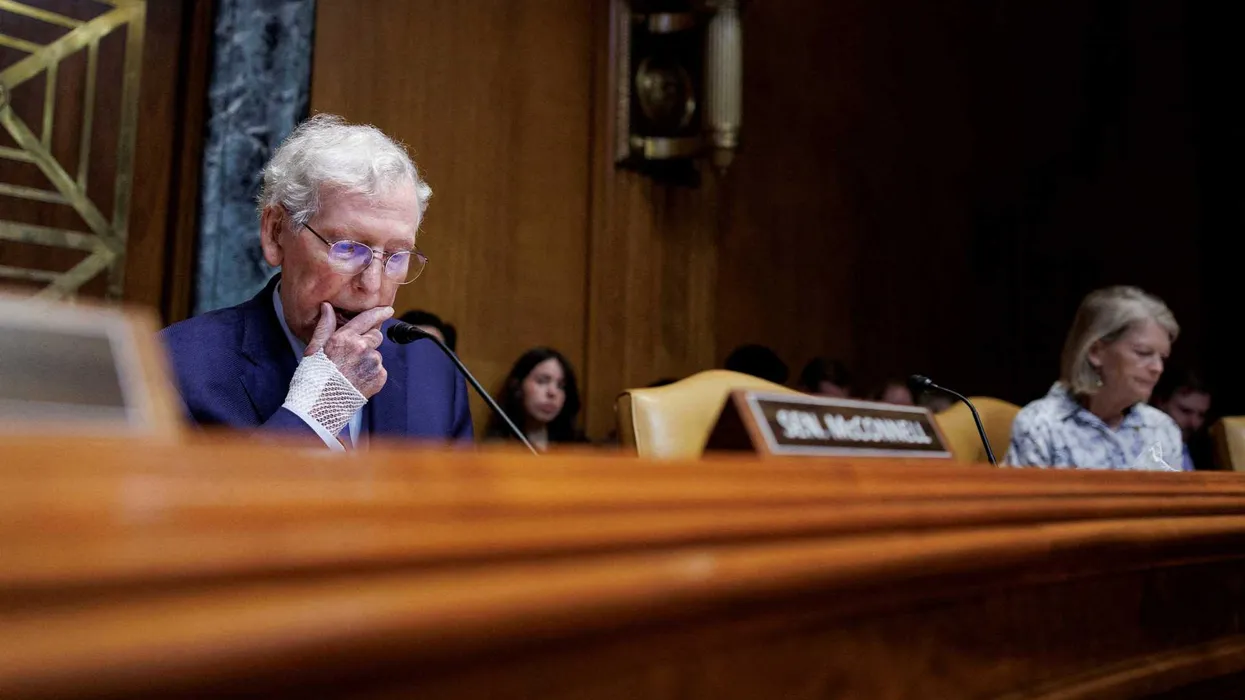
An expert on authoritarianism has identified the "mafia state" tactics she says are helping Sen. Mitch McConnell (R-KY) conceal his health condition from the public.
Sarah Kendzior, author of several books on authoritarianism — including "Hiding in Plain Sight" and "They Knew" — co-host of the Gaslit Nation podcast, and an expert on Uzbek politics, argued in a new Substack essay that McConnell has largely avoided public scrutiny of his failing health because of the "entrenchment of Trump's mafia state." She said Americans have largely become unable to distinguish between fact and fiction, partly because of the hollowed-out media ecosystem and a president who lies constantly.
The term she leans on has a lineage in political science: Hungarian scholar Bálint Magyar popularized "mafia state" to describe regimes — most prominently Viktor Orbán's Hungary — in which a ruling clique converts public institutions into private assets. Kendzior has used the phrase for years to describe Trump-era Republican governance.
"Americans are less adept at discerning the mortality of our leaders because they do not fully realize they are living in a mafia state and that basic protocol — like letting the public know where an ailing senator has been for two months — will not be followed," Kendzior wrote. "Americans lack the great skill of the Uzbeks: mish-mish, which replaced facts so long ago, it became honed into a form of discernment."
"Mish-mish," the Uzbek expression for the rumors that circulate when official channels cannot be trusted, is a concept she has returned to throughout her work on Central Asia.
"When you constantly expect lies but refuse to accept lies (a critical distinction), you become better at finding the truth," she added. "Surviving an autocracy means not only believing that the unfathomable is possible, but that it's probably happening, so you better start planning for what comes next."
"It is very unpleasant to live in a state run on mish-mish, but at least Uzbeks know it's mish-mish, instead of calling it, like, 'The Washington Post' or something," she added.
McConnell was hospitalized for several weeks after falling and contracting pneumonia, according to reports. Even though he was allegedly discharged in August, Kentucky Gov. Andy Beshear, a Democrat, has claimed he has heard nothing from McConnell about his health.
That silence carries institutional weight. Beshear would be the official responsible for filling a U.S. Senate vacancy in Kentucky, but under a 2021 state law passed by the Republican-controlled legislature over his veto, he would have to choose a same-party successor from a three-name list supplied by the state Republican Party — a provision widely reported at the time as insurance against a Democratic appointment should McConnell's seat ever open.
Sen. Rand Paul (R-KY) has also claimed that he hasn't heard from McConnell.
The opacity has revived scrutiny that has trailed McConnell for years: he froze mid-sentence twice on camera in the summer of 2023, once at a Capitol press conference and weeks later at an event in Kentucky, and he fell while leaving the Senate chamber in December 2024. He stepped aside as Senate Republican leader in January 2025, ending a record run as the longest-serving party leader in Senate history and handing the post to John Thune while keeping his own seat, then announced weeks later that he would not seek reelection in 2026 — a race to succeed him that is already underway among Kentucky Republicans. With the GOP holding a narrow 53-47 Senate majority, any prolonged absence also tightens the party's vote math on contested floor decisions.
"The reason the Mitch McConnell saga is so disturbing isn't because McConnell may be dead, but because the Senate is," Kendzior wrote.

