Military review boards are quietly defying Trump's orders on transgender troops, report says
Key Takeaways
- •Nine of the 12 transgender service members reviewed by the boards were approved to remain in the military.
- •The Pentagon has withheld overall figures on the number of hearings held and personnel dismissed.
- •Review outcomes differ by branch, with the Air Force continuing to discharge transgender service members quickly.
- •Transgender personnel make up roughly 4,250 service members, or about 0.1 percent of the military.
- •Court cases and review-board decisions are emerging as significant venues for challenging the policy.
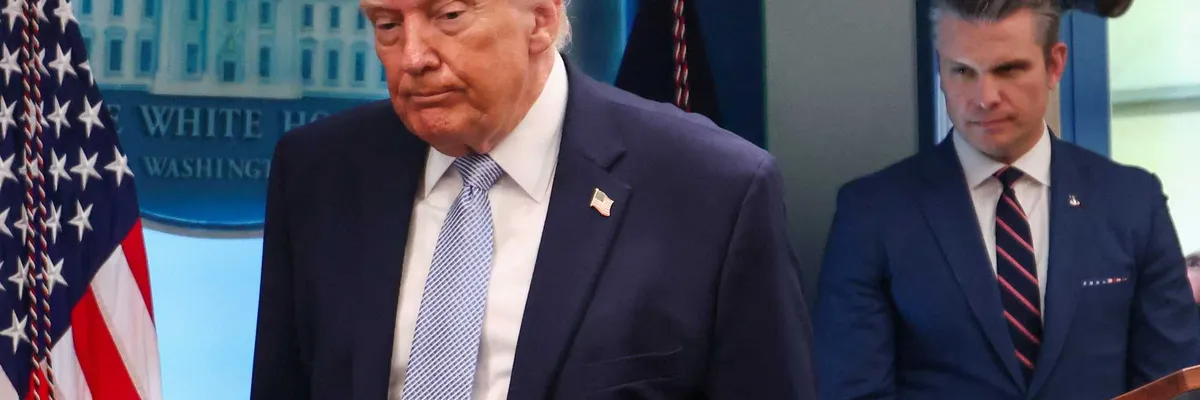
Military review boards staffed by ordinary service members are quietly defying orders from President Donald Trump and Secretary of Defense Pete Hegseth, voting behind closed doors to keep transgender troops in uniform despite directives designed to remove them, according to a new report.
The New York Times reported on Friday that the Pentagon had set up review boards at bases around the globe, manned by everyday uniformed service members operating under narrow orders that “all but ensured that the trans troops appearing before them would be voted out.” Instead, many of those panelists are voting to let transgender service members stay. A similar pattern is playing out in the Navy.
The outcome is no occasional exception. Of the 12 people brought before the boards, nine have been approved to remain in the military, according to the report. All of the proceedings are kept secret — even spouses are barred from attending the hearings — and the Pentagon has declined to say how many hearings have taken place in total or how many people have been removed. With the Pentagon withholding totals, the report’s figures offer one of the few public measures of how the policy is actually being carried out.
The dynamic is not uniform across the armed forces. In the U.S. Air Force, transgender personnel are still being discharged quickly. Even so, the Times characterized the board votes as a “stunning rebuke” of Trumpism by at least some military branches. The votes also underscore how much discretion administrative boards retain: even under narrow instructions, panels weigh individual cases one at a time rather than issue blanket rulings.
“These boards are being told to do something that they know is wrong — to rubber-stamp a non-choice given to them by the administration,” said Rachel VanLandingham, a former Air Force lawyer who now teaches at Southwestern Law School. “We are seeing them say they’re not going to play that game. We are seeing them nullify a process they see as unjust.”
The board votes follow a separate political firestorm. Democrats came under attack after former military and intelligence members now serving in elected office filmed a video stating that no one in the military must follow an unlawful order. The video reminded service members that the Uniform Code of Military Justice (UCMJ) gives all of them a legal right — and obligation — to refuse unlawful orders. Trump called the video an act of “sedition” and demanded that the lawmakers be “put on trial.” That has not happened: Nov. 20 marks the one-year anniversary of his demand. The Defense Department separately tried to demote Sen. Mark Kelly (D-Ariz.) so that he would receive a smaller pension.
The Trump administration has claimed that transgender troops — who account for roughly 4,250 people, or about 0.1 percent of the military — are a costly burden on military effectiveness, the report said. But it cited a military finding that contradicts that assessment.
“For the sake of our Nation and the patriotic Americans who volunteer to serve it, military service must be reserved for those mentally and physically fit duty,” the order demands. The directive marks the second such push by Trump, who first moved to bar transgender service members from the military in 2017 before President Joe Biden reversed that ban in 2021.
The consequences have been significant, according to the Times. “Hundreds of highly qualified people left, including doctors, lawyers, pilots and nuclear technicians. The troops who stayed to challenge their dismissal waited in limbo, sometimes for more than a year.”
The report walked through the case of one Marine staff sergeant who faced a board in August. He believed his career was over, but the panel approved him to stay. His lawyer was stunned: early in the process she had seen nothing but losses and dismissals at board hearings, and then something shifted — though she has no idea why. The Navy and Marines have refused to cooperate, and she recently won a case for a client in the Army. That victory is one sign that courts, like the boards themselves, are becoming an arena where the policy is being contested — and fuller Pentagon disclosure of hearing totals, the outcomes of remaining cases, and further court rulings are the details to watch as the process continues.
For those who have already been dismissed, the experience has been very different. After 18 years of service, one woman had a character witness testifying on her behalf when the panel cut the witness off: “We get it, your service is commendable, that’s not what we’re here to decide.”

