Miliband Declined to Meet UK Motor Industry Trade Body Over Zero-Emission Vehicle Mandate
Key Takeaways
- •The SMMT was unable to secure any meetings with energy ministers during Ed Miliband's two-year tenure as energy secretary, despite repeated requests to discuss the ZEV mandate.
- •The ZEV mandate currently requires approximately one-third of cars sold to be zero-emission, with targets rising to 38 per cent next year and 52 per cent by 2028, ultimately reaching 100 per cent by 2035.
- •Responsibility for the mandate is split across three departments—Transport, Business and Trade, and Energy Security and Net Zero—creating uncertainty over accountability.
- •Stellantis cited the ZEV mandate as a key factor in its 2024 decision to close its Luton van-making plant, and warned that all of its UK production could cease without rule changes.
- •UK carmakers are delaying investment decisions until they receive clarity on the mandate, with some considering redirecting funds to competing European markets offering rival EV incentives.
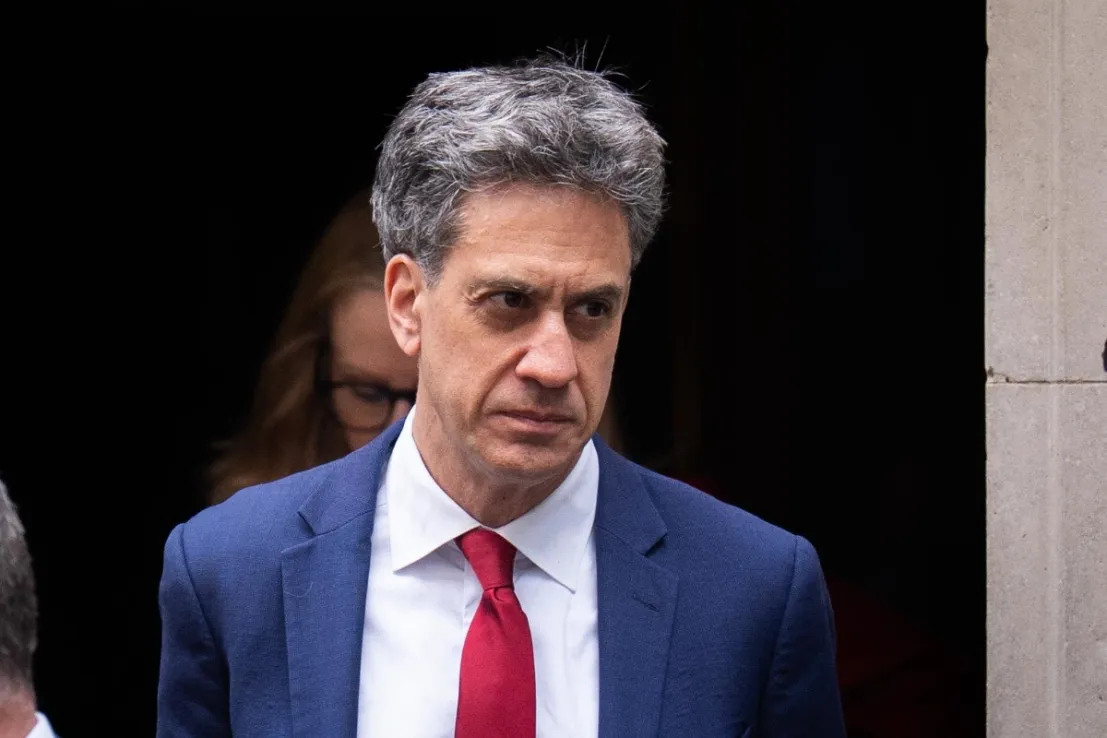
Ed Miliband declined to meet the UK motor industry's largest trade body during his two-year tenure as energy secretary, even as the government's contentious electric vehicle sales targets fell partly under his department's purview.
Mike Hawes, chief executive of the Society of Motor Manufacturers and Traders (SMMT), said the lobby group's requests to meet the senior Labour figure and discuss the so-called zero emission vehicle (ZEV) mandate went unheeded, despite warnings that the policy could hollow out the UK's carmaking sector, which supports roughly 200,000 direct manufacturing jobs and accounts for a significant share of the country's goods exports.
"We try and engage with all government departments, and Desnz [the Department for Energy Security and Net Zero] was the one we were least successful with," Hawes told reporters. When asked whether he had secured any meetings with energy ministers during the Starmer administration, he responded: "No. I've been in some with officials and junior ministers."
The ZEV mandate is a flagship environmental policy requiring carmakers to produce an increasing share of all-electric vehicles over time. It has generated considerable pushback from UK auto manufacturers, who, alongside the SMMT, argue that the targets are already too ambitious even in their early stages, particularly given that consumer EV uptake has lagged behind expectations amid persistent concerns over charging infrastructure availability and vehicle affordability. The policy has been cited as a factor putting carmakers at risk amid electric vehicle mandate and tariff pressures.
Miliband Overruled by Starmer Over EV Rules
Currently, roughly a third of all cars sold by automakers must produce zero emissions. Next year, that target — first introduced by the previous Conservative government — is set to increase to 38 per cent before reaching 52 per cent in 2028. A similar regime applies to vans. The ultimate goal is for all new vehicles sold in Britain to be fully electric by 2035, completely phasing out both internal combustion engines and plug-in hybrids, aligning with a broader European transition timeline.
Responsibility for the mandate spans the Department for Transport, the Department for Business and Trade (DBT), and Desnz, where Miliband served as energy secretary for two years before Andy Burnham appointed him to run the Foreign Office earlier this month.
The absence of a single accountable department has mired the policy in political debate, with both the DBT and Number 10 pushing to soften the proposals to avoid worsening conditions for Britain's already struggling car manufacturers.
According to a report in The Sunday Times, before his removal last month, Keir Starmer had been planning to overrule his energy secretary amid pressure from the industry and business committee chair Liam Byrne.
Hawes stressed that reform of the mandate was essential. "The consensus is, we need a review," he told reporters. "A review was slated for 2027, it needs to be brought forward, it needs to be resolved this year."
He added that carmakers in Britain are holding back investment decisions until they receive clarity on the mandate, cautioning that some may opt to direct those investments to other markets — a risk compounded by competing EV incentive regimes across European nations vying for the same manufacturing capital.
Stellantis cited the policy as a key factor behind its 2024 decision to close a major van-making plant in Luton. The Vauxhall manufacturer's chief executive warned that "all Stellantis production in the UK could stop" without a rule change, Sky News reported.
Outside of Desnz, the SMMT's engagement with other government departments had been very positive, according to Hawes, who noted that he had already spoken with new business secretary Jonathan Reynolds.
Desnz was approached for comment.

