"Trump Did All of It": Former Aide Details an Unprecedented Month of Presidential Offenses
Key Takeaways
- •Miles Taylor, former DHS chief of staff during Trump's first term, published a blog post on Tuesday claiming the media grants Trump a pass for conduct that would have been considered scandalous in any previous president.
- •Taylor framed his list of alleged episodes as hypotheticals with Barack Obama substituted for Trump, arguing a double standard and anchoring the events to the month before the midterm elections.
- •He described the list as incomplete, pointing to $810 million in congressionally approved spending he says Trump unilaterally cancelled, threatened disaster aid for North Carolina, and a 250-foot arch being built in Trump's honor ahead of court rulings.
- •Cult specialist Dr. Steven Hassan told AlterNet in August that Trump maintains supporter loyalty through cult-like control, emphasizing information control and emotionally charged rhetoric that frames opponents as threats.
- •University of Bristol cognitive scientist Dr. Stephan Lewandowsky said deeper attitudinal currents, including racism, religion, and beliefs about personal responsibility, are entangled in and difficult to disentangle from Trump supporters' allegiance.
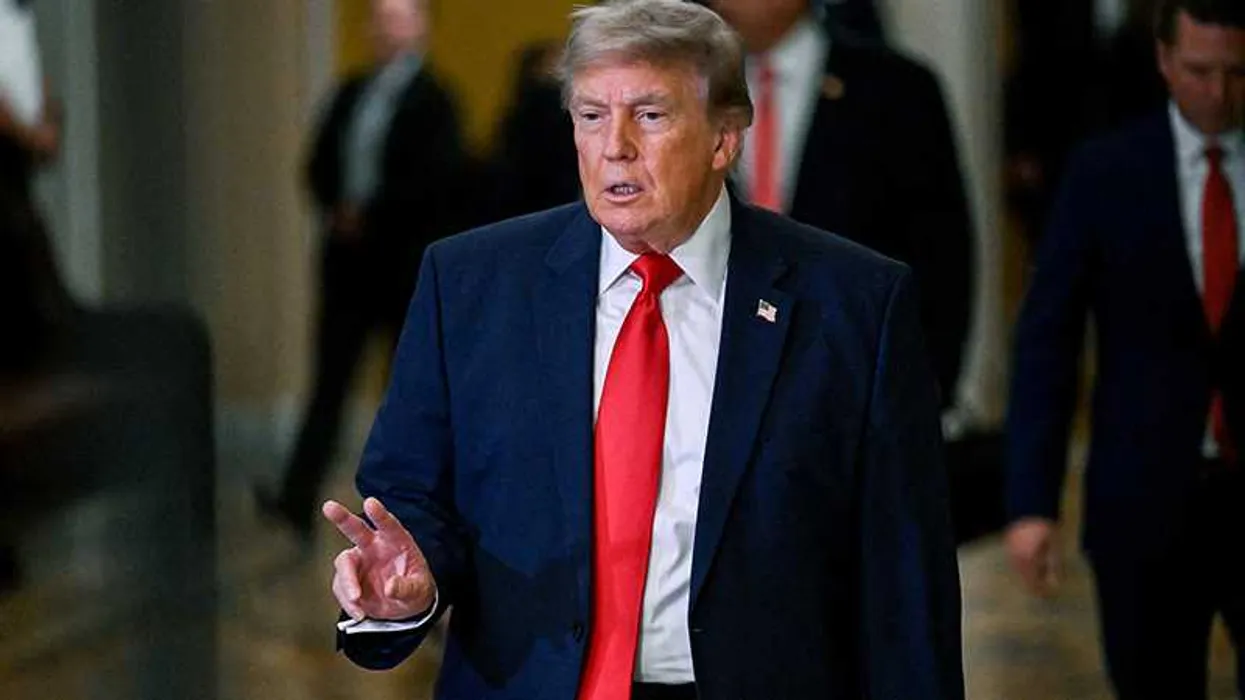
President Donald Trump has frequently likened himself to Abraham Lincoln, the Republican predecessor he regards as generally considered his superior. Yet according to one of Trump's former subordinates, the current president is distinctive in one respect: he receives a pass from the media for conduct that would have been deemed scandalous in any of his predecessors.
Miles Taylor, a former official for Trump's Department of Homeland Security during his first term, made that case in a blog post published on Tuesday. Taylor, who served as the department's chief of staff and later drew wide attention as the anonymous author of a 2018 New York Times op-ed criticizing the president before revealing himself as its author frames the significance of the moment not in any single act but in the volume and pace of the episodes he catalogs — and in what he describes as a normalization that has muted the reaction each would once have drawn.
"Imagine that weeks before a midterm, Barack Obama had run taxpayer-funded television ads starring himself… cut a deal with Vladimir Putin months after American intelligence caught Russia handing Iran the coordinates of U.S. troops in order to kill them… sent federal agents into the home of a Republican congresswoman… banned news outlets from the White House that investigated his administration… told a crowd of supporters that maybe one of our adversaries should bomb Republican-led cities… said he'd withhold money from GOP states that don't elect Obama-approved candidates… and met with outside advisers who've reportedly drafted plans for the president to declare martial law and seize Americans' ballots in the midterms," Taylor wrote.
He concluded: "Any one of those outrages would've spawned congressional fury. Together, they would've led to a spike in chatter about civil war. Yet Donald Trump did all of it (and then some) in just the past month."
The hypothetical framing carries his central claim: by substituting Obama into the same scenarios, Taylor is pressing an argument about a double standard, and he anchors the entire list to the run-up to the midterms — the window in which he says all of it occurred.
Taylor described the list as incomplete. "It leaves out the $810 million in congressionally approved spending that Trump unilaterally cancelled… the disaster aid he told North Carolina it wouldn't get if his candidate lost… and the 250-foot triumphal arch his administration is racing to build — in his honor — before the courts rule against him," he wrote.
His aside on the arch, which he asserts the courts will rule against, points to the two timelines hanging over his list: the legal challenges still ahead and the midterm elections he uses as his measuring stick.
Taylor's critique echoes earlier AlterNet reporting on the psychology of the president's support base. In August, cult specialist Dr. Steven Hassan suggested to AlterNet that one reason Trump's backers stand by him despite his many flaws is that he exerts a cult-like level of control over their loyalties.
"A key point in my BITE [Behavior, Information, Thought and Emotional] model of authoritarian control is information control, I emphasize how these destructive groups, like the Trump movement, are lying all the time," Hassan told AlterNet at the time. "And part of the appeal is really about using emotionally leading rhetoric to scare people, to create 'the other,' to demonize. I'll quote Eric Hoffer's 1951 book, 'The True Believer.' He said, 'The strength of a mass movement is proportionate to the vividness and tangibility of its devil.' We know that, evolutionarily, we're going to overreact to anything that's a perceived danger or threat to us. So 'owning the libs' means that they are a danger, and he's going to save people from them."
University of Bristol cognitive scientist Dr. Stephan Lewandowsky told AlterNet that deeper attitudinal currents also sustain the allegiance. "There's so much tied up in this," he said. "There's latent racism. There's religion. There's the general conservative idea that poor people are — it's their fault, they're just lazy, everybody is responsible for what happens to them… except me, because I'm a farmer, and therefore I'm not lazy, and I've tried everything, and I deserve a subsidy."
He concluded: "There's a lot of attitudes and underlying currents tied up in this that are difficult to disentangle."
Read together, Taylor's institutional indictment and the researchers' account of why that allegiance holds frame the stakes of the months ahead: whether the episodes he catalogs meet the response he says any prior president would have faced, or fade into background noise as the midterms approach.
The original version of this article appeared on Alternet.

