Whistleblower Miles Taylor Says CEOs Who Courted Trump Are ‘Bracing for an Onslaught’
Key Takeaways
- •Miles Taylor, who served at the Department of Homeland Security under Trump and later revealed himself as the anonymous author of a 2018 New York Times op-ed, says executives who courted Trump are panicking over coming investigations.
- •According to Taylor, the incoming Democratic majority is preparing a wave of congressional probes that could subpoena corporate records, compel sworn executive testimony, and turn private correspondence into public hearings.
- •Taylor cites reversals by major tech figures, noting Mark Zuckerberg and Sundar Pichai moved from criticizing Trump to supporting him, while Elon Musk spent roughly $290 million to help return him to office.
- •A Washington Post investigation reportedly found Apple and Nvidia each contributed $25 million to the $330 million White House ballroom fund, with Nvidia and other donors totaling at least $77 million requesting anonymity.
- •Taylor recommends that Democrats issue document preservation requests to every involved company, noting that destroying relevant records after such notices can itself constitute obstruction.
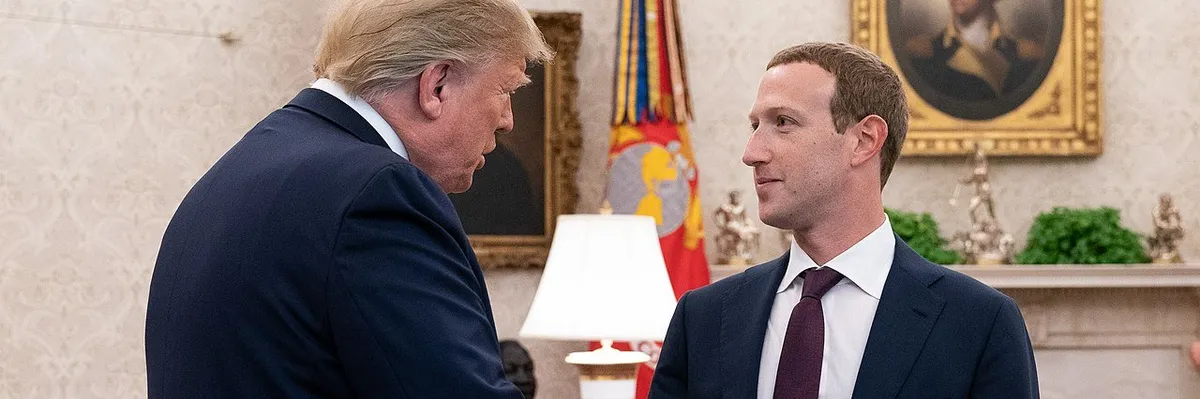
Miles Taylor, a former Homeland Security analyst in the Trump administration who later became a whistleblower, says the billionaires who paid Trump's big bills for political favors are panicking — and that they should be. Taylor served inside the Department of Homeland Security during Trump's first term and became publicly known as the anonymous author of a 2018 New York Times op-ed describing internal resistance to the president, before revealing his identity in 2020.
According to Taylor, who laid out his argument in an essay published at Defiance News, the incoming Democratic majority is already drawing up a second “blue tsunami” of investigations into corporations that spent the last two years currying favor with President Donald Trump. The executives who oversaw those influence campaigns, he added, are now bracing “for an onslaught”. The term maps onto the standard tools of congressional oversight, in which a chamber majority can subpoena internal records, compel sworn testimony from executives, and turn private correspondence into public hearings.
“I know many of the people who've got twisting stomachs this morning. I used to work with them,” Taylor said. “After I left government, I spent a period of time advising some of the top emerging technology, AI, defense, space, and biotech companies in the country on how to deal with Washington, D.C. (and often why to stay away from it). Far too many of them were eager to become ‘MAGA’ once Trump was re-elected, despite warnings about how quickly power changes hands in Washington.”
Trump is “obviously susceptible to being bought off, whether it's through flattery or funding,” Taylor said. “I saw it myself inside his first administration. Hell, everyone saw it. The man is a malfeasance magnet. And the tech titans and billionaires were all too willing to influence a man who was ready to be influenced.”
Now, he said, “those CEOs have no idea what's about to hit them” after showering “the president with literal gifts.”
“They wrote checks to his inaugural fund, underwrote the monument he is building to himself on the White House lawn, aired documentaries about his wife (and paid her for the privilege), settled lawsuits they should've won, and showed up in the Oval Office bearing tributes made of actual gold,” Taylor said. “All the while, those same companies were asking the federal government for billions of dollars in contracts, tariff exemptions, or regulatory sign-off on blockbuster mergers.”
Taylor called the conduct “corruption,” adding that the nation will soon see “evidence of a more damning word: bribery.”
He pointed to a series of reversals among the country's most prominent technology figures. Mark Zuckerberg threw Trump off Facebook in 2021 because of the risk he posed, yet three and a half years later he was “wiring a $1 million to Trump's inaugural fund, and sitting beside the president at a White House dinner.” Google CEO Sundar Pichai blasted Trump's January 6 insurrection, but by 2025 he was attending dinners and praising the man behind it.
Jeff Bezos once offered to strap Trump to a Blue Origin rocket and send him to space, as he told CBS News. This year, he described Trump as “more mature” in an interview with The Hill, even as Trump called Barack Obama a “traitor” and shared AI images of himself “escorting a handcuffed alien, kissing a statue of Jesus, carved into Mount Rushmore, looming over Greenland, and wading shirtless through the Reflecting Pool beside a woman in a bikini,” Taylor said. Elon Musk, after initially advising Trump to leave politics, went on to spend roughly $290 million to help put him back in office.
The courtship extended beyond public flattery. A recently revealed secret donor list showed that Apple and Nvidia each contributed $25 million to the $330 million fund Trump raised to “bulldoze the East Wing of the White House and build himself a gilded party hall,” according to a Washington Post investigation. Nvidia asked that its gift remain anonymous — as did other donors responsible for at least $77 million in contributions who insisted their names be withheld.
“I've helped run corporate giving initiatives at major companies before,” Taylor said. “I've steered money to wounded veterans and anti-poverty work. This was not that. Not a single soul at Nvidia believed the Donald J. Trump Ballroom was the most pressing social need in America.”
The anxiety among these donors is easy to explain, Taylor argued. “For every one of these acts, there's a paper trail somewhere. Each major company has a D.C. office, and each of those offices spent late 2024 and all of 2025 trading emails, texts, and Slack messages about how to position their company with the incoming president,” he said.
Democrats now have access to those records. Taylor suggested their first step should be to fire off document preservation requests to “every single one of these companies.” Such requests are a standard opening move in congressional investigations: they put recipients on legal notice to retain relevant emails, texts, and chat logs, and destroying records afterward can itself be treated as obstruction. If the incoming majority follows that playbook, the first visible sign of the “onslaught” may be preservation letters landing in corporate legal departments rather than dramatic public hearings.
The billionaires involved will “be rewarded” for “pay[ing] off a president who was abusing his power and torching the U.S. Constitution,” Taylor said. “Just not in the way you hoped.”

