Miles Taylor says Trump’s remarks on Iran echo a long fixation on nuclear weapons
Key Takeaways
- •Miles Taylor said Trump has treated nuclear weapons as instruments of power and coercion throughout his political career.
- •Taylor cited Trump’s recent remarks on Iran, including comments about ordering a massive attack and causing more pain, as part of the pattern.
- •He pointed to Trump’s 2017 threats against North Korea as the first clear sign, in his view, that Trump understood and might consider using nuclear weapons.
- •Taylor said the North Korea crisis prompted contingency planning for a possible nuclear strike on U.S. soil.
- •He argued that Trump’s fascination with nuclear weapons began during the 2016 campaign and has returned now that Trump is back in office.
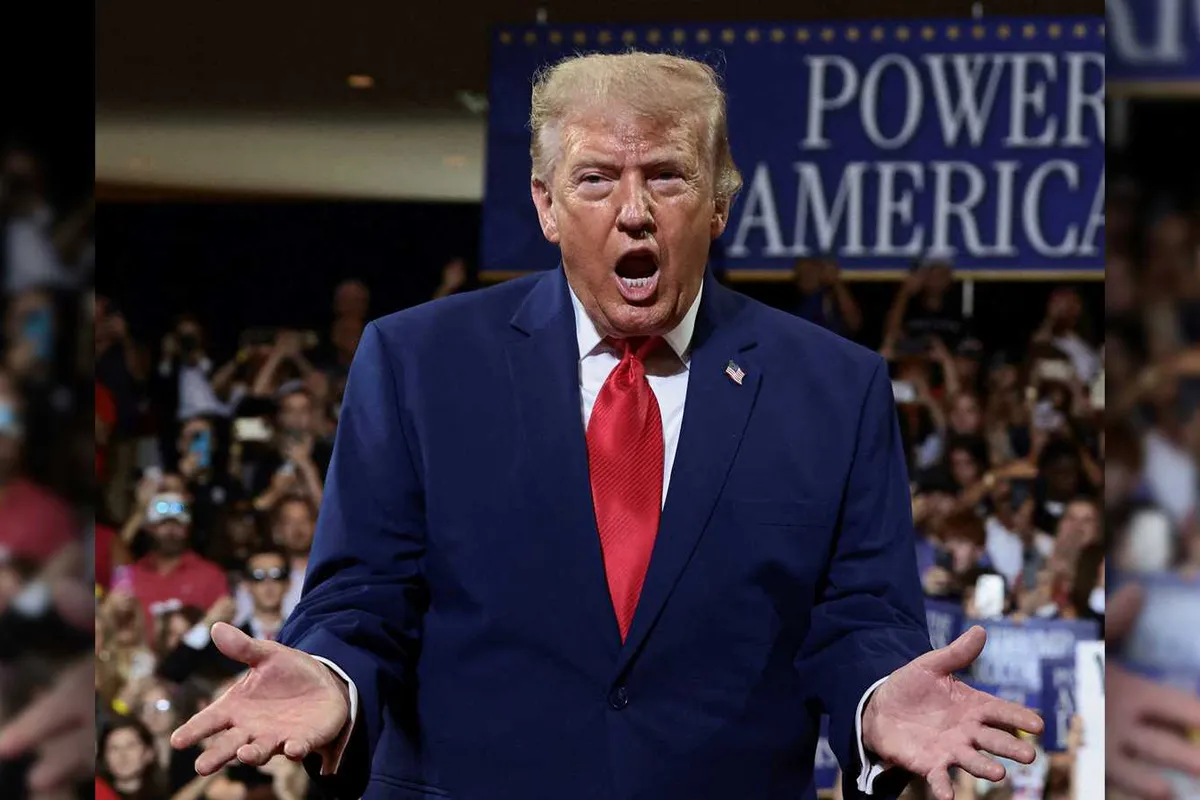
Over the course of his war with Iran, President Donald Trump has made inflammatory remarks that many have interpreted as suggesting a willingness to use nuclear weapons. Now a whistleblower from Trump’s first term says he “watched Donald Trump talk about nuclear weapons like they were presidential toys,” and that “he may be closer to playing with them than you think.”
The comments come from Miles Taylor, who served as deputy chief of staff at the Department of Homeland Security during Trump’s first administration and later became known for an anonymous article describing a resistance movement inside the White House. On Monday, Taylor published a new piece arguing that Trump has a “fixation” with nuclear weapons, an accusation that draws on both Trump’s public rhetoric and the officials who were around him when nuclear escalation was a live concern.
“Last week,” Taylor wrote, “the president told Axios he was ‘close’ to ordering a ‘massive attack’ on Iran … The threat had the same ominous feel of his April comments that ‘a whole civilization will die tonight.’ It was an insinuation that he possessed super powers — and might break the world’s nuclear taboo to end the stalemate.” The pause did not mean the war was over, however, and Trump told Axios why he believed the conflict should continue: “They haven’t received enough pain yet.”
“Not enough pain,” Taylor noted. “I’ve heard rhetoric like that from him before. And it wasn’t about Iran.”
Taylor pointed to 2017, when Trump, in Taylor’s telling, concluded that the only way to force North Korea to capitulate was to make it suffer. Trump tweeted at “Rocketman” Kim Jong-un and promised “fire, fury and frankly power the likes of which this world has never seen before” if the country did not meet his demands. Taylor said that was Trump’s first clear signal that he understood he controlled nuclear weapons and might be willing to use them. Kim responded by threatening to fire missiles at Guam and testing a nuclear-capable missile that could reach the U.S. mainland.
According to Taylor, the crisis escalated so quickly that Defense Secretary James Mattis began preparing Homeland Security officials for the possibility of nuclear war. “For the first time in the Department of Homeland Security’s history, we ran exercises for a potential real-life nuclear strike on American soil, because frankly, we couldn’t rule out that our own president might take us into such an apocalyptic situation.”
Taylor said the motivation was straightforward: “Trump wanted to see something blow up, and the rest of us built contingency plans around that desire. Thankfully, he didn’t launch nukes at North Korea. But General Mattis also isn’t at the Pentagon anymore. ‘Pistol Pete’ Hegseth is.”
He also argued that Trump’s fascination with nuclear weapons dates back to the 2016 campaign. Taylor wrote that MSNBC’s Joe Scarborough said a foreign policy adviser left a briefing with Trump rattled because Trump asked, three separate times, some version of: “If we have nuclear weapons, why can’t we use them?” Trump also told The New York Times that he was not sure it “would be a bad thing for us” if Japan built its own nuclear deterrent against North Korea, and he told CNN’s Anderson Cooper that Saudi Arabia should have nukes as well, “absolutely.” Taylor said that since then, Trump has “toyed with nuclear weapons more openly and more recklessly than any American president ever entrusted with the stewardship of the bomb.”
Now, amid what Taylor called an “unresolved war with Iran,” he warned that the public is seeing “a president who’s just one mood swing away from putting his finger on the proverbial red button.”
In Taylor’s view, the explanation for Trump’s behavior is not complicated. “Donald Trump has spent his entire presidency on a power quest, always hunting for the next most powerful thing he can do. And nuclear weapons are at the top of that list,” he wrote. “To say that he’s ‘toying’ with extreme powers is probably the wrong phraseology. He’s addicted to power. Very much like it’s an intoxicant.” Taylor added that when Susie Wiles, Trump’s chief of staff, told The Atlantic that her boss had an “alcoholic’s personality,” it was not, in his view, a slip of the tongue. “That’s how everyone who’s served the man has come to see him … He has an uncontrollable, pathological, junkie-like urge to power.”
Taylor concluded by warning that if “deploying troops to seize foreign leaders and raining missiles on other nations isn’t cutting it anymore,” he worries about where Trump’s quest for power may lead. He also pointed to reports that Trump left office with U.S. nuclear secrets and said, “Back in office, the fixation has returned.”

