Miles Taylor Rejects Katie Miller's Infidelity Allegation, Calls White House Retaliation 'a New Stage of Desperation'
Key Takeaways
- •Katie Miller, wife of White House chief of staff Stephen Miller, publicly accused Miles Taylor of an extramarital affair with the Secretary's executive assistant during his tenure as DHS deputy chief of staff.
- •Taylor rejected the allegation in a Friday Substack post, stating he was not married for most of his deputy chief of staff tenure, that the woman named never held the described role, and that he had no romantic relationships within the department.
- •Taylor connected the attack to his unanswered question about whether Trump would return Nvidia's $25 million contribution to the White House ballroom project, as Nvidia faces scrutiny over CEO Jensen Huang's alleged ties to a suspected Chinese spy.
- •In April 2025, Trump signed an executive order directing a government investigation into Taylor and suggested he was guilty of treason, with reporting by Maggie Haberman and Jonathan Swan later naming Stephen Miller among those behind retaliation orders targeting Taylor and former CISA director Chris Krebs.
- •Taylor argued the shift toward personal attacks is an effort to scare critics into silence, but maintained the strategy is failing as public anger over corruption grows.
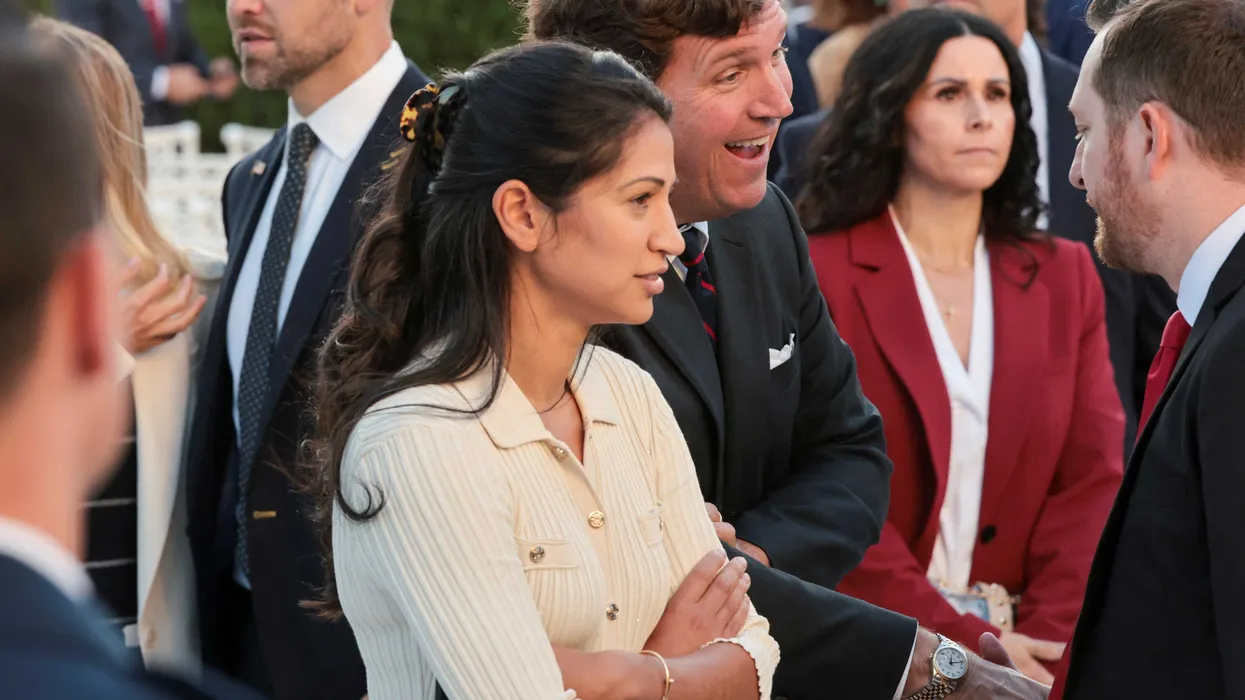
Miles Taylor, former chief of staff at the Department of Homeland Security (DHS), has remained a target of MAGA loyalists ever since he penned an anonymous tell-all editorial about President Donald Trump — the 2018 New York Times op-ed written under the pen name "Anonymous," whose authorship he kept secret until revealing himself in 2020. The latest attack came from Katie Miller, wife of White House chief of staff Stephen Miller, who alleged: "Miles Taylor cheated on his wife with the Secretary's Executive Assistant while he was Deputy Chief of Staff of the Department of Homeland Security."
In a Substack post published Friday, Taylor rebutted the accusation, writing that Miller appeared to be referring to his first wife, as he and his current wife were not together until after he had left the administration.
"The number of falsehoods packed into one sentence is almost comical," Taylor wrote. "I wasn't married for most of the time I was deputy chief of staff… Hannah was never the Secretary's executive assistant (and I had to stop and think about who was)… and I had precisely zero romantic relationships with anyone inside the Department during my time there. That didn't slow down the claim as it traveled through X at tabloid speed."
His wife, Taylor added, took the episode in stride with a sense of humor, saying she wished the two of them had gotten together two years earlier.
Taylor traced the personal attack to a recent question he raised about Trump's ballroom — the planned White House ballroom project — specifically, whether the president would return the $25 million given by Nvidia to partially fund the project. Nvidia has fallen under serious scrutiny after its CEO, Jensen Huang, was outed for having a relationship with a suspected Chinese spy.
The Nvidia scandal has rocked Washington this week. Derek Thompson, a contributing writer at The Atlantic, summed it up in a post on X: "1. Jensen Huang is sleeping with a Chinese spy. 2. Nvidia has been selling chips to Chinese AI companies for years through a Singapore intermediary overseen by that Chinese spy. 3. Nvidia's lawyers pushed back on a federal investigation into this illegal scheme. 4. The White House knew all of the above and did absolutely nothing."
According to Taylor, the question about returning the money bothered Katie Miller so much "that she answered it with a fabricated and tawdry story about my time at DHS, as if that might distract from the corruption in plain view." In his view, the real motive is her irritation over his attacks on her husband, who now serves as Trump's chief of staff, and he described the personal turn as "a new stage of desperation." His underlying question about the donation, as he recounts it, went unanswered.
"First, they tried treason," Taylor recalled. "In April 2025, the president signed an executive order directing the government to investigate me, and told reporters he thought I was guilty of treason. My offense was exercising my First Amendment rights." A White House official explained the thinking to Rolling Stone at the time: "Donald Trump needed to send a message."
Taylor noted that Maggie Haberman and Jonathan Swan later reported in their book "Regime Change" that Stephen Miller was one of the individuals behind the retaliation orders directed at him and Chris Krebs, the former director of the federal Cybersecurity and Infrastructure Security Agency whom Trump ousted in 2020 after Krebs's agency publicly affirmed the security of the 2020 election. Notably, Katie Miller celebrated the night the order was signed, calling Taylor a "traitor" and writing that "bad people always have a day of reckoning."
Now, Taylor argued, the effort has shifted to going after him personally — an attempt to scare critics into silence by making clear that anyone who speaks out will face the full weight of the White House.
"I hate to disappoint them, but it isn't working," Taylor wrote. "And it won't. Whatever window they had — in the dark early days of 2025 when law firms and universities were flagellating themselves in front of the president to avoid his punishment — closed a long time ago. The country has turned against this president. People are furious about the corruption, and they've stopped being afraid to say it."
As the Trump administration clings to whatever power and influence it held before Nov. 3, such attacks, in Taylor's telling, only deepen its own humiliation. Whether his question about the Nvidia money receives a substantive answer — rather than another personal volley — remains the open thread. His full essay appears on Defiance.
"I learned a long time ago that what is right and what is easy are almost never the same thing, and I've stopped lamenting the labor it takes to follow an ethical lodestar. I've come to rejoice in it," Taylor concluded.

