Former Rep. Mike Rogers Ends Press Conference After Reporter Asks About Data Centers
Key Takeaways
- •Rogers cut short the event after a reporter asked whether his position on data centers included support for a moratorium.
- •Opposition to data centers has grown as residents worry about higher utility bills, water use and limited long-term employment gains.
- •Rogers has previously supported data center growth and endorsed Donald Trump’s artificial intelligence framework.
- •Democratic candidate Abdul El-Sayed has said he supports data centers only if they do not raise utility rates, weaken reliability or affect water supplies.
- •The episode came one day after a report said Rogers accepted nearly $100,000 in donations from telecommunications-sector figures during his time in office.
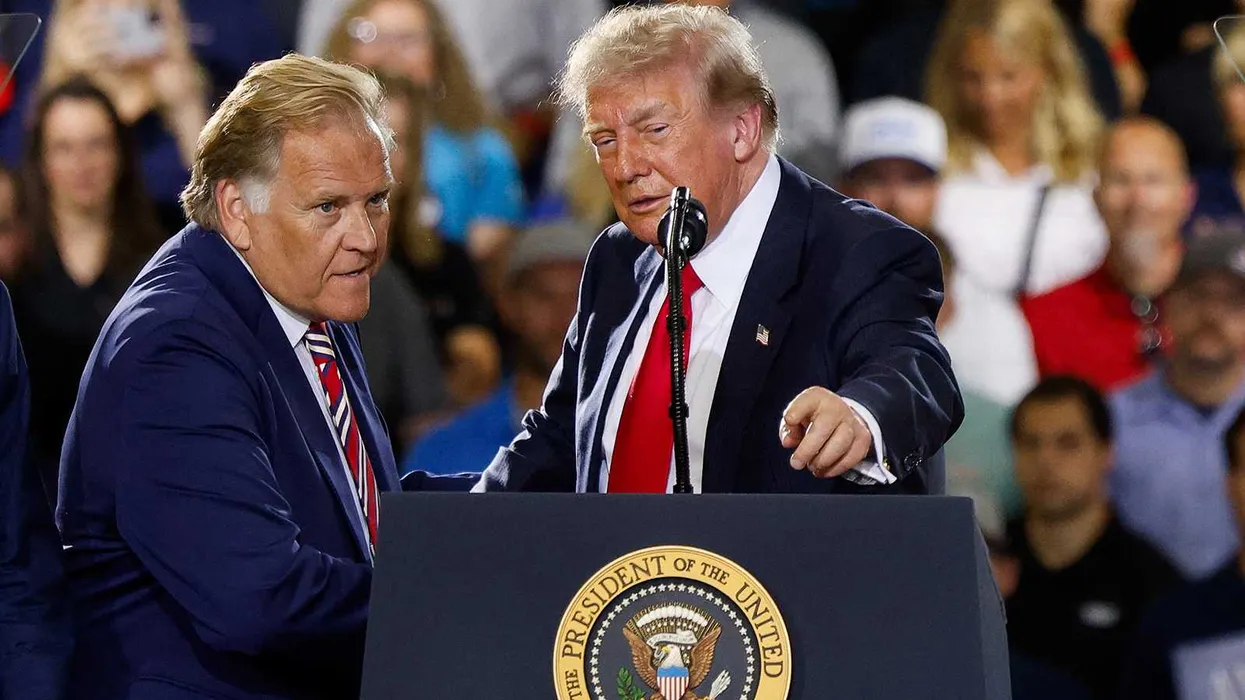
Former Rep. Mike Rogers (R-Mich.), the Republican candidate in this year's race for Michigan governor, cut short a Thursday morning press conference after a reporter pressed him on his position on data centers.
In a video posted by Craig Mauger of the Detroit News, Rogers had been discussing issues such as affordability and manufacturing. The full video shows the campaign calling on reporters, but the event was swiftly ended after Mauger shouted out his question about data centers.
"Thanks," Rogers said as he walked away. "I think we need to take a pause, probably, and make sure we're answering all the questions on that."
"Does that mean a moratorium?" Mauger asked.
Rogers then walked away while his staff waved their arms to clear away the press.
The anti-data center movement has become a major thorn in the side of pro-business Republicans, who are trying to make the case that artificial intelligence will bring jobs to the area. The friction mirrors debates in other states, where a data center construction boom driven by demand for AI computing power has raised questions about electricity demand, utility rates and water use. At a planning commission meeting in Bay City, Michigan, on Wednesday, residents raised concerns that new data centers could increase electricity bills, strain water supplies and deliver only limited long-term jobs, MLive.com reported.
Rogers has broadly supported data center expansions in the past. In June, Bridge Michigan reported that Rogers "endorsed President Donald Trump's artificial intelligence framework."
Data centers also featured in the debate among Democratic candidates during the primary. Abdul El-Sayed has spoken out in support of data centers, provided the facilities do not harm the electrical grid or the environment.
"We want to make sure that if you want to put a data center anywhere that it's going to meet the following terms: all union labor, no raising our utility rates, increasing our utility reliability, not touching our water," El-Sayed said during a June debate hosted by WOOD-TV.
The issue has cut across party lines in the race, with candidates in both parties fielding questions about the facilities' costs and local benefits as the November general election approaches.
The episode follows a Michigan Advance report on Wednesday that Rogers accepted nearly $100,000 in donations from key players in the telecommunications sector over the course of his time in office.
"Rogers' work with AT&T and its contribution to his campaign coincided with legislation he introduced that appeared to align with AT&T's lobbying efforts on behalf of legislation criticized by civil liberties groups, as well as their fight against net neutrality, which advocates have called one of the guiding regulation principles for a free and open internet," the report said.
According to the report, Rogers, a former FBI agent who later chaired the House Intelligence Committee, proposed legislation that would have "allowed telecom companies and internet service providers, or ISPs, to legally hand over swaths of private user data, including personally identifiable customer information, to the federal government, including agencies such as the National Security Agency, without judicial oversight." All of it would have been accessible without a warrant. The bill, the Cyber Intelligence Sharing and Protection Act, passed the House in 2012 but never became law.
Attempted to ask Mike Rogers about his policy stance on data centers this morning: pic.twitter.com/pPOYrdFvaW — Craig Mauger (@CraigDMauger) August 20, 2026
