Election Anxiety Mounts as Trump and MAGA Forces Face Midterm Test
Key Takeaways
- •President Trump directed the Justice Department to seek an injunction preventing Alaska from certifying its Senate results if Republican incumbent Sen. Dan S. Sullivan loses to Democrat Mary Peltola.
- •U.S. District Judge David Carter rejected the Justice Department's request to set aside more than 20,000 California ballots while the voters' citizenship was being verified.
- •Armed federal agents have been visiting homes across the country to question residents about their citizenship status and voting history, conduct DeVega describes as appearing to constitute voter intimidation.
- •The Washington Post reported that a small group of current and former national-security officials is quietly advising state governments and Congress on preparing for possible Trump administration interference in the midterm elections.
- •DeVega notes that Trump and his MAGA regime will remain in power for at least two more years regardless of the election outcome, and sociologist Charles Derber argues that defeating Trump alone would not restore the country's political health.
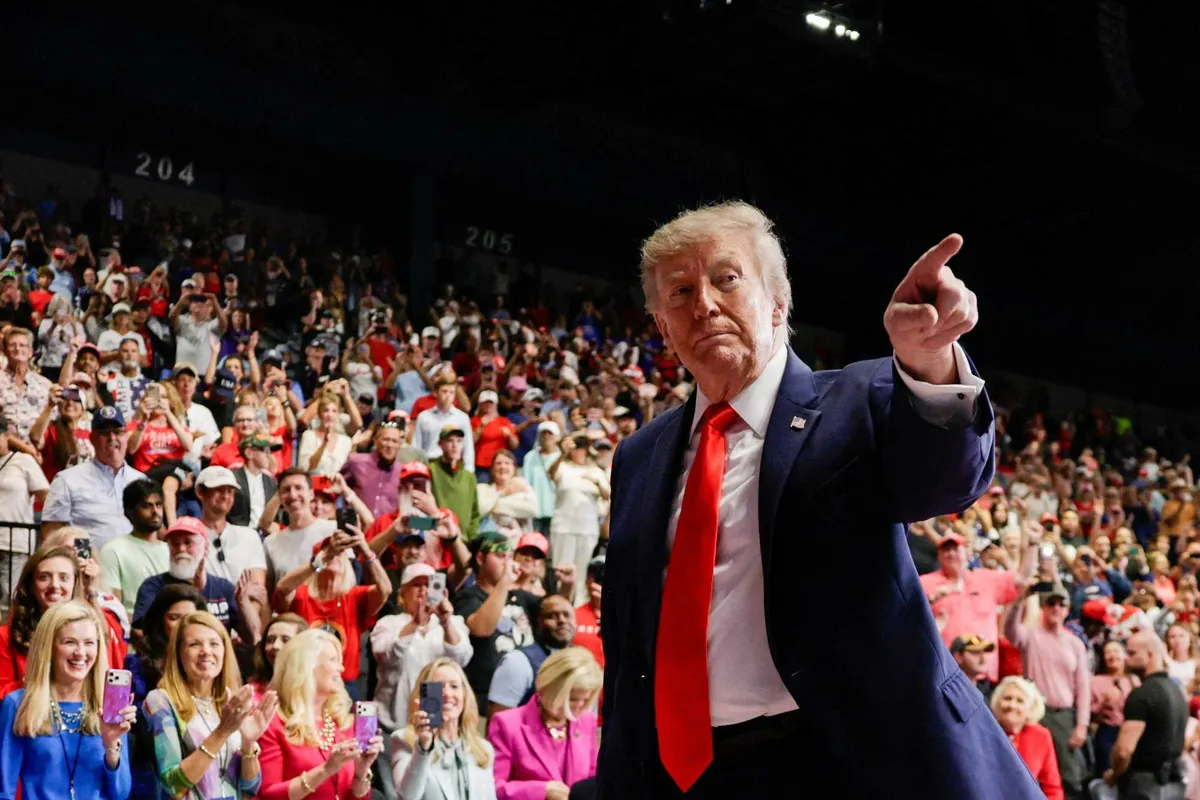
The U.S. midterm elections are only days away, and the country is facing what opinion writer Chauncey DeVega describes as a deepening political, moral and public mental-health crisis under President Donald Trump’s second administration. Held halfway through a president’s four-year term, midterm elections determine the makeup of Congress and, with it, the legislative balance for the remainder of that term.
DeVega portrays the country as traveling down a dangerous river created by Trump, Steve Bannon and their MAGA forces. Pollsters and analysts believe Trump and his MAGA Republicans could be defeated on Election Day, potentially in a blue wave. For pro-democracy Americans, that result could offer a path out of the “Age of Trump.” But the route, DeVega writes, is obstructed by the damage already caused by the administration.
“The American people are white-knuckling it,” he writes, arguing that Trump, his supporters and their enablers are trying to capsize the country’s political system. He warns that Americans who have lived with the crisis for so long may begin to accept its “filth and foul air” as normal.
One of the most consequential disputes involves Alaska’s Senate election. Trump directed the Department of Justice to seek an injunction blocking Alaska from certifying its Senate results if Republican incumbent Sen. Dan S. Sullivan loses to Democrat Mary Peltola. Certification is the formal process by which a state’s vote totals become official results — typically a routine administrative step that this directive turned into a federal court fight days before Election Day. The administration argues that the presence of a second candidate, Daniel J. Sullivan Jr., could confuse voters. DeVega characterizes the position as an argument that an election should be void if Trump’s preferred candidate loses.
The Justice Department also sought to have more than 20,000 California ballots set aside while the citizenship of the voters was verified. On Wednesday night, U.S. District Judge David Carter rejected that request.
“Eroded trust in our democracy is irreparable. Once a vote is segregated, lasting harm has occurred. If the Executive can discount votes and threaten an ongoing election due to unproven allegations, then our democracy is in danger. This Court declines to be a party to such process,” Carter wrote in his decision.
Armed federal agents are also visiting the homes of American citizens around the country and questioning residents about their citizenship status and voting history. DeVega describes the activity as appearing to constitute voter intimidation and violations of voting-rights laws.
The Washington Post reported last Tuesday that a small group of current and former national-security officials had been quietly advising state governments and members of Congress on preparing for the possibility that the Trump administration would attempt to interfere in the midterm elections. According to the Post, “Their efforts are motivated not by political bias, they say, but a growing sense of alarm that President Donald Trump will harm American democracy by undermining the integrity of the vote to keep the Republican Party in power.”
The election is functioning as a referendum on Trump, MAGA and the Republican Party, but DeVega notes that anger toward Republicans does not necessarily amount to support for Democrats. Many Americans, he writes, are repelled by what they regard as a fundamentally broken political system. Trump is presented as the most extreme expression of a broader crisis rather than its sole cause.
DeVega also describes the public as experiencing severe collective anxiety, potentially resembling a nationwide panic attack. He recommends grounding techniques such as focusing on breathing and identifying five things in the immediate surroundings — an approach that mirrors the widely taught 5-4-3-2-1 grounding exercise used to manage acute anxiety. He recounts that a friend who had experienced panic attacks since Trump returned to power said this advice had helped.
The essay argues that a leader’s pathological behavior can spread throughout society. DeVega points to several examples.
Several weeks ago, Secretary of War Pete Hegseth announced that the Pentagon would broadcast the execution of Nidal Hasan, the convicted Fort Hood mass murderer and terrorist, whose 2009 attack at the Army base in Texas killed 13 people. Trump initially endorsed the execution but changed position after public backlash. DeVega writes that broadcasting the killing of a man in a wheelchair was apparently too disturbing even for Trump. Trump has also continued to threaten Iran with annihilation and genocide if it does not surrender.
DeVega further accuses Trump of promoting racism and white supremacy. In speeches and social-media posts, Trump has portrayed Black Somalis as primitives and “low IQ people” from a “sh**hole country” who do not wear clothes, then come to the United States, become wealthy and drive luxury cars by committing fraud. In a Truth Social post, Trump told the white people of Minneapolis to “fight back” against Black Somali “invaders” and said he would send federal forces to support them. DeVega characterizes the rhetoric as incitement equivalent to a “race riot”—or a pogrom.
Trump has also directed the Justice Department to find a way to revoke Rep. Ilhan Omar’s citizenship, according to the essay. DeVega emphasizes that Omar is Black, a woman, the child of refugees, a Muslim and a vocal critic of Trump and his political project. He writes that her identity and what she represents are incompatible with Trump’s MAGA vision.
The essay describes Trump as increasingly resembling a “MAGA Cult Leader.” At a rally in Greenville, North Carolina, a video portrayed him as a prophetic leader chosen by God to protect the nation. Accompanied by somber music, it said: “I need somebody with arms strong enough to wrestle the deep state, and yet gentle enough to deliver his own grandchild. So, God gave us Trump.”
Trump’s followers have assaulted protesters at his rallies, and DeVega writes that Trump encourages and praises such conduct.
Reflecting on the cumulative stress of the Trump era, DeVega discusses depersonalization—the feeling of being disconnected from oneself, one’s thoughts or one’s body. He says the condition can occur in response to trauma or extreme stress and suggests that a fuller history of the period may show that many Americans experienced episodes of what could be called mass depersonalization without having the language to understand them.
Two weeks ago, Trump shared Truth Social videos depicting people being mauled by tigers and other wild animals. In one video, he used artificial intelligence to portray himself playing with the tiger that killed a former child actor at a British wildlife park.
After receiving an alert about the video late at night, DeVega said he briefly wondered whether he was dreaming or had consumed contaminated whiskey. He emailed a fellow writer, described as a leading psychiatrist and psychoanalyst who also keeps late-night hours. The psychiatrist replied:
If Trump were sane, instead of this stunt he’d be trying to walk back his demented statements and actions and appearing to be as decent as he can pretend to be. But, like Hitler invading the USSR, his delusional belief in his power and greatness leads him to think that whatever he does will be triumphant and accepted by followers who share his belief that he is a god. The spectacle is not just absurd. It batters the public’s sense of reality.
DeVega describes himself as one of the “chroniclers and pilots” traveling through what he calls the river of the Trump era and American fascism. He says that a pilot can navigate only one section of a long and dangerous river and that no individual can understand the entire route alone.
He asked sociologist Charles Derber what could follow the Age of Trump. Derber responded that defeating Trump alone would not restore the country’s political health. Because Trump’s attacks are constant and the media repeatedly report his lies, Derber argued, the president’s campaign against legal protections and civil rights becomes normalized.
Fighting Trump therefore requires resisting the normalization of rage and repression, according to Derber. But returning to the pre-Trump political order would not be sufficient either, because that would restore an earlier corporate system that also normalized the mistreatment of workers and outsiders. The resistance, he said, must reject both Trump and the profit-driven system that helped produce him.
African American studies professor, author and moral philosopher Eddie S. Glaude Jr. connected the political and emotional crisis to what he described as a deeper spiritual sickness in American society.
“We’re not well, and we’re so busy with the demands of living in this place called the United States that we won’t take the time to simply say, ‘We’re not okay. It’s not just them. It’s all of us.…. We are experiencing, in my view, an epidemic of selfishness in this country,” Glaude said.
Whatever happens in next Tuesday’s midterm elections, DeVega writes, Trump and his MAGA regime will remain in power for at least two more years. He concludes that Americans who see a way forward must return to the “riverboat” to rescue those who have been thrown overboard and recover the bodies so their families can have closure.
Chauncey DeVega is a politics and opinion writer whose work examines American democracy, inequality, political power and the continuing significance of race in the United States and the wider world. He was formerly a senior politics writer at Salon. His essays and commentary have been cited by The New York Times, The Washington Post, the BBC, NPR, The Atlantic and other leading publications. He hosts The Chauncey DeVega Show and The Truth Report. An expanded version of the essay is available on his Substack, Indomitable.

