Middle East Conflict Disrupts Global LNG Markets, Casting Doubt on Long-Term Growth Outlook
Key Takeaways
- •LNG prices have doubled since January 2026, with buyers paying $20-22 per MMBtu compared to $10 at the start of the year.
- •The Strait of Hormuz, through which roughly one-fifth of global LNG supply normally transits, has become effectively impassable for many carriers due to the conflict.
- •Asian countries including Japan, the world's second-largest LNG importer, have ramped up coal power generation to substitute for expensive liquefied gas.
- •Gas Strategies estimates global LNG demand could decline by 8% in 2026 compared to 2025 if Persian Gulf gas flows remain subdued throughout the year.
- •Approximately 207 million tons of new annual LNG capacity is expected online by 2030, equivalent to roughly half of today's total global supply, though buyer demand remains uncertain.
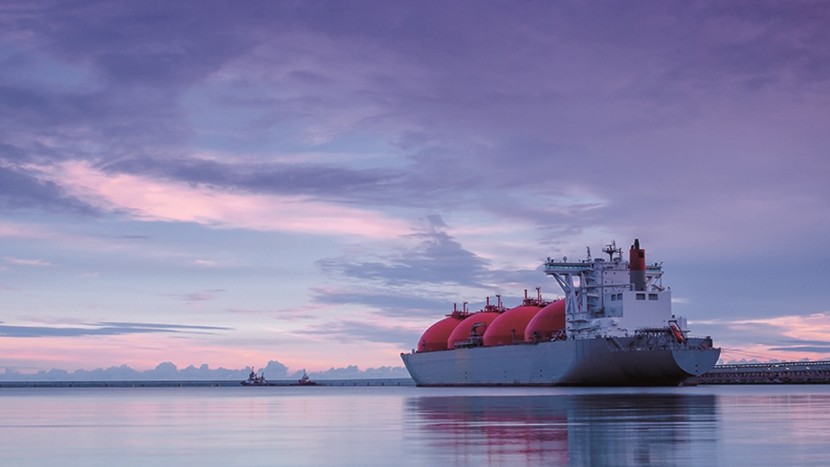
The Middle East war has triggered what may be an unprecedented disruption in global energy flows. While crude oil has dominated headlines, the situation in the liquefied natural gas (LNG) sector is arguably more severe — and potentially more consequential for the commodity's long-term trajectory.
At the end of June, Shell released a long-term LNG demand forecast projecting global consumption to reach nearly 700 million tons annually by 2050, representing a 65% increase from 2025 levels. The supermajor stated this growth would come "as countries continue to prioritise flexible and reliable energy security offered by gas and LNG."
LNG has proven to be a highly flexible transport commodity, with liquefaction technology making natural gas trade truly global. However, the war — which prompted a force majeure declaration at Qatar, one of the world's top three LNG exporters alongside the United States and Australia — has exposed the limits of even this flexibility.
LNG exports from the Persian Gulf have slowed to a trickle due to the conflict. The Strait of Hormuz, through which roughly a fifth of global LNG supply normally transits, has become effectively impassable for many carriers. Energy importers still value whatever volumes they can secure and are willing to pay a premium as seasonal demand peaks in the northern hemisphere. That premium has climbed substantially, and some analysts now believe the war premium could alter the long-term outlook for LNG.
Since January, LNG prices have doubled. Pat Breen, chief executive of energy consultancy Gas Strategies, told The National: "Buyers who paid $10 per million British thermal units (MMBtu) in January have paid $20 to $22/MMBtu for much of July."
The price surge has clearly hurt LNG demand. Even Pakistan, despite limited financial resources, has paid the premium to secure critical gas cargos during peak demand season. Across Asia more broadly, countries have ramped up coal power generation, including Japan — the world's second-largest LNG importer — effectively substituting coal for expensive liquefied gas.
Europe is also falling significantly behind on its gas storage refill due to elevated LNG prices, a clear instance of price-driven demand destruction. The continent's vulnerability is heightened because it substantially increased its reliance on LNG after sharply reducing Russian pipeline gas imports in the wake of the 2022 Ukraine conflict. According to Gas Strategies, as cited by The National, global LNG demand could fall by 8% this year compared to 2025 if Persian Gulf gas flows remain subdued throughout the year.
The likelihood of that scenario appears significant. Recent attacks on LNG carriers in the Strait of Hormuz suggest that normalizing energy trade through the chokepoint is a distant prospect. With U.S.–Iran peace talks reportedly occurring only in media coverage rather than in practice, the supply squeeze is expected to persist and deepen.
Not all importers are equally exposed to the war's impact on energy demand. China sharply reduced its LNG purchases in the second quarter but has seen imports rebound this quarter. At the end of June, Kpler reported that China was increasing its liquefied gas purchases as electricity demand rose with temperatures while domestic production declined.
China holds a stronger position than many other importers, including European Union members, because it imports both LNG and pipeline gas from Russia. The EU is also importing Russian LNG at record rates, but this is set to end at the start of 2027 when the EU ban on Russian gas imports takes effect.
On the other hand, the EU ban could free additional liquefied gas for other buyers — potentially redirecting demand to major LNG exporters such as the United States and Australia. The U.S. is already the world's largest LNG exporter and continues to build new liquefaction capacity. Theoretically, additional supply should lead to lower prices, but with Qatari supply still constrained by the effective closure of the Strait of Hormuz and continued attacks on vessels in the waterway, the war premium will likely remain substantial.
Breen suggests that while the short-term supply situation is tight, conditions could shift by next year, forcing LNG producers to reassess expansion plans. By 2030, approximately 207 million tons of new annual LNG capacity is expected to come online — an amount equivalent to roughly half of today's total global LNG supply — though it remains uncertain whether sufficient buyers will emerge for that volume.
However, the risk of an oversupply with no buyers appears limited. As demonstrated across commodity cycles, when prices fall, demand rises — a dynamic observed in oil markets and expected to apply to gas as well, despite the push to expand wind and solar generating capacity. The underlying reason is straightforward: gas provides on-demand electricity generation and can be stored for extended periods, unlike intermittent renewable sources.
By Irina Slav for OilPrice.com

