MicroStrategy Raises Cash Through Share Sales as Bitcoin Purchases Pause
Key Takeaways
- •MicroStrategy raised $544.5 million by selling 5.43 million shares, bringing its cash reserve to $3.75 billion.
- •The company has gone five consecutive weeks without buying Bitcoin as it focuses on liquidity and capital management.
- •Its Digital Credit Capital Framework is intended to fund preferred-share dividends and debt interest, which total about $1.76 billion annually.
- •Two July share raises created about 7.6 million new shares, representing nearly 2% dilution based on April’s proxy share count.
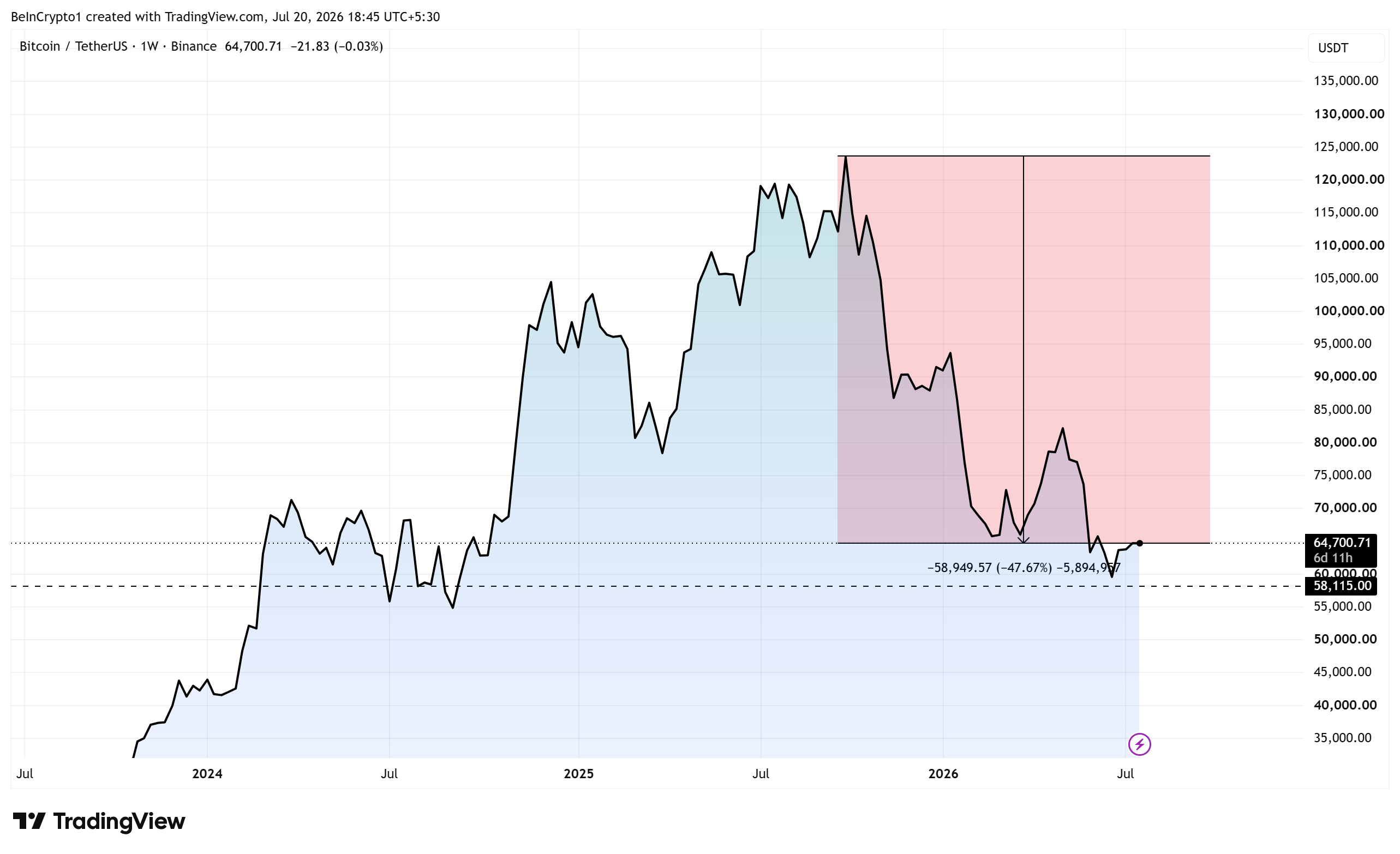
- •MicroStrategy’s average Bitcoin cost is $75,476 per coin, while Bitcoin recently traded near $64,700.
MicroStrategy has gone five consecutive weeks without buying Bitcoin, choosing instead to raise cash through stock sales. The company sold 5.43 million shares to bring in $544.5 million, lifting its cash reserve to $3.75 billion. The continued issuance has drawn criticism from some investors, particularly after the company previously indicated it would avoid issuing stock below a 1.2x NAV, a valuation threshold tied to how the market prices the company relative to its net asset value.
We repurchased 288,930 shares of $STRC for $25M at an average price of $86.52 per share. We intend to remain a regular, disciplined buyer of STRC below $100. More at deeper discounts, less as STRC nears $100. Another $975M remains available for our prefs. — Strategy (@Strategy) July 27, 2026
“This harms current share holders a lot because Every share sold dilutes existing holders, and they’re being diluted to fund a Bitcoin position that’s already down $8.84 billion,” analyst Bull Theory noted.
What MSTR Share Sales Are Funding
The latest fundraising follows another recent raise of $466.7 million through the same mechanism. The proceeds support the company’s Digital Credit Capital Framework, a policy introduced in June that sets aside funds for specific obligations: paying dividends on preferred shares and interest on debt.
According to the company’s announcement, those obligations total about $1.76 billion annually. The $3.2 billion reserve covers roughly 22 months of payments, while the board requires only 12 months of coverage. That excess coverage is important because the framework is meant to separate required cash payments from the timing of Bitcoin purchases or sales.
“Strategy remains committed to Bitcoin as its primary treasury reserve asset. At the same time, Digital Credit requires liquidity, discipline, and active capital management,” Michael Saylor, Strategy’s founder and executive chairman, said when introducing the framework.
The Trade-Off for MSTR Investors
The cash reserve matters because of the company’s Bitcoin cost basis. MicroStrategy paid an average of $75,476 per Bitcoin, or $63.7 billion in total, according to its July disclosure. Bitcoin is now trading near $64,700, about 48% below its October 2025 peak. That difference produced an $8.32 billion paper loss last quarter.
June illustrated the risk the reserve is intended to address. Strategy sold 3,588 BTC near $60,000 each to pay dividends, selling below its own average cost. The reserve is designed to prevent a repeat of that situation.
That protection comes with dilution. The two July raises created roughly 7.6 million new shares, equal to nearly 2% dilution in two weeks based on April’s proxy count of 327 million shares. The company still has another $23.5 billion in ATM capacity available, leaving investors focused on whether future issuance is used primarily to maintain liquidity, buy Bitcoin, or support preferred-share obligations.
MSTR traded at $96.22 in Monday pre-market trading, up 1.45% from its previous close of $94.85. The stock remains well below its 52-week high of $437.
Observers differ on the significance of the shift. Bitwise CIO Matt Hougan believes the firm’s period as a dominant buyer is over. Grayscale, however, has argued that controlled Bitcoin sales could stabilize BTC rather than push it lower. Saylor continues to describe corporate Bitcoin adoption as inevitable.
For MSTR investors, the central issue is whether a smaller stake in a company with a larger liquidity buffer is preferable to a larger stake in one with less financial cushion. The answer depends on how MicroStrategy balances future Bitcoin purchases against reserve-building.

