Microsoft Says New Cybersecurity AI Model Outperforms Anthropic’s in Internal Testing
Key Takeaways
- •Microsoft said MDASH scored 95.95% on the CyberGym cybersecurity benchmark in its internal testing.
- •The company reported that MDASH outperformed Anthropic’s Mythos 5 and GPT-5.6 Sol on the same evaluation.
- •Microsoft said the new model operates at about half the cost of competing systems.
- •The reported benchmark results had not appeared on CyberGym’s public leaderboard and had not been independently confirmed.
- •The announcement reflects intensifying competition to build AI tools for cybersecurity and enterprise defense.
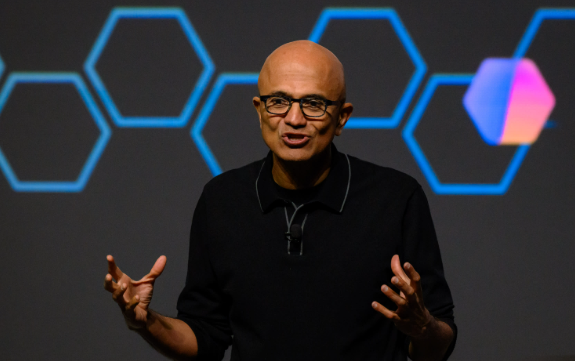
Microsoft has announced its first dedicated cybersecurity artificial intelligence model, saying it achieved higher performance than Anthropic’s Mythos model in internal testing while operating at about half the cost.
The company said its new cybersecurity model, known as MDASH, scored 95.95% on the CyberGym evaluation benchmark, outperforming Anthropic’s Mythos 5 model, which reportedly scored 83.8%, as well as GPT-5.6 Sol, which recorded 83.6%.
The announcement underscores intensifying competition among major technology companies to build AI systems capable of defending against increasingly sophisticated cyber threats, especially as enterprises look for tools that can handle growing alert volumes without adding significant operational overhead.
The development was highlighted by market observers, including the verified X account Coin Bureau, which referenced Microsoft’s reported cybersecurity AI performance claims and the potential impact on the rapidly expanding AI security market.
However, the reported results were based on Microsoft’s own evaluation and had not appeared on CyberGym’s publicly available leaderboard, according to reports from Decrypt. Independent verification of the benchmark results has not yet been publicly confirmed.
Microsoft Expands Its AI Strategy Into Cybersecurity
Microsoft’s move into specialized cybersecurity AI reflects a broader industry shift toward using artificial intelligence to protect digital infrastructure.
Cyberattacks have become increasingly complex as organizations around the world rely more heavily on cloud computing, connected devices, and digital services.
Traditional cybersecurity tools often depend on predefined rules, signatures, and human analysis. While those methods remain important, companies are increasingly turning to AI systems that can identify unusual patterns, analyze large volumes of security data, and respond more quickly to emerging threats.
Microsoft has positioned artificial intelligence as a central part of its cybersecurity strategy, combining its security infrastructure with advanced AI models.
The company already operates a large cybersecurity ecosystem through products used by businesses and government organizations worldwide. The introduction of a dedicated cybersecurity model represents an effort to further integrate AI capabilities into security operations.
MDASH Reportedly Delivers a Higher CyberGym Score
According to Microsoft, MDASH achieved a 95.95% score on the CyberGym benchmark, placing it ahead of several competing AI systems.
CyberGym is designed to evaluate AI models on cybersecurity-related tasks, including threat analysis, vulnerability identification, and problem-solving scenarios.
Microsoft said the model was able to complete challenging security tasks with high accuracy while maintaining lower operational costs.
The company’s reported comparison showed MDASH outperforming Anthropic’s Mythos 5 and GPT-5.6 Sol during testing.
The results suggest that specialized AI models built for specific industries may compete effectively with broader general-purpose systems.
At the same time, cybersecurity researchers often caution that benchmark results should be interpreted carefully, because performance in controlled testing environments does not always translate directly into real-world security operations.
Microsoft Combines Its Own Model With OpenAI Technology
One notable feature of Microsoft’s cybersecurity system is its hybrid design.
Reports indicate that MDASH combines Microsoft’s own cybersecurity-focused model with OpenAI’s GPT-5.4 technology.
According to Microsoft, GPT-5.4 is used for the most difficult portion of tasks, representing about 10% of the overall workload.
The strategy allows Microsoft to use specialized AI capabilities for most cybersecurity operations while relying on a more advanced general reasoning model for highly complex challenges.
This approach reflects a growing trend in AI development, in which companies combine multiple models instead of relying on a single system.
Hybrid AI architectures can potentially improve efficiency by assigning different tasks to models based on their strengths. For cybersecurity applications, that could help organizations balance speed, accuracy, and cost.
Cost Efficiency Is Becoming a Key Factor in AI Competition
While AI performance remains a major focus, cost has become one of the most important factors in enterprise adoption.
Advanced AI systems require significant computing resources, including powerful processors, large-scale infrastructure, and ongoing maintenance.
For businesses deploying AI cybersecurity solutions, operational costs can determine whether a technology is practical at scale.
Microsoft’s claim that MDASH operates at half the cost of competing systems highlights the growing importance of efficiency in the AI market.
Organizations are increasingly looking for AI solutions that deliver strong performance without excessive spending.
Lower costs could make advanced cybersecurity tools accessible to more businesses, including smaller companies that may not have had the resources for sophisticated security operations.
Cybersecurity Faces a Growing Threat Landscape
The demand for advanced cybersecurity solutions continues to rise as cyber threats become more frequent and sophisticated.
Companies, governments, and critical infrastructure providers face risks ranging from ransomware attacks to data breaches and advanced persistent threats.
Attackers are also beginning to use artificial intelligence to improve their own capabilities, creating a technological race between cyber defense systems and malicious actors.
Security experts have warned that AI could make cyberattacks faster, more automated, and harder to detect.
As a result, organizations are investing heavily in AI-powered defenses designed to identify threats earlier and respond more effectively.
Microsoft’s cybersecurity AI initiative enters a market where demand is expected to grow significantly over the coming years.
Source: Xpost
AI Security Models Could Change Enterprise Defense
The introduction of specialized cybersecurity AI models could change how companies manage digital security.
Security teams often face challenges involving large amounts of data, limited staffing, and increasingly complex attack methods.
AI systems can assist analysts by automatically reviewing security alerts, identifying potential vulnerabilities, and suggesting responses.
Rather than replacing human cybersecurity professionals, many experts expect AI tools to function as assistants that increase productivity.
A cybersecurity analyst supported by AI could potentially investigate threats faster and focus on more complex strategic decisions.
The effectiveness of these systems, however, will depend on accuracy, reliability, transparency, and the ability to operate safely in sensitive environments.
Competition Between Microsoft, Anthropic, and OpenAI Intensifies
The cybersecurity AI market is becoming another area of competition among leading artificial intelligence companies.
Microsoft has invested heavily in AI through its partnership with OpenAI while also developing its own internal AI technologies.
Anthropic has focused on building reliable and safety-oriented AI systems, while other technology companies continue to develop specialized models for enterprise applications.
The competition reflects a broader shift in the AI industry, where companies are moving beyond general-purpose chatbots toward specialized systems designed for specific professional fields.
Cybersecurity is considered one of the most valuable areas for AI development because of its direct impact on businesses, governments, and consumers.
Questions Remain Over Independent Verification
Although Microsoft’s reported results have drawn attention, analysts note that independent verification remains important.
The CyberGym leaderboard had not publicly listed the reported MDASH score at the time of reporting, according to information cited by Decrypt.
Independent benchmarks allow researchers and users to compare AI systems under consistent conditions.
Without external confirmation, performance claims should be viewed as preliminary until additional testing is conducted.
That does not necessarily reduce the potential significance of Microsoft’s development, but it does highlight the importance of transparency in AI evaluation.
As competition increases, reliable benchmarking will become increasingly important for businesses selecting AI security solutions.
Microsoft’s Broader Vision for AI-Powered Security
Microsoft has increasingly positioned itself as a leader in AI-powered enterprise technology.
The company believes artificial intelligence can improve productivity, automate complex processes, and strengthen cybersecurity defenses.
Through its cloud infrastructure and security platforms, Microsoft has access to extensive data and operational experience that could support the development of advanced security models.
The integration of AI into cybersecurity represents a major strategic opportunity as organizations seek better protection against evolving threats.
Outlook for Cybersecurity AI
The development of models like MDASH suggests that specialized AI systems may become increasingly important across professional industries.
Cybersecurity is likely to be one of the earliest areas where AI delivers measurable operational benefits because of the large amount of data analysis required.
Future cybersecurity AI systems may be capable of monitoring networks continuously, predicting possible attacks, and assisting security teams with complex investigations.
However, continued progress will require careful attention to privacy, security, accuracy, and responsible deployment.
Companies will also need to ensure that AI tools themselves do not introduce new vulnerabilities into critical systems.
Microsoft’s reported cybersecurity AI breakthrough marks another development in the competition to build advanced artificial intelligence systems for enterprise use.
The company says its MDASH model achieved a 95.95% score on CyberGym testing, outperforming Anthropic’s Mythos 5 and GPT-5.6 Sol while operating at a significantly lower cost.
Although the results remain based on Microsoft’s own evaluation and still require independent verification, the announcement highlights the rapid evolution of AI-powered cybersecurity.
As cyber threats continue to expand, organizations are increasingly looking to artificial intelligence as a critical tool for protecting digital infrastructure.
The next stage of competition will likely focus not only on intelligence and accuracy, but also on reliability, affordability, and real-world effectiveness.

