Too Much 'Crazy': Why the Press Has Become Numb to Trump's Meltdowns
Key Takeaways
- •New York Times columnist Michelle Goldberg says the sheer quantity of Trump-related controversies limits how thoroughly the paper can cover his age and mental decline relative to its earlier scrutiny of Joe Biden.
- •Among recent episodes, Trump posted images declaring the Strait of Hormuz 'new U.S. territory,' which former U.S. ambassador to Russia Michael McFaul denounced as 'just crazy' and evidence the United States is no longer a serious country.
- •Trump has drawn criticism for calling himself America greatest president in a post that omitted 11 former chief executives, including Ronald Reagan.
- •Goldberg argues voters knew what they were getting when they re-elected Trump twice, distinguishing his case from a 'bait-and-switch' like Senator John Fetterman's.
- •Goldberg suggests Trump's erratic behavior may now be more visible among Republicans as his poll numbers decline and the myth of great-man inevitability wears thin.
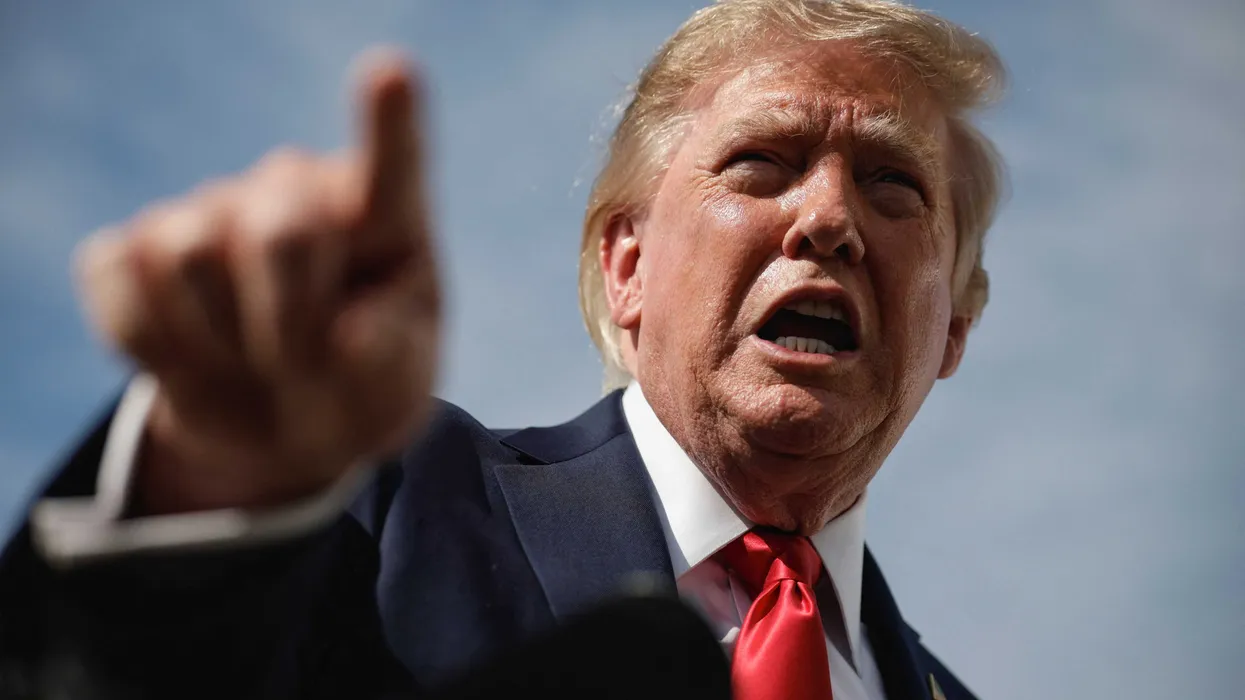
New York Times columnist Michelle Goldberg says she gets emails all the time from frustrated readers asking why the newspaper does not fully cover the extent of President Donald Trump's advanced age and mental "decline" the way it covered similar questions about former President Joe Biden. One of the answers, she says, involves the sheer quantity of it all.
"I mean, one is just that there's only so much room, and scandal expands to fit the space available," Goldberg wrote.
That volume creates a challenge beyond deciding which individual episode deserves attention: repeated controversies can make behavior that once seemed extraordinary harder to assess in the broader public conversation. Goldberg's argument is that journalism must still find a way to preserve that perspective without treating each new incident as entirely separate from the pattern around it.
Her observations come as Trump's erratic behavior appears to be mounting, with the president and his party facing a possible drubbing in the midterms. Among the recent episodes: Trump posting images declaring the Strait of Hormuz "new U.S. territory." Stanford political science professor and former U.S. ambassador to Russia Michael McFaul described that post and other presidential missives as "just crazy."
"We are no longer a serious country, let alone a respected great power. Hoping the damage [done] right now can be reversed, but it's going to take a lot of work and a lot of humility," McFaul wrote on X.
The episodes extend beyond foreign policy. Trump also likes to attack women in public, and he has drawn criticism for claiming he was America's greatest president — a post that neglected to mention 11 of America's former chief executives, including the most influential recent Republican president, Ronald Reagan.
At the same time, Goldberg says she is not sure she even sees "a marked untethering" — just more of it. Significantly more.
"The A.I. memes are not new. There was the one in which he kind of compared himself to Jesus, or a doctor. And so part of the difficulty, I think, and this has been the difficulty writing about Trump all along, is that it is very difficult to maintain the appropriate level of shock, because you just cannot help but get inured to this over the last 10 years," Goldberg wrote. "And it's a kind of constant struggle to try and maintain some connection to the frame of reference we had for what was considered acceptable or decent a decade ago."
Goldberg added that newspaper reporters are also mindful that American voters know exactly what kind of person they voted for, because they voted for him twice.
"[T]his is the man who was re-elected," she said. "It's not like a situation like John Fetterman, where there was almost a bait-and-switch [where] … people thought that they were electing one man, and then he became someone totally different. This is Trump. It's always been Trump."
In her view, Trump's erratic behavior may be more visible to more people now, at least among Republicans.
"There was this kind of scrim of great-man inevitability, as if he might have been some kind of mad genius instead of just mad. So as his poll numbers go down, and as his catastrophes metastasize, that mythos that once surrounded him becomes more and more threadbare. But this is the same person who bankrupted casinos. This is the same person that caused me to cry my eyes out in terror when he was elected in 2016," said Goldberg.

