Michael Wolff argues Gulf rulers found a 'perfect mark' in Jared Kushner
Key Takeaways
- •Wolff says Kushner received a $2 billion investment from Saudi Arabia after leaving Trump’s first administration and later obtained backing from the UAE and Qatar.
- •Trump is using Kushner as an unofficial Middle East negotiator outside conventional diplomatic structures, despite his lack of formal diplomatic training.
- •Matthew Cole’s book portrays Kushner as an intermediary cultivated by Gulf leaders, rather than the central architect of the relationships described.
- •Allegations involving Gulf funding, influence operations and Kushner’s financial interests remain contested, and Kushner has denied them and threatened legal action.
- •Wolff expects the newly elected Democratic-controlled House and Senate to examine Kushner as they restore ethics and financial-disclosure safeguards.
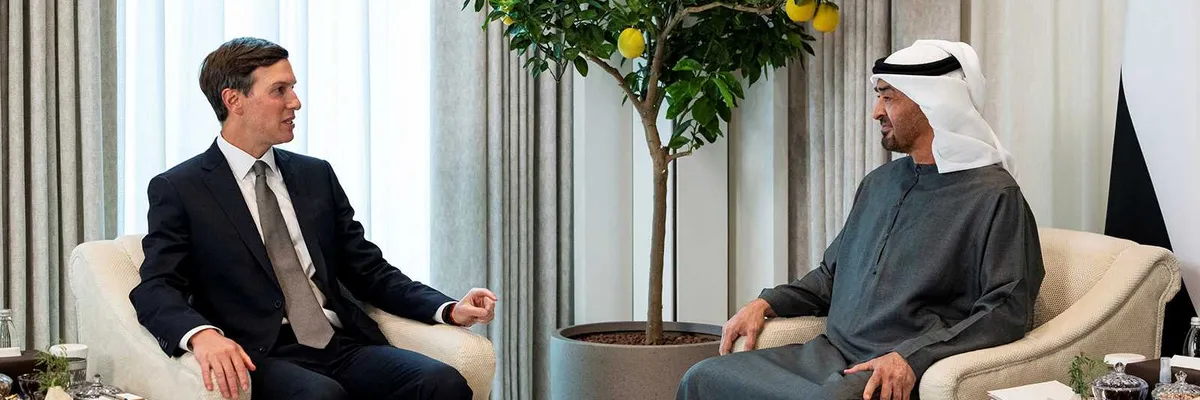
Michael Wolff, one of President Donald Trump’s biographers, argues that Jared Kushner’s combination of diplomatic influence, access to the Trump family and Gulf-backed wealth reflects a breakdown of government safeguards—and a failure by the media to investigate how Kushner accumulated so much power.
In a column published Thursday, Wolff wrote that Kushner secured a $2 billion investment from the Saudi royal family after leaving Trump’s first administration to run his hedge fund. Kushner also received additional backing from the United Arab Emirates and Qatar.
Kushner has now returned as an international negotiator for the administration, Wolff wrote, but without oversight, financial disclosures or even a national security apparatus around him. Wolff expects the newly elected Democratic House and Senate to scrutinize Kushner as they restore guardrails on ethics requirements and disclosures.
Wolff cited Matthew Cole’s new book, Princes and Thieves, as offering an explanation for Kushner’s rise. The book centers on Kushner’s relationships with Mohamed bin Zayed Al Nahyan, known as MBZ and the head of the UAE, and Mohammed bin Salman Al Saud, known as MBS and the head of Saudi Arabia, and examines how Kushner became a major beneficiary of their money and machinations, Wolff wrote.
Wolff said there is an “extreme need for an explanation,” while the “Trump-era press” has done little to demand one. He wrote that Kushner has remained “in plain sight” with “the grift across his forehead,” and said people are apparently “so cowed and stupefied by the combination of his own lack of substance and the enormity of his influence and self-dealing that they just look at their shoes.”
The biographer said he had tried in his own books to explain how Kushner rose to power despite his lack of experience. Wolff questioned whether Kushner reached the top because he could oversee “areas too complex for his father-in-law to understand or want to think about.” He also recalled Trump adviser Steve Bannon once saying that Kushner’s real success was that “when the going gets tough, Jared gets out of the room.”
Cole’s book presents a different interpretation, which Wolff conceded was “much better” than his own. Kushner, according to that account, was not the mastermind behind anything. Instead, he was an inexperienced intermediary cultivated and manipulated by sophisticated Gulf rulers. His access to Trump, admiration for wealth and transactional outlook allegedly made him useful to foreign leaders seeking influence.
Trump is now using Kushner as an “unofficial” Middle East negotiator outside traditional diplomatic channels. Kushner has no training as a diplomat or negotiator, Wolff wrote, which may help explain why he has been unable to reach a deal with Iran or between Russia and Ukraine.
Cole’s book alleges that Gulf money supported influence operations and Kushner’s financial interests. Those allegations remain disputed, however, and Kushner has issued denials and legal threats concerning them. Wolff said Cole’s account almost reads like a spy novel.
“Indeed, the immersiveness and fluidity of the narrative — edge-of-your-seat stuff — may have given ammunition to some reviewers’ skepticism. They are more suspicious of the cogency of Cole’s explanation than they are of the persistent lack of explanation for Kushner’s accomplishments,” Wolff wrote.
Wolff said that was the central point. “There is no world in which Kushner’s accomplishments happen without a hidden deus ex machina,” he wrote. He described the book as a “step-by-step primer of skullduggery and diplomacy” that provides “a vastly more detailed and useful account of Jared Kushner’s remarkable journey than any other to date.”
Kushner ultimately prevailed while navigating Trump’s many problems and, as Wolff put it, his “jealousy and whims.” He also ended up with $2 billion for his hedge fund.
Wolff contended that journalists became so accustomed to the extraordinary scandals and corruption of the Trump era that they failed to investigate Kushner’s position. He wrote that CNN apparently canceled promotional appearances by Cole after Kushner threatened legal action, while The Guardian framed its coverage around Kushner’s denial rather than Cole’s book.
Wolff defended the use of unnamed sources, arguing that secrecy is unsurprising when reporting on powerful people and alleged influence schemes. He nevertheless cautioned that some details were plausible rather than proven: “Plausibility is not truth.”
Ultimately, Wolff found Cole’s book to be a persuasive explanation for an otherwise puzzling matter. He said the more important argument was that Kushner’s growing fortune and continuing diplomatic role deserve greater scrutiny.
Source: Alternet
Related Michael Wolff columns:

