North Carolina Senate Candidate Michael Whatley Stands by Trump as Party Confidence Wavers
Key Takeaways
- •Michael Whatley has remained closely tied to President Trump while other Republican candidates remove pro-Trump messaging, welcoming visits from Trump and Vice President JD Vance that no other Republican Senate candidate has received.
- •Whatley trails his Democratic opponent, former Governor Roy Cooper, in polls, and his North Carolina seat is viewed as the most likely in the country to flip to Democrats in November.
- •The Republican-aligned super PAC Old North Action withdrew $6.5 million in television ad reservations, a move seen as a signal that outside confidence in Whatley's campaign is weakening.
- •Trump handpicked Whatley to chair the Republican National Committee in early 2024, and having never held elected office, Whatley is relying heavily on his association with the president to win the seat being vacated by Senator Thom Tillis.
- •Whatley has emphasized crime as the top issue and attacked Cooper's handling of Hurricane Helene recovery, despite polling showing that the cost of living is voters' primary concern.
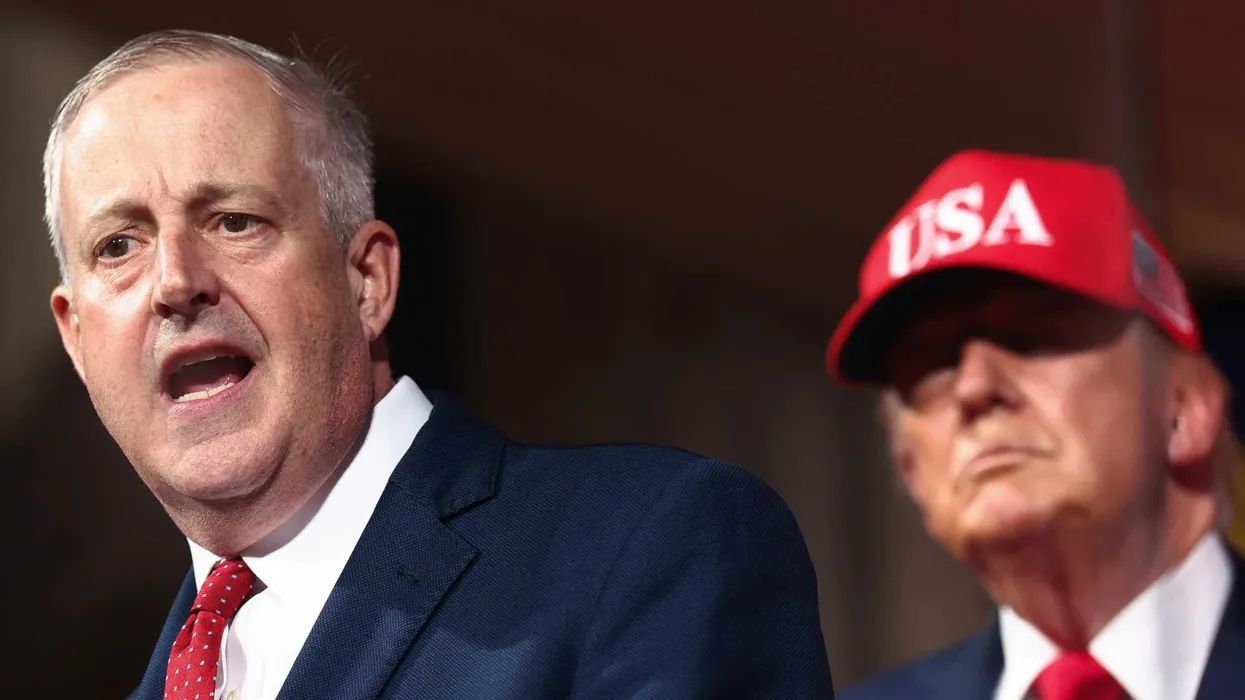
While many Republican candidates have rushed to distance themselves from President Donald Trump as his approval ratings sink to historic lows in the run-up to November's midterm elections, one Senate hopeful is not only standing “still with” him but continuing to champion some of his most unpopular policies. That is the central finding of new reporting from The New York Times, which examined why North Carolina Senate candidate Michael Whatley has remained aboard as the MAGA ship takes on water.
A string of GOP candidates have scrubbed pro-Trump messaging from their campaign websites in recent weeks. Whatley, by contrast, “spoke at Mr. Trump's midterm convention. He stood by the Iran war. He opposed blanket pauses on building new data centers.” The convention flopped, and both the war and the data center construction have drawn opposition across the political spectrum. Even so, Whatley “welcomed visits last week and this week from Mr. Trump and Vice President JD Vance, a distinction no other Republican Senate candidate can claim,” according to the Times. Speaking at a recent rally, Whatley declared of the president: “I am still with that guy.”
As the Times notes, the strategy is a high-stakes gamble. “With six weeks to go until the election, Mr. Whatley is running out of time to win his bet that lashing himself to a president, whose ratings are near historic lows, to draw out the MAGA base will help more than it hurts,” the newspaper writes. “Mr. Whatley lags behind his Democratic opponent in polls, is at risk of losing critical funding from outside groups and is running for a Senate seat now seen as the likeliest in the country to flip in November.”
Yet “Mr. Whatley may have no other choice.” Per the Times, his political fortunes are tightly bound to Trump, who “handpicked him to chair the Republican National Committee in early 2024, a job he held until last fall.” The RNC chairmanship, the party's top national organizational post, made Whatley a fixture of Trump's political operation — and, having never run for office, he entered the Senate race as an unknown to many voters, relying on his Trump ties to try to hold a seat in a state the president has won three times. He is seeking to replace Senator Thom Tillis, a Republican who repeatedly clashed with the president and chose to retire after Trump threatened him with a primary challenger.
Though polling well behind his opponent, Whatley has insisted he feels “very good” about the race and that the “numbers are moving in our direction.” But on Monday, the Times reports, “with the days ticking down for Mr. Whatley to show that he can narrow [his opponent's] lead, a Republican-aligned super PAC, Old North Action, removed $6.5 million in television ad reservations” — a signal that party confidence in his campaign is eroding. Super PACs may raise and spend unlimited sums on a candidate's behalf so long as they operate independently, and whether Old North Action restores those reservations in the final stretch will be among the clearest barometers of outside-group confidence in the race's closing weeks.
Tillis, who has not endorsed in the race, has said Whatley should find ways to separate himself from Trump. Whatley has taken a different approach: shifting the conversation away from the cost of living, which polls show is voters' top concern. He instead called crime the “No. 1 issue.” That argument has proven difficult to sustain with gas prices averaging more than $4 a gallon and polls showing the public has lost trust in Trump's handling of the economy.
Whatley has also sought to portray his opponent, former North Carolina Governor Roy Cooper, as a radical — even as “some Republicans concede that most voters have a positive opinion of Mr. Cooper, 69, who is almost universally known to North Carolinians as a roll-up-his-sleeves centrist,” according to the Times.
His messaging has instead centered on attacking Cooper. “He argued that Mr. Cooper had bungled the initial response to Hurricane Helene, which devastated parts of western North Carolina two years ago. Last year, Mr. Trump appointed Mr. Whatley to help lead recovery efforts,” the Times reports. At the rally for Whatley, Trump said his administration “spent more than $2 billion” on hurricane relief, while acknowledging that the state was still waiting for more money — an acknowledgment that, two years after the storm, recovery funding remains unsettled even as Whatley leans on his role in it as a campaign argument.
“I'm going to get that to you, Michael,” Trump told Whatley, before adding: “Now, if Michael loses, I'm not sending it, OK? No, I'm only kidding. You're getting it. You're going to get it, Michael.”

