Michael Saylor Says He Has Never Sold a Single Satoshi of His Personal Bitcoin
Key Takeaways
- •Michael Saylor, Executive Chairman of Strategy, publicly stated that he has never sold any portion of his personal Bitcoin holdings, down to a single satoshi.
- •Strategy holds more than 400,000 BTC, making it the world's largest publicly traded corporate Bitcoin holder through a multi-year purchasing program.
- •Saylor first initiated Strategy's corporate treasury Bitcoin strategy in August 2020 and has consistently advocated treating Bitcoin as long-term digital property.
- •The SEC's approval of spot Bitcoin ETFs in January 2024 marked a significant milestone that broadened institutional access to Bitcoin through regulated investment vehicles.
- •Saylor stepped down as CEO of Strategy in August 2022 to focus on Bitcoin-related initiatives while continuing to serve as Executive Chairman.
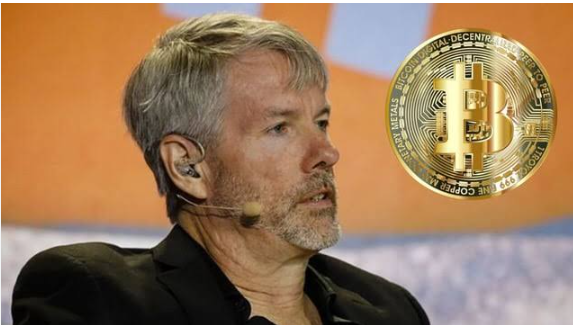
Michael Saylor, Executive Chairman of Strategy (formerly MicroStrategy), has once again reaffirmed his long-standing commitment to Bitcoin, stating that he has never sold a single satoshi from his personal Bitcoin holdings. The declaration reinforces Saylor's reputation as one of the cryptocurrency industry's most prominent long-term Bitcoin advocates, a position he has maintained consistently since first embracing the asset in 2020 across multiple market cycles.
Saylor's remarks gained widespread attention after being highlighted by Cointelegraph on X (source post). While the social media amplification brought renewed focus to the statement, it reflects a philosophy Saylor has articulated repeatedly since first embracing Bitcoin several years ago — namely, that the digital asset serves as a superior long-term store of value compared with traditional fiat currencies and many conventional investment instruments.
His comments come at a time when institutional adoption of Bitcoin continues to expand following the SEC's approval of spot Bitcoin exchange-traded funds in January 2024, and governments worldwide are increasingly evaluating digital asset regulatory frameworks.
A Long-Term Bitcoin Believer
Saylor has become one of the most recognizable figures in the cryptocurrency sector, with a reputation that extends well beyond his corporate leadership. Under his guidance, Strategy pioneered a corporate treasury Bitcoin strategy that helped redefine how publicly traded companies view digital assets as reserve holdings. Saylor stepped down as CEO in August 2022 to focus on Bitcoin-related initiatives while continuing as Executive Chairman.
Since announcing Strategy's first Bitcoin purchase in August 2020, Saylor has consistently argued that Bitcoin should be treated as long-term digital property rather than a speculative trading instrument. His personal investment approach mirrors the corporate strategy adopted by the company. By stating he has never sold even a single satoshi, Saylor underscores his conviction that Bitcoin is an asset to be accumulated and held rather than actively traded.
Understanding a Satoshi
A satoshi is the smallest unit of Bitcoin. One Bitcoin comprises 100 million satoshis, enabling users to own and transact with extremely small fractions of the cryptocurrency. This divisibility makes Bitcoin practical for both large institutional investors and everyday users, regardless of how substantially its price has appreciated since its creation.
Saylor's specific reference to not selling "a single satoshi" highlights the absolute nature of his commitment — rather than simply claiming he has never sold Bitcoin, the phrasing emphasizes that he has retained every fraction of his personal holdings.
Strategy's Corporate Bitcoin Model
Saylor's personal investment philosophy has deeply influenced Strategy's corporate treasury operations. The company has become the world's largest publicly traded corporate holder of Bitcoin, with holdings exceeding 400,000 BTC accumulated through a multi-year purchasing program. Strategy has expanded its position over multiple years through direct purchases financed by operating cash flow, debt offerings, convertible notes, preferred securities, and other capital market transactions.
The approach has attracted global attention and sparked widespread discussion among corporations evaluating digital assets as treasury reserves. Supporters argue that Bitcoin offers long-term protection against currency debasement and inflation, while critics continue to point to its price volatility.
Conviction Across Multiple Market Cycles
Since its creation, Bitcoin has experienced several major bull and bear markets. Throughout these cycles, many investors have opted to take profits during strong rallies or reduce exposure during heightened volatility. Saylor, by contrast, has consistently advocated maintaining long-term positions regardless of short-term market conditions.
By publicly confirming that he has never sold any portion of his personal Bitcoin, Saylor demonstrates consistency between his public messaging and his personal investment decisions.
Institutional Adoption Continues Expanding
Saylor's statement arrives amid continued growth in institutional interest in Bitcoin. Asset managers, investment advisers, banks, insurance companies, family offices, pension funds, and public corporations now participate in digital asset markets through direct holdings, exchange-traded funds, regulated custody providers, and blockchain infrastructure investments. The approval of spot Bitcoin ETFs in the United States in early 2024 marked a significant milestone, providing regulated investment vehicles that expanded access for traditional market participants. This expanding institutional participation has contributed to Bitcoin's increasing legitimacy within global financial markets, and Saylor has frequently cited such adoption as evidence supporting Bitcoin's long-term investment case.
Bitcoin as Digital Property
One of Saylor's most consistent arguments is that Bitcoin should be viewed as digital property rather than merely another financial asset. He frequently compares Bitcoin to scarce assets such as real estate or gold, emphasizing its mathematically limited supply cap of 21 million coins. Supporters contend that this fixed scarcity distinguishes Bitcoin from fiat currencies, whose supply can expand through monetary policy decisions.
According to Saylor's investment thesis, long-term holders benefit from preserving ownership rather than actively trading their positions — a principle directly reflected in his latest statement.
Why Long-Term Holding Appeals to Investors
Many Bitcoin investors adopt a long-term holding strategy, seeking exposure to Bitcoin's potential appreciation over extended time horizons rather than attempting to predict short-term price movements. Supporters argue this approach reduces emotional decision-making during periods of market volatility. Saylor has repeatedly encouraged investors to focus on long-term fundamentals rather than daily price fluctuations, and his refusal to sell personal holdings reflects this broader mindset.
Market Participants Follow Saylor's Views
Saylor's public statements regularly attract significant attention across cryptocurrency markets. Because Strategy owns one of the largest corporate Bitcoin portfolios globally, investors frequently monitor his commentary for signals regarding institutional sentiment. Although his personal investment decisions do not necessarily predict future market performance, they often shape discussions surrounding Bitcoin adoption and long-term strategy.
Bitcoin's Expanding Role in Traditional Finance
Bitcoin has increasingly assumed a larger role within traditional financial markets. The development of spot Bitcoin exchange-traded funds, institutional custody services, corporate treasury strategies, tokenized financial products, banking partnerships, and payment infrastructure all reflect the cryptocurrency's deepening integration into mainstream finance. Saylor has consistently argued that these developments reinforce Bitcoin's long-term value proposition.
Coexistence of Diverse Investment Strategies
While Saylor strongly advocates long-term accumulation, market participants continue to employ a wide range of strategies. Some investors actively trade short-term price movements, others diversify across multiple cryptocurrencies, and many institutions maintain balanced portfolios containing both digital and traditional assets. Financial advisers generally emphasize that investment decisions should reflect individual objectives, risk tolerance, and time horizons. Saylor's approach represents one long-term philosophy rather than a universal investment model.
Looking Ahead
Saylor's latest statement — that he has never sold a single satoshi of his personal Bitcoin — reinforces one of the cryptocurrency industry's most recognizable long-term investment philosophies. As Executive Chairman of Strategy and one of Bitcoin's most vocal advocates, he continues to emphasize conviction, scarcity, and long-term ownership over short-term market timing.
His comments come as institutional participation continues to grow, governments refine cryptocurrency regulations, and digital assets become increasingly embedded in traditional financial infrastructure. Regardless of whether investors share his approach or pursue different strategies, Saylor's unwavering commitment has established him as a defining voice in Bitcoin's ongoing global adoption story.

