Strategy's Michael Saylor Believes Bitcoin Can Withstand AI-Powered Attacks
Key Takeaways
- •Michael Saylor warned at Oranje Summit 2026 that AI will make attacks on financial software faster, cheaper, and more effective, with crypto exchanges, neobanks, digital wallets, and traditional banks among the most exposed.
- •Saylor argued Bitcoin's deliberately simple base protocol—including SHA-256 hashing, proof-of-work, and the absence of Turing-complete smart contracts—makes the network robust to AI-assisted threats.
- •He pointed to incidents such as the $6.3 billion Binance hack, noting that AI can automate phishing campaigns, scan software for vulnerabilities, and produce convincing impersonations even when blockchains remain intact.
- •Saylor urged companies to ask whether their banks, exchanges, and custodians test infrastructure daily with frontier AI models, since human-led security reviews may be too slow against machine-speed attackers.
- •He also framed bitcoin's portability—self-custody, switching custodians, or moving capital across borders—as a hedge against political and jurisdictional risk that AI-driven threats make more valuable.
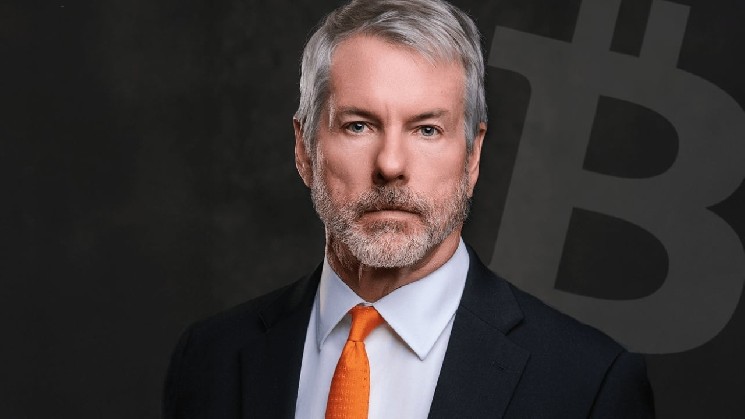
Artificial intelligence may be reshaping software development, but Strategy founder Michael Saylor believes it is also set to make financial hacking faster, cheaper, and more effective.
Speaking remotely at the Oranje Summit 2026 in São Paulo, the outspoken bitcoin proponent—whose company, formerly known as MicroStrategy and now the largest corporate holder of bitcoin, holds more than $58 billion worth of BTC—warned that advanced AI models are handing attackers powerful tools for locating weaknesses in the software used to move money.
"The most vulnerable thing in the world is going to be complicated, poorly constructed software that moves money," Saylor said.
His warning extends across crypto exchanges, neobanks (app-based banks that operate without physical branches), digital wallets, and traditional financial institutions. He urged companies to continuously run the strongest available AI models against their own systems to uncover security gaps before attackers find them.
Satoshi's Minimalist Design Vindicated
Saylor argued that Bitcoin's relative simplicity is an advantage in an era of AI-assisted cyberattacks. While other networks are designed to support complex smart contracts and programmable applications, Bitcoin's base layer was built primarily to transfer and secure value.
He praised pseudonymous creator Satoshi Nakamoto for focusing on the fundamentals of secure digital money. "In hindsight, Satoshi looks so brilliant," Saylor said, pointing to the decision not to make Bitcoin a Turing-complete network—the kind of system that can run arbitrary programs, as the smart contracts on platforms such as Ethereum do. According to Saylor, the network's use of SHA-256 hashing and proof-of-work, under which miners expend computing power to validate blocks and earn new bitcoin, makes it "very robust to AI threats."
The distinction matters. Exchanges, custody platforms, browser extensions, and wallet software can still be compromised. But in Saylor's view, Bitcoin's simpler base protocol leaves attackers fewer openings than feature-rich financial software loaded with numerous permissions and dependencies.
Exchanges and Wallets Stay Exposed
Recent incidents—such as the $6.3 billion Binance hack—have reinforced those concerns. AI can help criminals automate phishing campaigns, scan software for vulnerabilities, and produce convincing impersonations. Even when the underlying blockchain remains intact, users can still lose funds through compromised credentials, devices, or custody providers.
Saylor said companies should ask whether their banks and custodians use frontier AI systems to test their infrastructure daily, since human-led security reviews may no longer be fast enough when attackers can scan code and launch campaigns at machine speed. For anyone choosing where to hold funds, it adds a concrete question to ask of banks, exchanges, and custodians: whether their defenses are tested daily by frontier models, or still by humans alone.
Portability Strengthens the Case
Saylor also framed bitcoin as protection against political and jurisdictional risk. Real estate cannot be moved, and physical gold is difficult to transport, but bitcoin holders can take self-custody (holding the private keys that control their funds directly, rather than relying on a third party), switch custodians, or move capital across borders.
"You need the option to move the capital. It's the optionality that gives it value," he said.
For investors, the two arguments are connected: Bitcoin's deliberately limited design aims to make the monetary network harder to attack, while its portability offers holders an exit when a custodian, institution, or jurisdiction becomes unsafe. In Saylor's assessment, the rise of AI makes both qualities more valuable.
The commentary was originally published on Bitcoin.com News.

