Psychologist Michael Bader argues fact-checking Trump is necessary but insufficient
Key Takeaways
- •Bader compares Trump’s repetitive hyperbolic rhetoric to George Orwell’s concept of “Duckspeak” from 1984.
- •A news agency reported that Trump has used expressions such as unprecedented numbers or achievements more than 200 times this year.
- •Bader argues that Trump’s repeated boasting and falsehoods should be examined not only through fact-checking but also through psychological interpretation.
- •Reuters reported that at least 470 people, organizations and institutions have been targeted for retribution since Trump took office.
- •Bader says psychological insight can help anticipate Trump’s behavior but is not a replacement for checking his claims against facts.
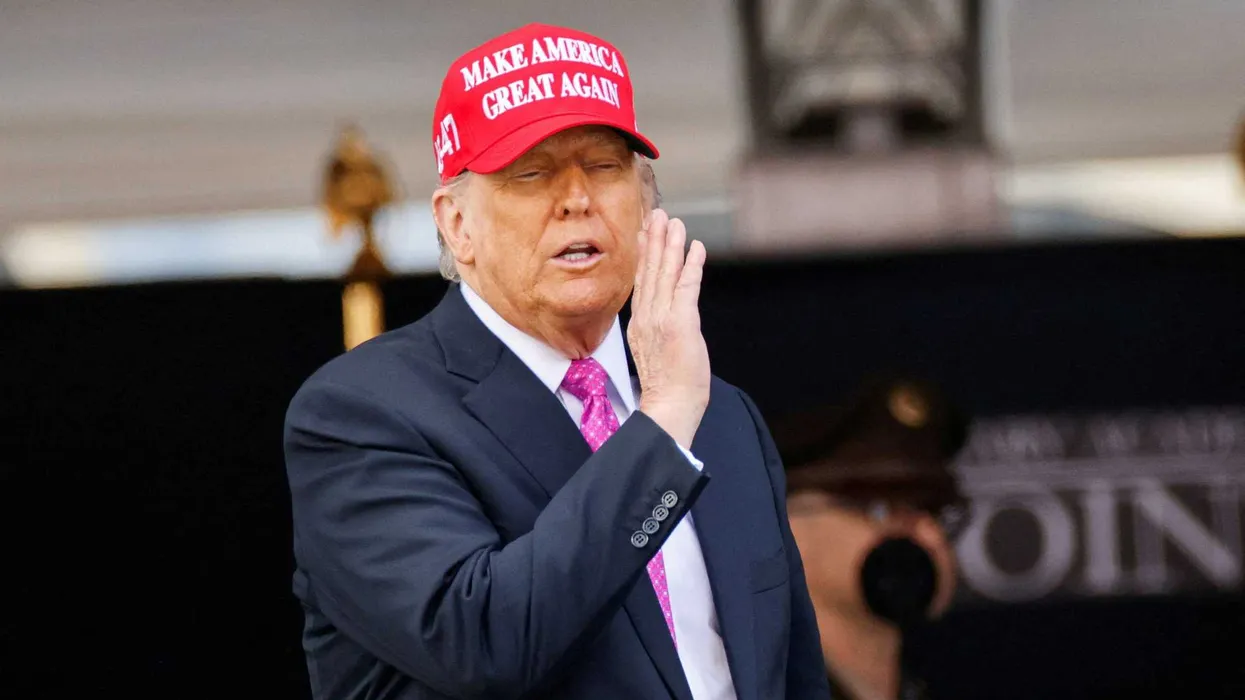
“Two years ago our country was dead. Today we are the hottest country in the world. America is respected like it's never been respected before…. Our stock markets are at their highest point of all time.”
Psychologist and psychoanalyst Michael Bader argues that the public has become so accustomed to Donald Trump’s hyperbolic rhetoric that it often no longer stops to examine what that rhetoric is doing. In Bader’s view, Trump’s recurring reliance on glittering generalities, superlatives and sweeping claims resembles what George Orwell called “Duckspeak” more than ordinary political speech. In 1984, Orwell described a form of language used under Big Brother that was still English but had become mindless, repetitive and largely emptied of conscious thought.
Trump, Bader writes, almost always places himself at the center of these claims as the hero of the story. Few speeches, he says, pass without phrases such as “the likes of which nobody’s ever seen before,” “numbers we’ve never seen,” or “like nobody ever thought possible.” One news agency reported that Trump had already used such expressions more than 200 times this year.
Such declarations, Bader argues, usually present Trump in near-messianic terms: not merely as a witness to unprecedented achievements, but as their sole and irreplaceable author. The repetition, he writes, can hold an already admiring audience in place. For people who are not captivated by Trump and his actions, the same repetition can have a paralyzing effect because there is little concrete material to address or dismantle.
The usual response, Bader says, is fact-checking.
Trump’s grandiosity, in Bader’s account, is not confined to sweeping claims about rescuing America from what Trump has portrayed as the dangerous, vermin-infested and garbage-ridden condition he inherited from Barack Obama and Joe Biden. It also appears in more personal territory, including when Trump has boasted that no one had ever seen a body as beautiful as his, described himself as a “stable genius,” said he had been “the most effective President for the black community since Abraham Lincoln,” or portrayed himself as Jesus.
Because such statements are often interwoven with falsehoods, Bader says, progressives and much of the mainstream media typically respond by checking Trump’s claims against factual records. After Trump’s speech about election security, for example, the media environment quickly filled with corrections of his assertions.
Trump lies repeatedly, Bader writes, and so his critics repeatedly fact-check him. The assumption appears to be that defending objective reality is the most effective response, in the hope that the public will recognize the truth. What is less often examined, he argues, is why the lying and boasting are so pervasive. Bader asks whether critics fail to understand the pattern, or whether they are embarrassed by it and therefore keep trying to search for a hidden logic beneath the repetition.
If that question is asked directly, Bader contends, the answer is “hiding in plain sight.” He argues that a person who publicly boasts constantly is likely privately struggling with feelings of inferiority and inadequacy. In his framing, this reflects a basic psychological function: people try to avoid, deny or expel real, imagined or anticipated feelings and situations that they fear would be psychically painful.
One person may deal with a bad feeling through denial. Another may project that feeling onto someone else. Many people, Bader writes, respond by exaggerating the opposite feeling or attribute. In that view, if someone — often a man — is especially threatened by situations that might make him feel helpless, unimportant or ashamed, that person may automatically try to counter the threat by insisting to himself and others that he is powerful, special and perfect.
Bader argues that, in Trump’s case, this psychological dynamic — the narcissism and the lying — is not voluntary or optional but obligatory. He writes that Trump is psychologically compelled to repeatedly assert and lie about his own unparalleled greatness. In Bader’s interpretation, Trump lacks the psychological freedom to do otherwise because doing so would risk bringing forward unconscious fears that he is a loser rather than a winner, weak rather than powerful, inferior rather than superior, and insignificant rather than heroically important. To Trump, Bader writes, any implication that he is a loser is akin to a visit from the Grim Reaper.
For that reason, Bader says, exposing and correcting Trump’s “alternative facts” is necessary but not sufficient. The political question, he argues, is whether a psychological explanation has legitimate political use, or whether applying such an explanation to public affairs is a category error — like bringing a diagnosis to a policy fight. That question sits inside a long-running professional and media debate over public psychological analysis of political figures, including concerns about making clinical claims without direct examination and the counterargument that observable public behavior can still be relevant to civic judgment.
Bader’s answer is that a clearer and more nuanced understanding of Trump’s internal world can help observers anticipate his behavior. He argues that Trump’s personal psychology too often shapes his political and policy actions, and that this is widely understood at an intuitive level. In Bader’s view, it helps explain why members of Trump’s Cabinet and other world leaders seek economic and political advantages from him through flattery.
When someone in public life appears to shame or criticize Trump, Bader writes, Trump’s response is reflexively vicious. Reuters tallied that at least 470 people, organizations and institutions have been targeted for retribution since Trump took office — an average of more than one per day. When Gavin Newsom mocked and embarrassed him on social media, Trump responded by calling him “New-scum.”
Bader says such exchanges demonstrate how easy it can be to provoke Trump. Newsom’s jabs, in his view, did not wound Trump in a lasting way; Bader argues that someone so defended against shame does not remain wounded. But the attacks worked as a hook, reliably pulling Trump into reacting on his opponent’s terms rather than setting the agenda himself.
Psychological insight, Bader concludes, is not a substitute for fact-checking Trump’s claims. Instead, he presents it as an early-warning system for how Trump is likely to behave and as a map of the pressure points that reliably make him move.
Michael Bader is a veteran psychologist, psychoanalyst and author with more than 40 years of clinical experience. He specializes in the intersection of psychoanalysis, culture and politics, and frequently writes about the psychological dynamics shaping modern public discourse.

