MEXC and Payward Discuss Collaboration as Crypto and TradFi Converge at TOKEN2049
Key Takeaways
- •MEXC CEO Vugar Usi Zade predicted that within five years, asset classes and investments will converge on a singular platform where they can move quickly and smoothly, with retail demand as the main driver.
- •Payward Co-CEO Arjun Sethi said that 24/7 trading ultimately requires bringing assets and collateral into a more connected financial environment.
- •Arjun identified MEXC as a partner that can help Payward succeed in its core markets, framing collaboration as necessary to serve a substantially larger global user base.
- •MEXC contributes a retail-focused approach, deep liquidity, and experience in perpetual markets, while Payward's Kraken, founded in 2011, brings global financial infrastructure and a long-established presence in the United States.
- •The two companies remain in an exploratory phase, with infrastructure, market access, and distribution identified as the areas where stronger connections between platforms could create value.
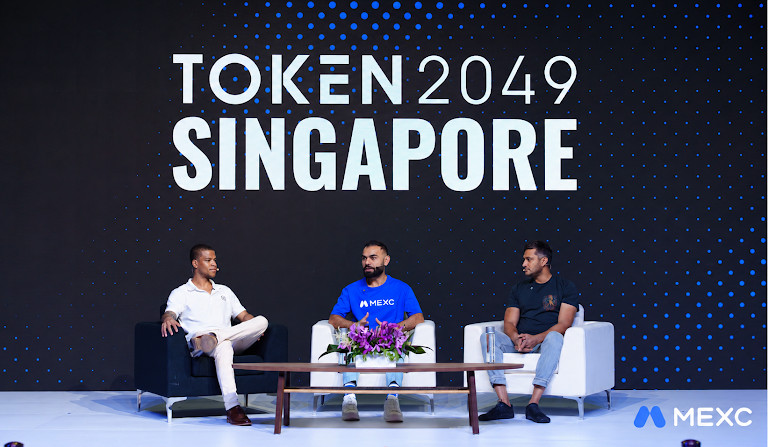
MEXC, a digital asset trading platform that promotes 0-fee trading, and Payward, the parent company of Kraken, discussed the convergence of cryptocurrency and traditional finance during a panel at TOKEN2049 Singapore, one of the crypto industry’s largest annual conferences.
MEXC CEO Vugar Usi Zade and Payward Co-CEO Arjun Sethi addressed the role of broader market access, retail demand and cooperation between trading platforms in the development of global markets.
Crypto and TradFi Move Closer Together
A central theme of the discussion was the shift toward more connected, always-on markets. Vugar said blockchain infrastructure is challenging traditional market structures based on fixed trading hours, while users increasingly expect seamless access to multiple asset classes. The contrast is structural: traditional exchanges typically operate fixed weekday sessions, while crypto markets trade around the clock.
“Over the five years, we’ll see a convergence toward a singular platform where asset classes and investments can move quickly and smoothly,” said Vugar. “Retail will be the main driver.”
Arjun focused on the infrastructure required to support this transition. He said that 24/7 trading ultimately depends on bringing assets and collateral into a more connected financial environment.
“24/7 trading really means: how do you bring all that collateral into one place?” said Arjun.
Collaboration Over Competition
Both executives described collaboration as an important element in scaling the next generation of global trading platforms.
Arjun said that serving a substantially larger global user base would require platforms to work with partners that offer different strengths in their respective markets. He specifically identified MEXC as one such partner.
“The only way to do that is to partner with folks, including MEXC, to be able to help succeed in their core markets,” said Arjun.
Vugar likewise said exchanges could increasingly build on one another’s strengths instead of treating every opportunity solely as a competitive contest. MEXC brings a retail-focused approach, deep liquidity and extensive experience in perpetual markets covering crypto and TradFi assets, while Payward contributes global financial infrastructure, professional trading capabilities and significant market experience in the United States. Kraken, which Payward operates, was founded in 2011 and is one of the longest-running cryptocurrency exchanges, with a long-established presence in the United States market.
The panel followed earlier indications from the two companies that they were exploring broader collaboration. Both executives identified infrastructure, market access and distribution as areas where stronger connections between platforms could create value.
The speakers also highlighted trust and access as key foundations for the development of future financial platforms. Vugar described the two factors as among the most important elements in building those platforms, while Arjun emphasized transparency as the industry becomes more interconnected.
The discussion described a financial landscape in which crypto and TradFi become increasingly connected. In that environment, cooperation between platforms could combine market access, infrastructure and user reach to serve a broader global audience. For now, the two companies remain in an exploratory phase, making the infrastructure, market access and distribution areas both executives identified the concrete signals to watch for next.
About MEXC
Founded in 2018, MEXC describes itself as a global multi-asset trading platform and a 0-fee gateway to digital asset and financial opportunities. The company says it serves users across more than 170 markets and provides access to crypto, stocks, tokenized assets, derivatives and a growing range of TradFi-linked opportunities through one account and one gateway.
MEXC says its offering includes 0 trading fees, deep liquidity, broad asset coverage and a high-performance trading experience designed for retail users seeking to discover assets earlier, act faster and trade with fewer barriers. The company says that, as crypto and traditional finance continue to converge, it is committed to making global opportunities more accessible, helping users trade freely and “MEXCmize every opportunity.”
For media inquiries, MEXC lists its public relations team at media@mexc.com.
Source: Metaverse Post
Risk disclaimer: This content does not constitute investment advice. Given the volatility of financial markets, including digital assets, tokenized assets and traditional financial products, investors should carefully assess market conditions, underlying asset fundamentals and potential financial risks before making investment or trading decisions.

