Metaplanet Fails All Four VanEck Executive Compensation Tests, Only 'Bad' Grade Among Top 10
Key Takeaways
- •VanEck's September 18 research note placed Metaplanet alone in its 'Bad' category, as it was only one of the 10 largest digital asset treasury companies to fail all four compensation tests.
- •Metaplanet's option pool represents 14.7% of fully diluted shares and named executives control 8.2%, roughly four and ten times the peer averages of 4.0% and 0.8%, respectively.
- •Following shareholder pressure, the board ended the automatic dilution clause on August 18 and shrank the option pool by 41% to 188.2 million shares on September 11, though VanEck kept its grading intact.
- •VanEck estimated that before the reductions, management dilution absorbed roughly 20% of the Bitcoin value added through purchases, leaving shareholders with about 80%.
- •Around 82.8 million shares had already reached insiders before the rollback, and another 105.4 million potential shares, roughly 7% of the company, remain available under the revised structure.
TLDR
- Metaplanet failed all four executive compensation tests in VanEck's September 18 research note, making it the only company among the top 10 digital asset treasury firms to receive a "Bad" grade.
- The company's option pool equals 14.7% of fully diluted shares, while named executives hold 8.2% — far above the peer averages of 4.0% and 0.8% cited by VanEck.
- The board repealed the evergreen dilution clause on August 18 and cut the option pool by 41% on September 11, but VanEck left its assessment unchanged.
- VanEck said about 82.8 million shares had already reached insiders, while another 105.4 million potential shares remain available under the revised structure.
Metaplanet, the Tokyo-listed Bitcoin treasury company, has received the weakest executive compensation assessment among the 10 largest digital asset treasury companies reviewed by VanEck, failing all four tests in the firm's September 18 research note. The note is part of VanEck's Bitcoin ChainCheck research series, produced by the firm's digital assets research team led by Matthew Sigel. VanEck examined option-pool size, executive ownership, shareholder approval rights, and performance conditions. The company scored poorly on each measure.
The verdict stands even after the company reduced its executive option pool twice in the past month. VanEck said the remaining structure still gives management unusually large exposure compared with peer companies, placing Metaplanet alone in the firm's "Bad" category while all nine other reviewed companies passed some tests.
Option Pool Stands Far Above Peer Levels
Metaplanet's option pool equals 14.7% of fully diluted shares, compared with a 4.0% average among peers. Named executives control 8.2%, while the peer average stands at 0.8%. That leaves the company with roughly four times the peer option-pool level and about ten times the executive exposure.
The current structure traces back to a February 2023 rescue plan. Shareholders approved options covering 46 million shares for seven employees at a ¥10 strike price, but the plan included a clause that adjusted the award to 20% of every share the company could issue.
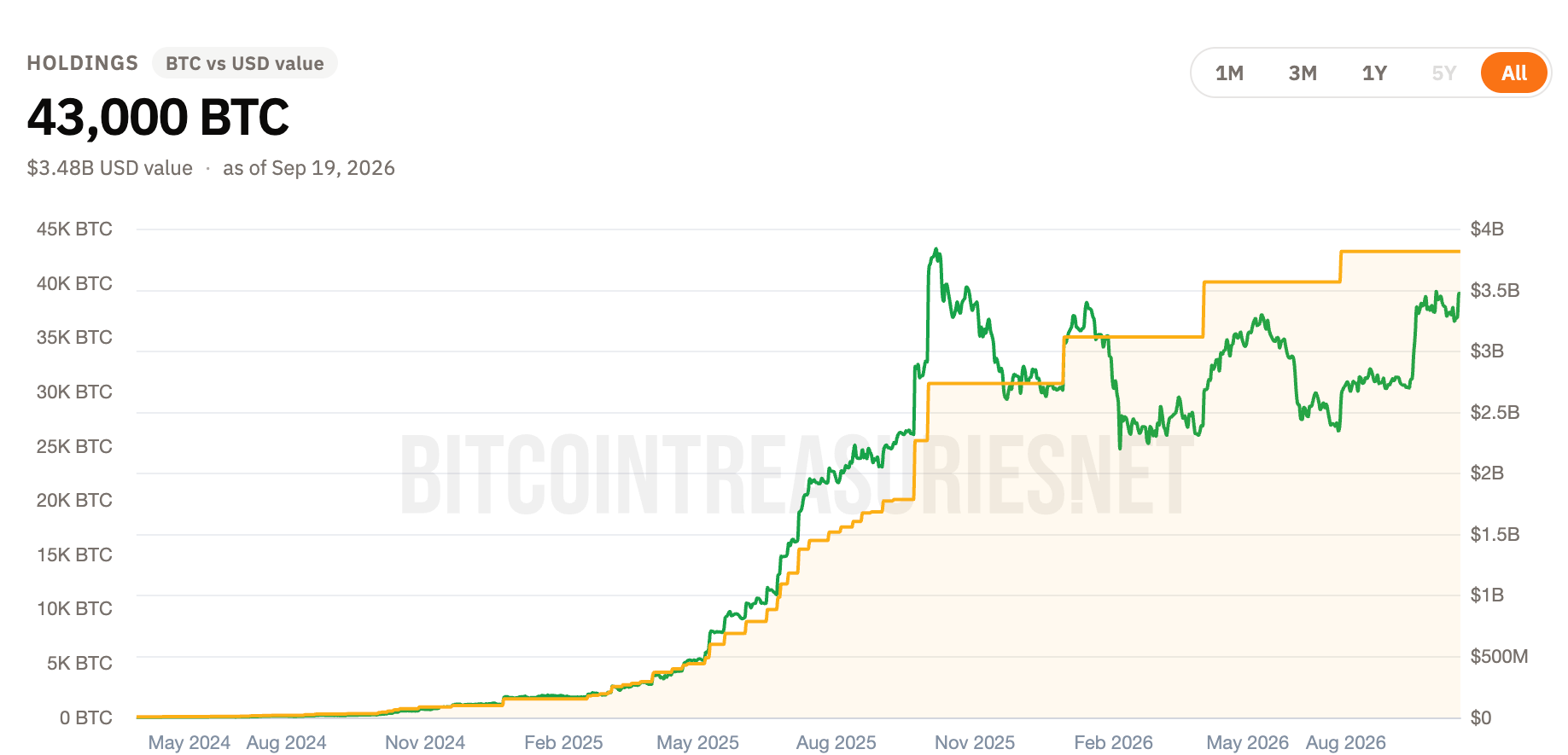
Metaplanet adopted its Bitcoin strategy in April 2024, funding purchases through new shares, debt, and preferred stock. Only the equity issuance diluted existing holders directly, while the option formula expanded alongside each round of new shares. Over two years, the company's share count rose from 153.9 million to about 1.35 billion, and the executive pool grew from 46 million shares to 319.5 million.
Share issuance increases outstanding shares, reducing each existing holder's percentage ownership unless their share count also rises. Exercised stock options can add further dilution because they create additional shares. In Metaplanet's case, VanEck focused on how the option formula expanded automatically as the company issued equity to finance additional Bitcoin purchases. For a listed Bitcoin treasury company, whose shares function as a vehicle for the coins it holds, such structural details determine how much of each new purchase accrues to outside shareholders rather than to insiders — the reason VanEck benchmarks these governance measures across the sector's largest companies.
VanEck estimated that, before the recent reductions, shareholders retained roughly 80% of the Bitcoin value added through purchases, with management dilution absorbing the remaining fifth under the automatic formula. The firm also highlighted that no separate committee approved each expansion. David Bailey, chief executive of Nakamoto, has defended the size of the pool, though VanEck kept its assessment focused on the structure of the awards and the shareholder protections attached to them.
VanEck Keeps 'Bad' Grade After Two Pool Reductions
VanEck reviewed four areas across the 10 largest digital asset treasury companies: the option pool measured against fully diluted shares, executive ownership, shareholder voting rights, and performance hurdles on the largest awards. Metaplanet failed every test. The firm said shareholders did not vote on the pool's growth or on two 2026 amendments, and the awards carry no performance condition beyond continued employment.
The board changed the structure twice following shareholder pressure. On August 18, it repealed the evergreen dilution clause, stopping the option pool from expanding automatically with future share issuance, although the existing pool remained unchanged. On September 11, the board restored terms that applied before a September 2025 share sale, reducing the pool by 41% to 188.2 million shares.
Some dilution had already taken place before that rollback. About 82.8 million shares had reached insiders under the earlier terms, and another 105.4 million potential shares remain available, equal to roughly 7% of the company. VanEck said those remaining awards still sit well above peer levels.
The firm said Metaplanet could improve the structure by cancelling about 273 million shares created under the earlier clause. VanEck also proposed a smaller, shareholder-approved plan, compensation linked to Bitcoin per share, and a formal policy governing grant timing. With the remaining 105.4 million potential shares still in place, the open question for holders is whether the board goes further — its two previous adjustments followed shareholder pressure.
The findings were reported in detail by Blockonomi.

