Meta Takes the Lead in the Race for the Post-Smartphone World
Key Takeaways
- •Meta leads the AI-enabled glasses market even as its AI models lag rivals, with EssilorLuxottica reporting 7 million pairs sold in 2025 and Meta's smart glasses sales tripling the previous year.
- •Meta's latest features include agentic AI powered by the Muse Spark model for multistep routines and a hologram function that renders 3D avatars of callers WhatsApp video calls.
- •Meta announced virtual reality glasses weighing 100 grams and priced at $1,299, built for movies, gaming, and spatial computing, with shipments planned for spring.
- •Privacy remains a central challenge, as Meta faces multiple proposed class-action lawsuits over glasses-captured footage and now disables recording when the LED indicator has been tampered with.
- •Analysts expect AI wearables to stay tethered to smartphones for at least the next five to 10 years because of small batteries and the power demands of 5G chips.
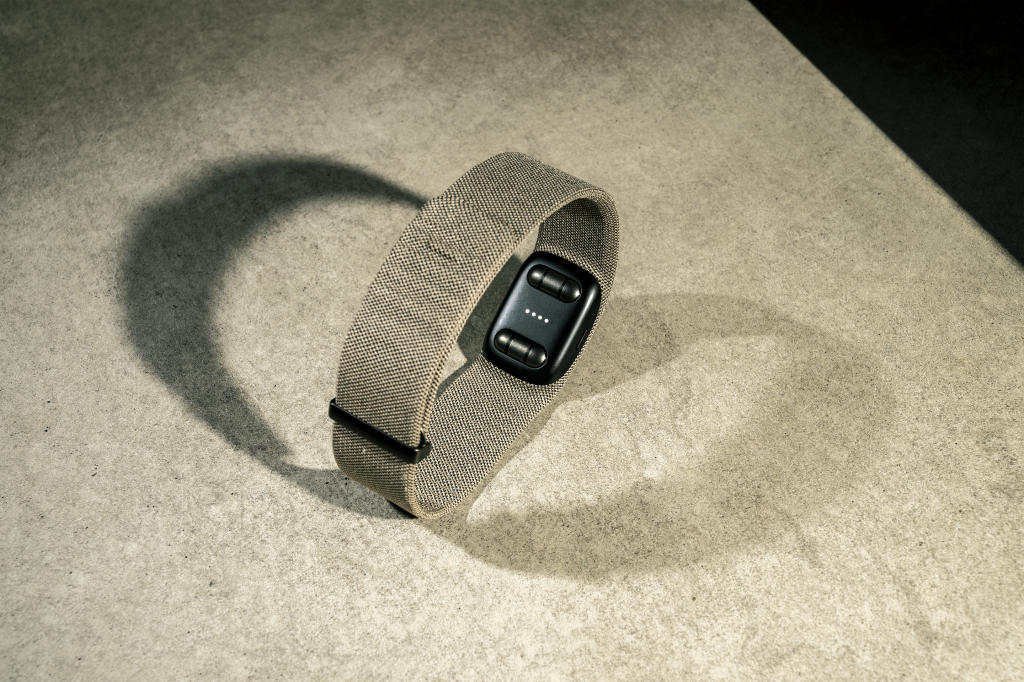
Some emerging technologies feel genuinely different the first time you try them. That is the case with Meta's most advanced smart glasses currently on the market, which project a high-resolution digital box inside the right lens and—paired with a smart wristband—let the wearer control objects on the screen with hand movements. Tap pointer finger and thumb together, and an app opens. Say "Hey, Meta," and you are suddenly chatting with an AI bot.
In Meta's view, this is how most people will eventually use AI. The company recently welcomed Fortune into a private demo room at its Menlo Park, California, headquarters to showcase its expanding family of smart glasses. The lineup included the flagship Ray-Ban Wayfarer camera-enabled glasses, now with an updated nine-hour battery life; the Ray-Bans with an in-lens display and the "neural" wristband—the model behind the demo described above; new audio-only smart glasses that drop the built-in camera; new styles such as Aviator frames; and prototypes including the Orion augmented reality glasses.
Few companies have cracked the code for AI-enabled wearables—glasses in particular—the way Meta has. A strategic partnership with EssilorLuxottica, the parent of Ray-Ban, has played a major part, and despite widespread privacy concerns, Meta's glasses are the most popular on the market.
It remains a relatively small market, but one the technology industry takes very seriously. Silicon Valley's elite companies are racing to build hardware in new, AI-friendly "form factors," wagering that there are better ways for consumers to interact with AI—whether through smart glasses or some yet-to-be-invented gadget. Leading AI labs such as OpenAI and, reportedly, Elon Musk's SpaceX are hard at work on new devices; Musk disputes that report. Numerous smaller startups, along with industry giants like Apple, are also developing new hardware.
At a time when the race to build the best frontier models is center stage, the competition to establish the next hardware platform is shaping up to be just as important. At stake is control over how billions of people access AI, regardless of whose bots are the smartest.
Meta's lead
Meta is a case in point. Its AI models generally lag those of rivals like OpenAI and Anthropic, yet the company stands above all others in AI-enabled glasses, having grown its sales of smart glasses threefold last year. EssilorLuxottica says it sold 7 million pairs of AI-enabled glasses in 2025.
Alex Himel, Meta's vice president of wearables, credits the company's early bet on the category and its decision to prioritize fashion. Customers use the smart features on the glasses only about 10% of the time, he said, so it is critical people crave the glasses for their look and weight. EssilorLuxottica held Meta to 50 grams or below for most models.
"We're able to keep adding this stuff into something that you're already wearing for other reasons," Himel said of the technology features.
One new capability he is excited about is agentic AI powered by Meta's latest Muse Spark model, which allows the glasses to execute multistep routines such as managing personal schedules and scanning through email.
"As the AI gets better, you want something that's always with you, can see what you see, hear what you hear," Himel said.
A new hologram feature scans the wearer's face and records their expressions, producing a 3D animated simulacrum of their visage. When someone wearing the glasses calls a friend via Meta-owned WhatsApp, their hologram appears on the friend's screen—and the friend's hologram, if they have one, appears in the glasses. The effect is impressive but also a bit jarring: the hologram created during the demo looked like a deepfake version of the person it was modeled on.
Meta also continues to work on new devices. On Wednesday, it announced virtual reality glasses that it said weigh only 100 grams and are built for movies, gaming, and spatial computing—the blending of digital content with the physical environment. The glasses, which the company said will ship in the spring, will cost $1,299.
There are still rough edges. The display glasses did not always respond to thumb swipes and sometimes lagged after voice commands. Meta's AI also occasionally struggled to identify objects cleanly, such as when it attempted to calculate the number of calories in a trayful of food. The company pointed out that there is a natural learning curve and that the technology usually works for most people without issue.
Meta's Ray-Ban Display glasses start at $799, while its third-generation flagship camera-enabled Ray-Bans cost $449. The new audio-only glasses start at $349 and are shipping in two styles: the Ray-Ban Clubmaster and Burbank.
The privacy problem
The bigger concern surrounding this technology, however is privacy. Meta has already had to respond to some users disabling the glasses' LED light, which turns on to alert people nearby that the video camera is recording. The company recently created a policy to deactivate recording if the LED has been tampered with, and Meta will delete the accounts of anyone who uses a modified device and posts harassing content.
Stopping depraved users is only part of the challenge. The most compelling features of AI devices come from AI's ability to make sense of the world around the user, operating not from on-screen data alone. That capability creates an inherent tension with norms around privacy and personal space.
Recently announced Apple Watch features such as Siri Recap, which listens to a user's conversations and provides a "high-level" AI-generated summary, have already raised concerns about whether the audio is being captured with proper consent. OpenAI's forthcoming device, rumored to be a portable smart speaker, could encounter similar eavesdropping concerns.
So far, Meta's famously poor privacy track record in social media has not prevented it from taking the lead in the nascent smart glasses category. But as the market grows, sensitivity around privacy is almost certain to become a bigger factor.
Meta is already facing multiple proposed class-action lawsuits related to its smart glasses, including one alleging that it sent footage captured by the glasses—including highly personal material—to third-party human reviewers for annotation and AI development. Meta disputes the allegations.
Competitors, well aware of Meta's reputation, are trying to win by making privacy central to their designs. Even Realities, an AI startup that drops audio and camera functions in favor of text-only displays, began selling its smart glasses in 2024. Taiwan-based HTC Corp.'s Vive Eagle glasses tout a feature that turns off recording if anyone—not just the user—says, "Stop recording."
For its part, Meta is introducing private, isolated cloud "devices" to secure sensitive user data such as health information, and making some data processed through the glasses unreadable, even to the company.
Back at Meta's headquarters, Himel showed off one of the company's latest models: its first-ever audio-only smart glasses. He said removing the camera was not a reaction to any recent events, but a product two years in the making. By eliminating the camera, he noted, the glasses are 10 grams lighter and the battery life is longer.
Don't throw your phone out
At the other end of the spectrum, social media company Snap's latest smart glasses are designed to be a stand-alone computer on the wearer's face. The bulky, $2,195 augmented reality Specs feature onboard processing that, the company says, eliminates the need for a phone.
While the glasses' aesthetics have been panned by some reviewers—one social media commenter joked they are a "Cybertruck for your face"—Snap executive Russell Patton said the glasses are designed to create a distinct computing ecosystem rather than serve as an accessory to a phone.
It is a bold bet, and it gets to another big question about AI-centric devices. Glasses are a natural form factor, given that about two-thirds of U.S. adults already wear corrective lenses. But some industry insiders believe glasses are just one of many devices that will leverage AI, and that they will coexist with smartphones for some time.
Because batteries in wearable devices are tiny, and 5G cellular chips can instantly cut a wearable's battery life by half, analysts expect these devices to remain tethered to a phone for at least the next five to 10 years.
Ziad Asghar, Qualcomm's senior vice president of wearables, believes AI use is likely to be experienced through a myriad of devices.
OpenAI's first device is reported to be a portable, screen-free, doughnut-shaped object, and the company promises several other products. In June, Microsoft introduced a wearable badge-like device—despite the high-profile failure of startup Humane's earlier attempt at the form factor—along with a cube-like device with a voice-activated screen. Meanwhile, Apple is reportedly developing glasses and camera-equipped AirPods.
While the primary input for the personal computer is the keyboard and mouse, and smartphones have a touch screen and camera, Asghar said the next generation of AI-powered devices will need to gather a much broader variety of information.
"That context is what allows us to personalize AI agentic experiences," he said.
Ultimately, choosing the right device, or devices, in a post-smartphone world could be a matter of individual style and preference—not unlike shopping for glasses.
This article appears in the October/November 2026 issue of Fortune under the headline "How Meta is winning the race for the post-smartphone world." The story was originally featured on Fortune.

